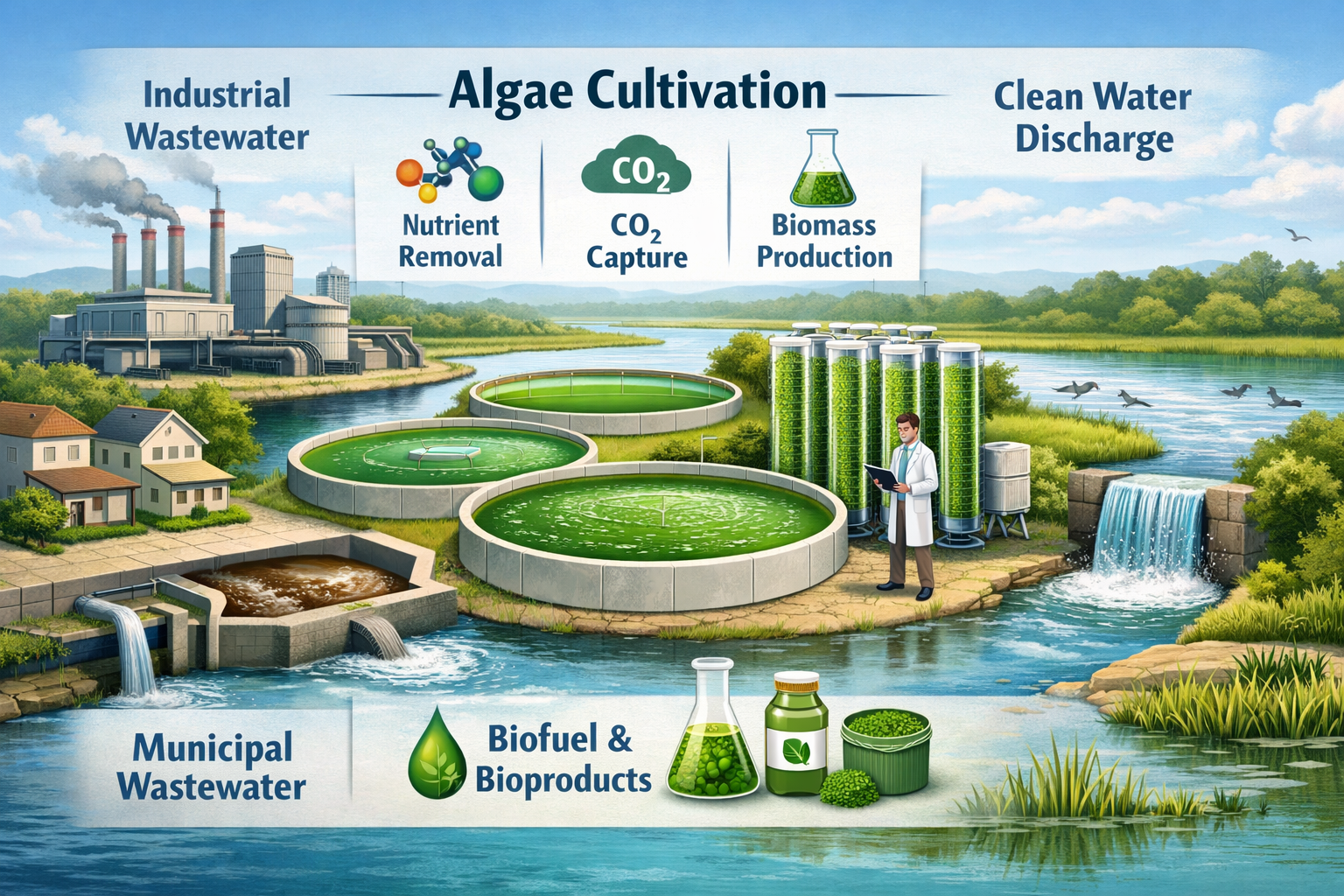
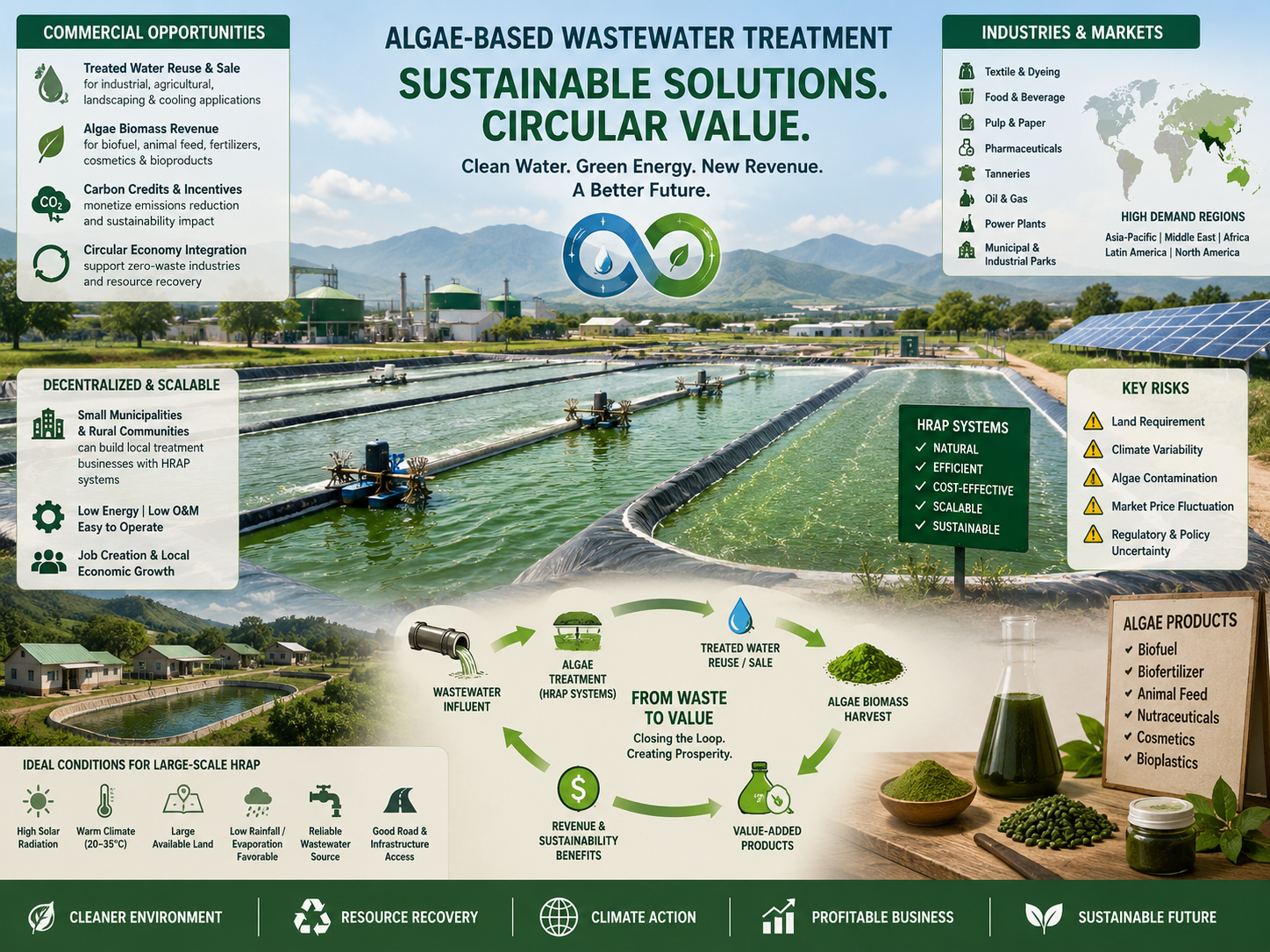
Yes, treated wastewater from High-Rate Algal Pond (HRAP) systems can be commercially reused and, in many regions, sold as a valuable water resource. HRAP systems are designed to remove nutrients, organic matter, and suspended solids through algal photosynthesis and natural biological processes, producing treated effluent suitable for several non-potable applications. Global water scarcity is increasing rapidly, with the United Nations estimating that billions of people already experience water stress for at least part of the year. As freshwater shortages intensify, reclaimed wastewater is becoming an increasingly important commercial commodity rather than simply a disposal output.
One of the largest commercial opportunities is agricultural irrigation. Treated HRAP water still contains residual nutrients such as nitrogen and phosphorus, which can reduce fertilizer demand while supplying irrigation water. This makes reclaimed water particularly attractive for agriculture in water-stressed regions such as India, the Middle East, Australia, Spain, and parts of Africa. Studies on wastewater reuse consistently show that agriculture is the largest global reuse market because irrigation consumes nearly 70% of global freshwater withdrawals. HRAP-treated water can therefore create recurring revenue through supply agreements with farms, plantations, and greenhouse operators.
Industrial reuse is another major commercial pathway. Many industries—including power plants, textile factories, refineries, mining operations, and manufacturing parks—do not require potable water for cooling, cleaning, or process operations. Treated wastewater from HRAP systems can often meet these non-drinking standards at lower cost than freshwater supply. Governments in several countries are actively promoting industrial reuse because industries are under pressure to reduce freshwater extraction and comply with sustainability regulations. In regions where industrial water tariffs are rising, reclaimed wastewater can become a competitive commercial product.
Urban and municipal reuse also represents a growing global market. HRAP-treated water can be used for landscaping, public parks, golf courses, road cleaning, dust suppression, and construction activities. Countries such as Singapore, Israel, and the United Arab Emirates have already demonstrated large-scale reclaimed-water programs that treat wastewater as a strategic national resource. Israel, for example, reuses a very high proportion of its treated wastewater for agriculture and landscaping, illustrating how reclaimed water markets can scale when supported by policy and infrastructure. HRAP systems may become especially valuable for decentralized communities and peri-urban developments because they combine relatively low energy demand with nutrient recovery.
However, commercial reuse depends heavily on water quality standards, public acceptance, infrastructure, and regulation. HRAP-treated water often requires additional polishing steps—such as filtration, disinfection, or membrane treatment—before high-value reuse applications are allowed. Regulatory frameworks differ widely between countries, and strict monitoring is essential to ensure safety and reliability. Even so, the global trend is clearly moving toward wastewater reuse because climate change, urbanization, and industrial growth are increasing pressure on freshwater resources. As a result, treated wastewater from HRAP systems is increasingly viewed not as waste, but as a commercially tradable resource with long-term economic value.