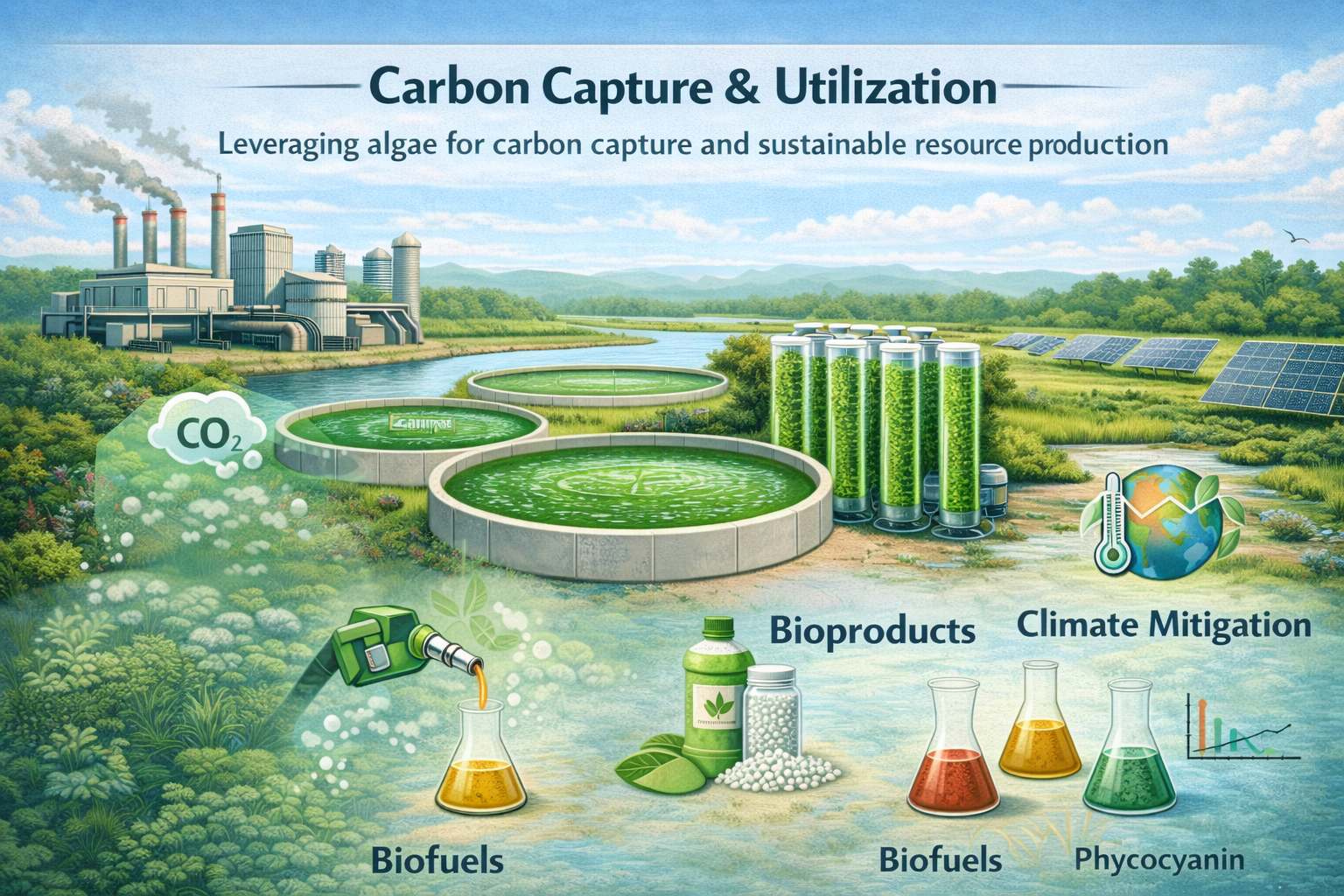

Big Impact: The Global Case for Algae-Based Carbon Capture
🌍 Overview
Algae-based carbon capture leverages the natural process of Photosynthesis to convert carbon dioxide (CO₂) into biomass. Microalgae can absorb CO₂ 10–50 times more efficiently than terrestrial plants, making them one of the most promising biological pathways for carbon sequestration.
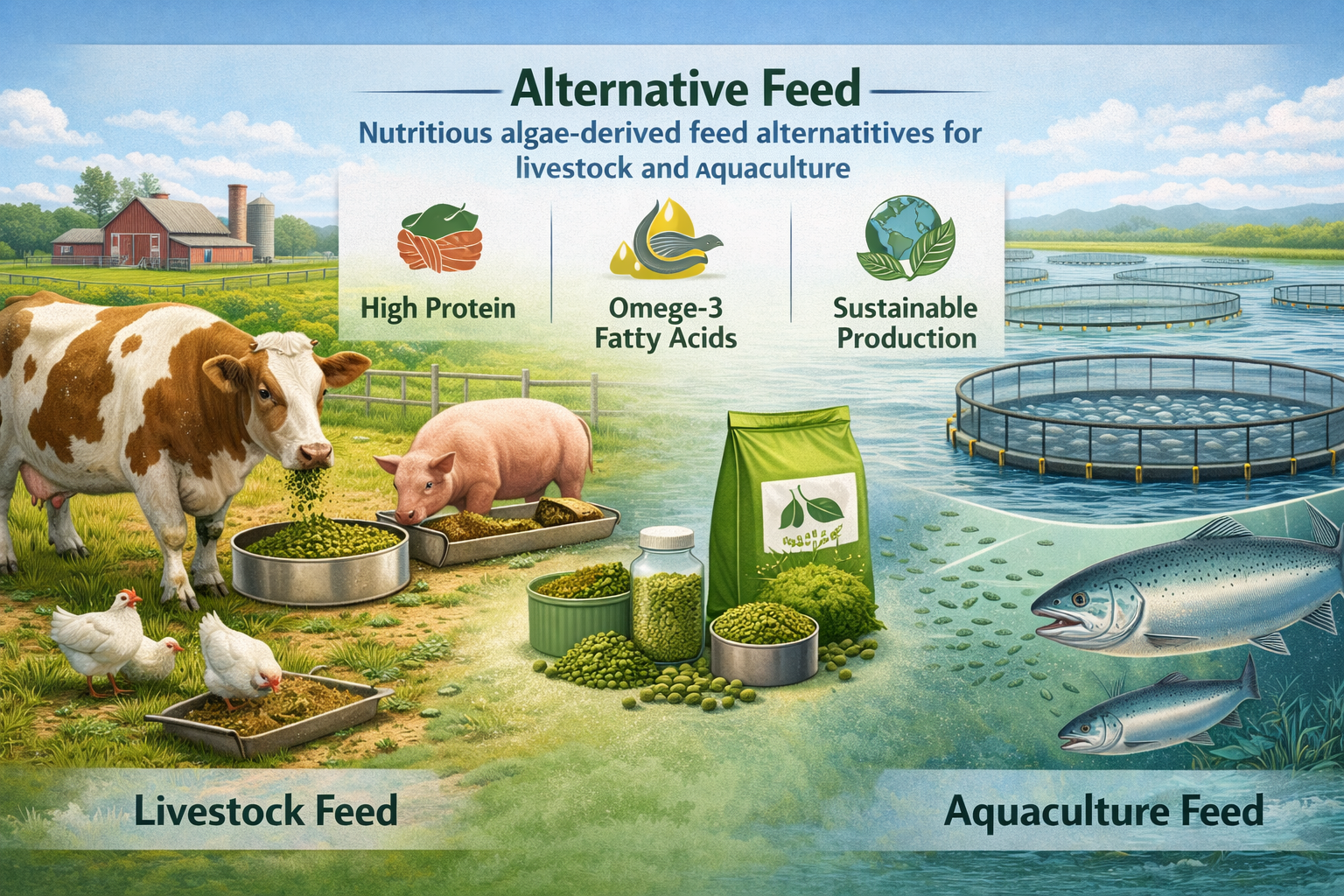
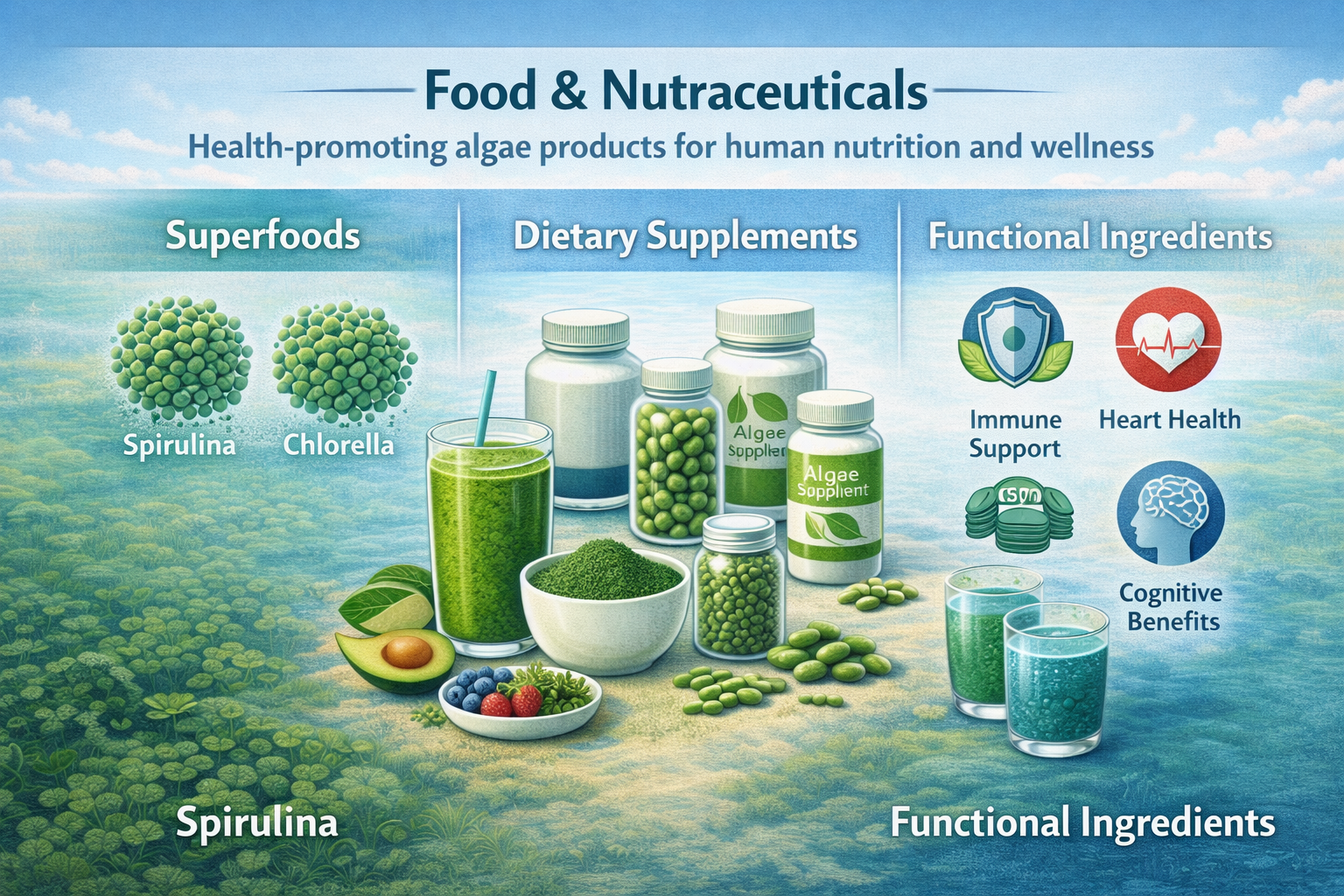
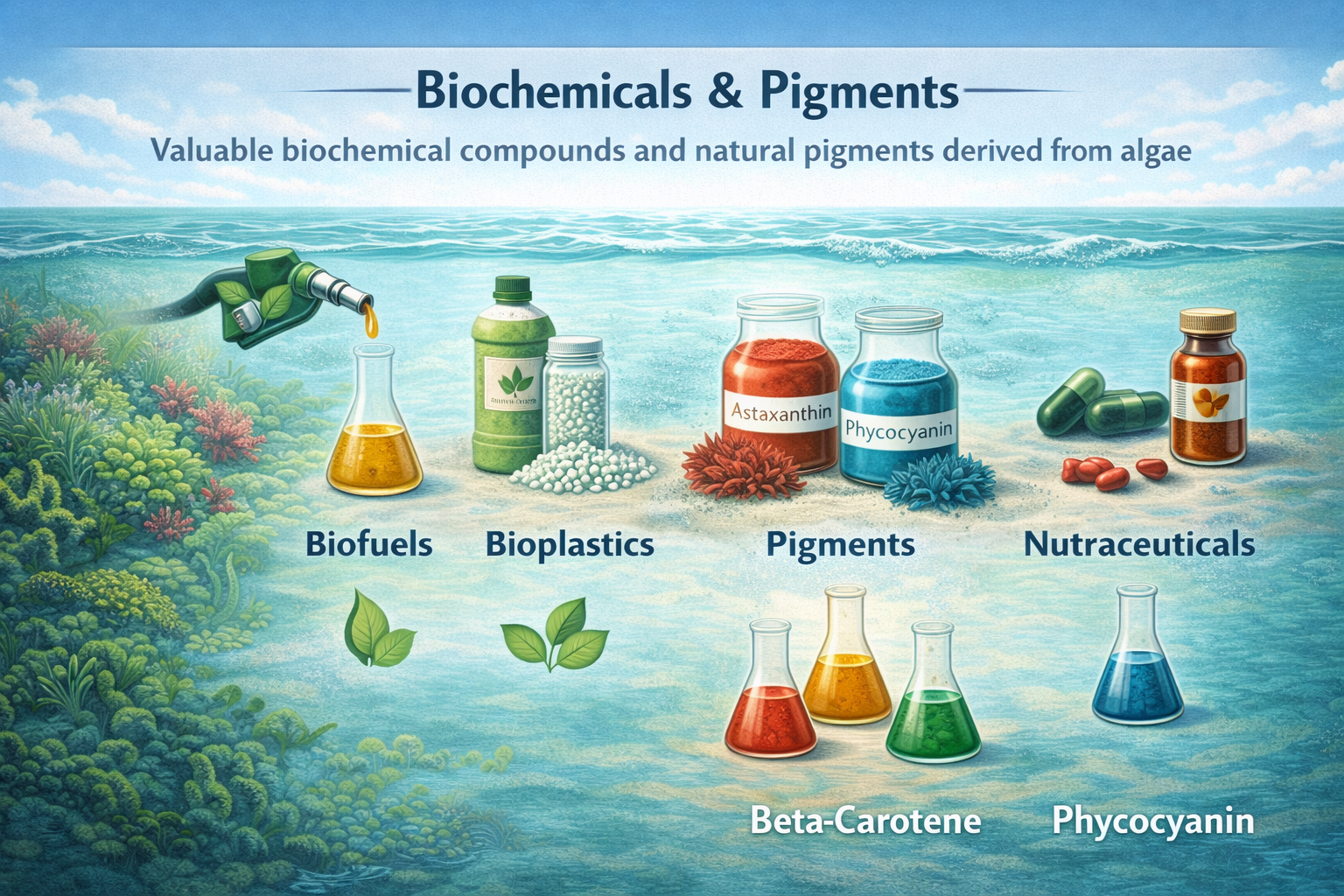
Unlike conventional carbon capture technologies such as Carbon Capture and Storage, which focus on storing CO₂ underground, algae systems transform emissions into valuable outputs—including fuels, feed, chemicals, and fertilizers—creating a carbon-to-value model.
🚀 Current High-Impact Solutions
- Flue gas integration: Algae systems directly capture CO₂ emissions from power plants and industries
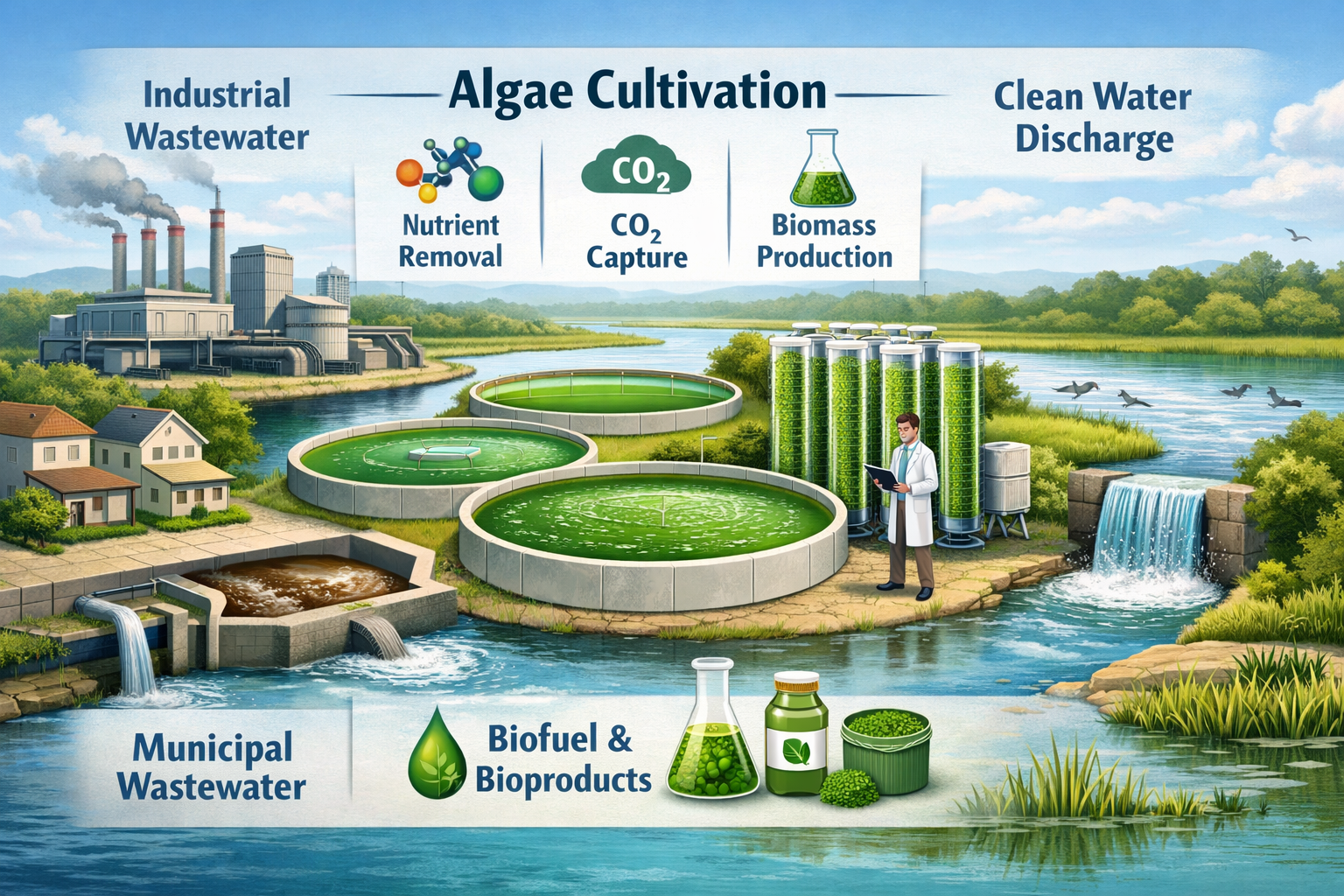
- Wastewater + CO₂ coupling: Dual-purpose systems treating wastewater while absorbing carbon
- Carbon capture biorefineries: Converting captured CO₂ into biofuels, feed, or chemicals
- Industrial pilot projects: Cement, steel, and thermal power sectors adopting algae pilots
🔮 Future Potential
- Large-scale deployment in hard-to-abate sectors (cement, steel, refining)
- Integration with direct air capture (DAC) + algae hybrid systems
- Development of carbon-negative biorefineries
- Carbon credit markets recognizing algae-based sequestration
Process Overview

⚙️ Technical Pathways
Step-by-step carbon capture process:
- CO₂ Source Capture:
- CO₂ sourced from industrial flue gases or ambient air
- Gas Delivery System:
- CO₂ is bubbled into algae cultivation systems
- Algal Cultivation:
- Open ponds or closed photobioreactors
- Sunlight + CO₂ → rapid algae growth
- Carbon Fixation:
- Algae convert CO₂ into organic biomass via photosynthesis
- Biomass Harvesting:
- Separation using filtration, centrifugation, or settling
- Utilization Pathways:
- Biomass processed into fuels, feed, fertilizers, or chemicals
🔄 Input–Output Logic
Inputs:
- CO₂ (industrial emissions or atmosphere)
- Sunlight (primary energy driver)
- Water (fresh, saline, or wastewater)
- Nutrients (nitrogen, phosphorus)
Outputs:
- Algal biomass (carbon-rich organic material)
- Oxygen (released during photosynthesis)
- Value-added products (biofuels, feed, chemicals)
- Potential carbon credits
Key Gaps and Challenges
⚙️ Technical Bottlenecks
- Efficient CO₂ transfer and absorption in large-scale systems
- Maintaining optimal growth conditions under variable climates
- Scaling photobioreactors economically
💰 Economic Barriers
- Higher costs compared to conventional CCS (in early stages)
- Revenue dependency on co-products (fuel, feed, chemicals)
- Limited monetization of captured carbon
🚚 Supply Chain Gaps
- Lack of integrated CO₂-to-product value chains
- Limited infrastructure for biomass processing and utilization
- Weak linkages between emitters and algae producers
⚠️ Additional Challenges
- Land and water requirements for large-scale deployment
- Policy uncertainty around carbon credit eligibility
- Measurement and verification of carbon sequestration
Stakeholder & Community Action
Key Stakeholders & Strategic Actions
🏛️ Governments & Policymakers
- Recognize algae systems in carbon credit frameworks
- Provide subsidies for carbon utilization technologies (CCU)
- Fund pilot and demonstration-scale projects
🧪 Research Institutions
- Improve strain efficiency for higher CO₂ uptake
- Develop hybrid systems combining algae with DAC or CCS
- Advance low-cost photobioreactor designs
🏭 Industry & Emitters
- Integrate algae systems with industrial CO₂ sources
- Invest in carbon-to-value supply chains
- Partner with startups for deployment and scaling
🚀 Startups & Innovators
- Build modular algae carbon capture units
- Develop AI-driven optimization for growth and capture efficiency
- Focus on high-value outputs to improve economics
🤝 Partnerships & Collaboration
- Collaboration between energy companies + biotech startups
- Integration with wastewater treatment and agriculture sectors
- Public-private partnerships for commercialization
Conclusion
Algae-based carbon capture represents a transformational shift from carbon storage to carbon utilization. By converting emissions into valuable products, algae systems align climate mitigation with economic opportunity.
While challenges remain in scalability and cost, the convergence of biotechnology, climate policy, and industrial decarbonization positions algae as a key enabler in the transition to a net-zero, circular carbon economy.