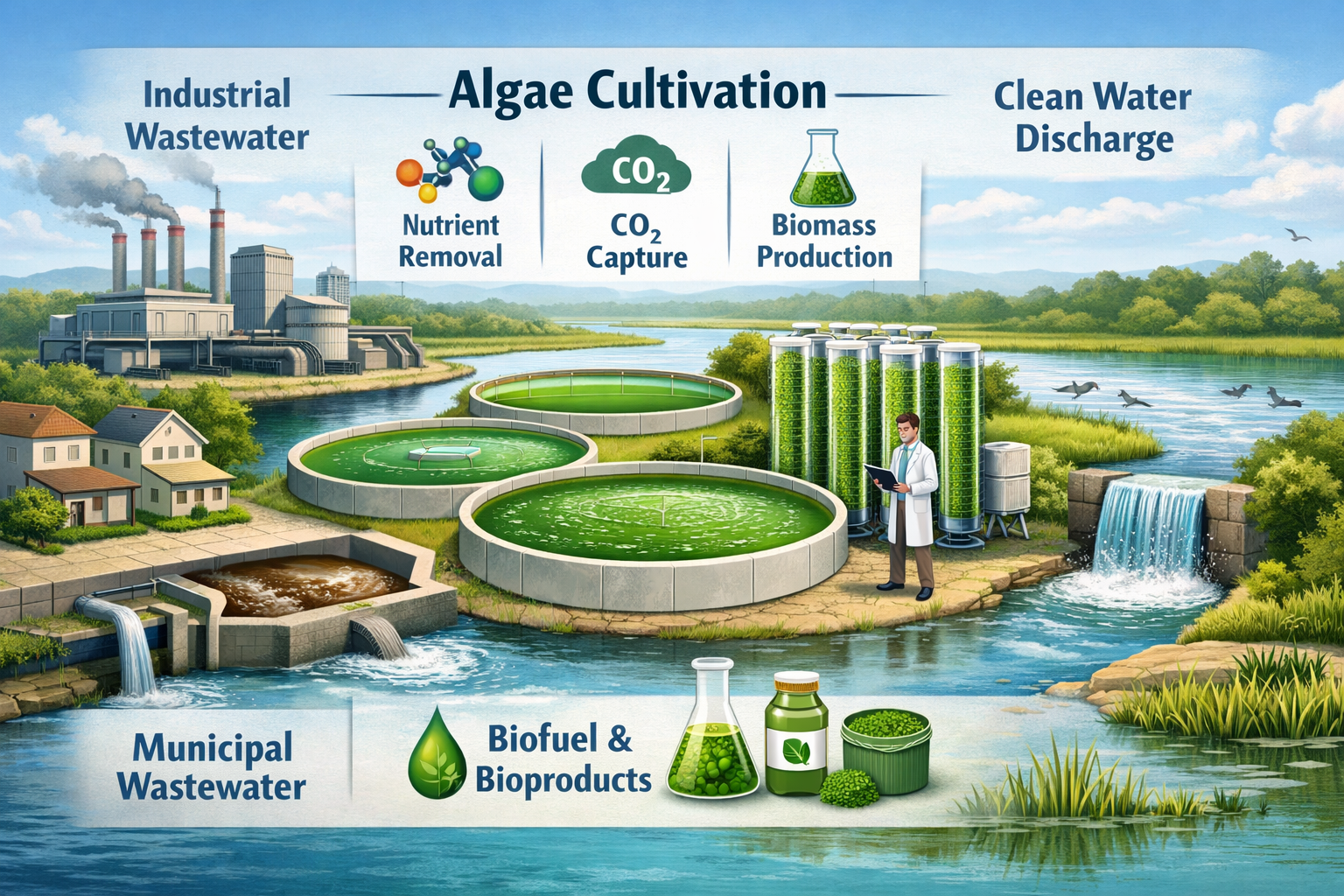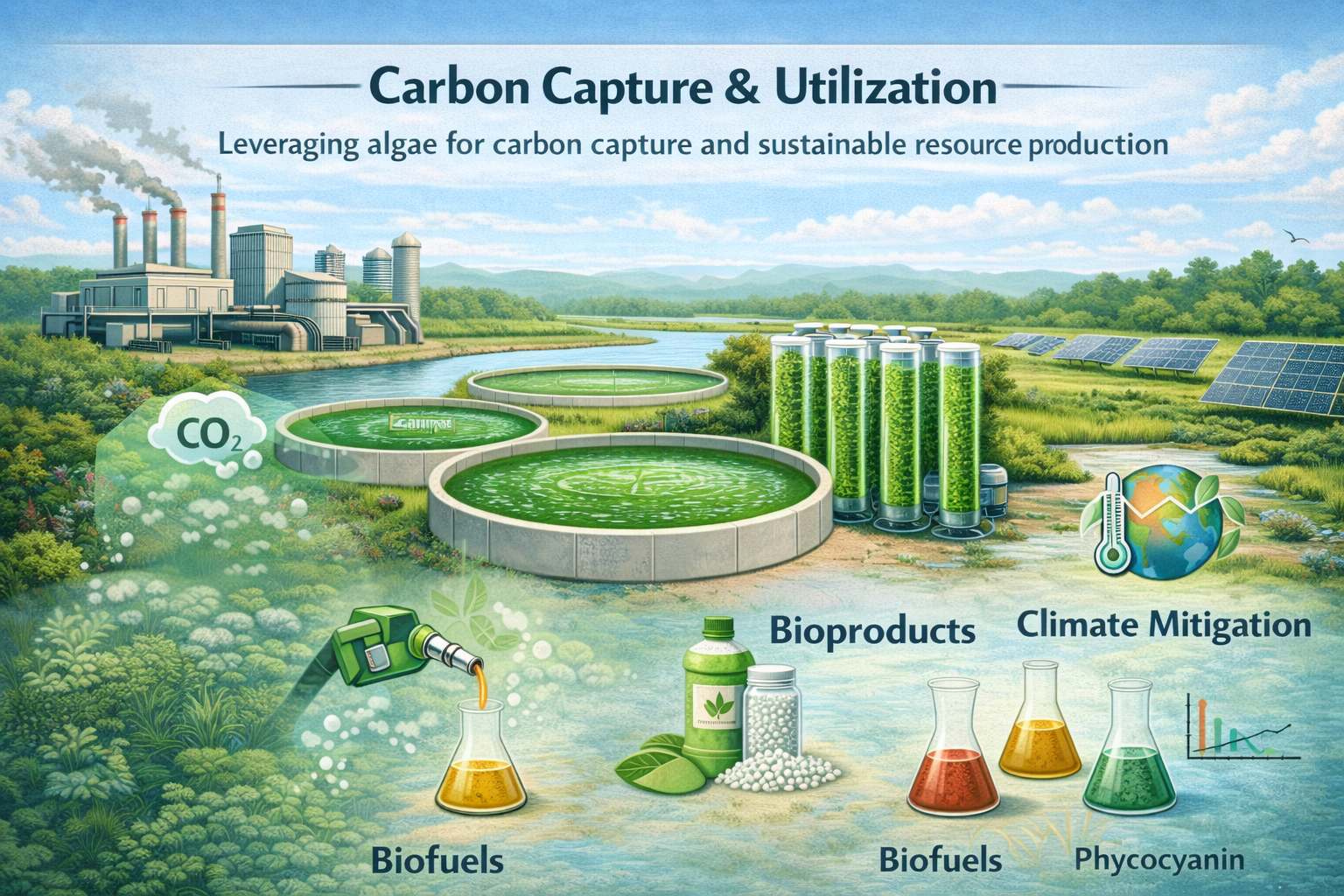
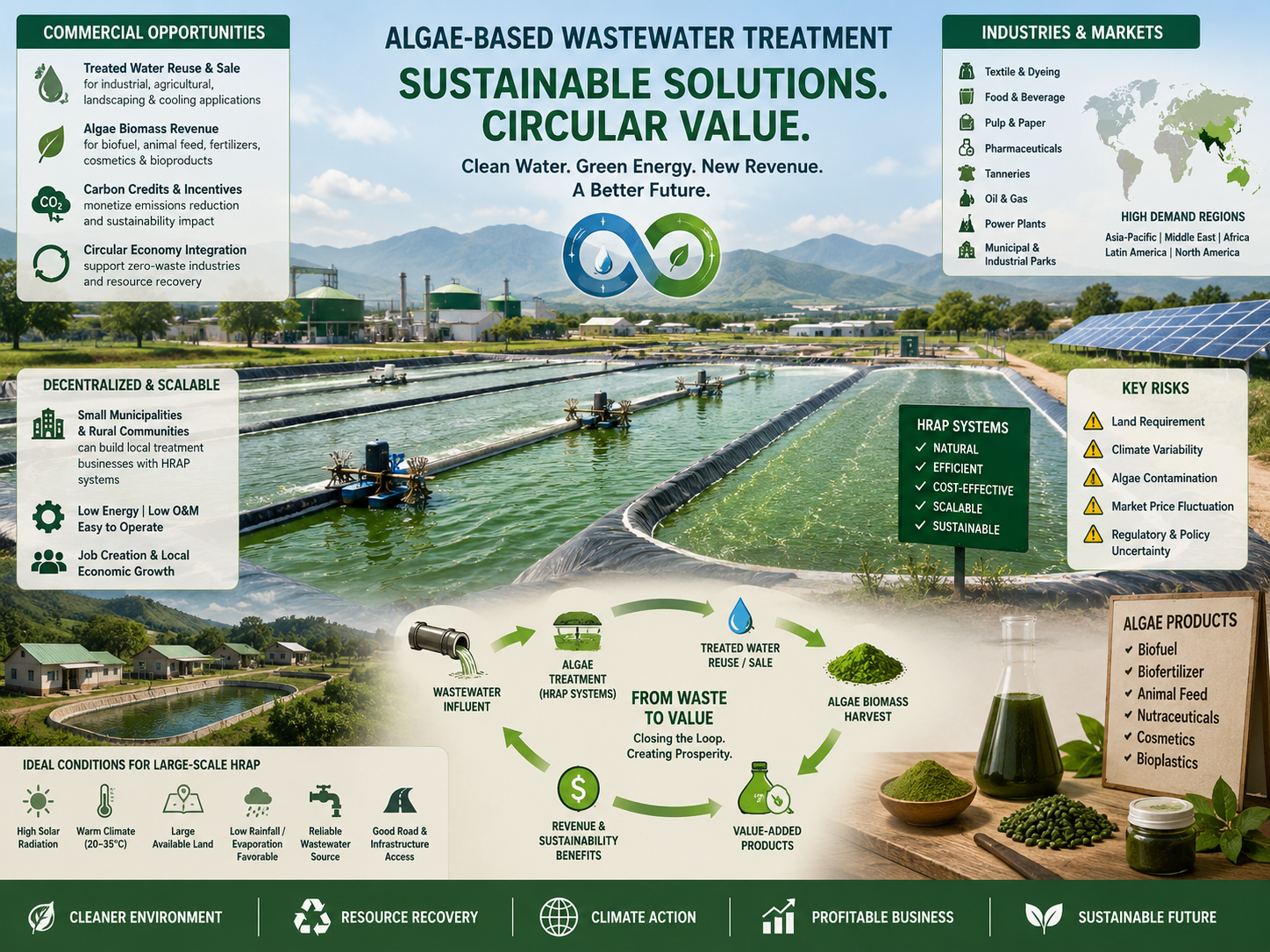
HRAP systems can support circular economy models very well because they treat wastewater while recovering nutrients and biomass instead of simply removing pollutants as a disposal cost. Reviews of microalgae wastewater systems show efficient removal of nitrogen, phosphorus, and COD while using a fraction of the energy required by conventional biological treatment, which is exactly the kind of resource-efficiency logic circular industries need.
The strongest circular-economy value comes from turning wastewater into reusable water and nutrient-rich biomass. HRAP studies show that real wastewater can be treated sufficiently to meet discharge requirements for organic matter and nutrients, while microalgae cultivation simultaneously recovers phosphorus and nitrogen from urban wastewater. That means the system can reduce both pollution load and freshwater demand, which is a direct fit for industrial water-reuse loops.
HRAPs also help industries close the carbon and energy loop. Recent reviews note that two-stage cultivation, biomass recirculation, and hybrid configurations improve both productivity and sustainability. In practice, this means one part of the biomass can be retained to seed the next cycle, while another part is processed further, reducing waste and improving process stability. This is particularly relevant for municipal plants, agro-industrial sites, and small-community systems.
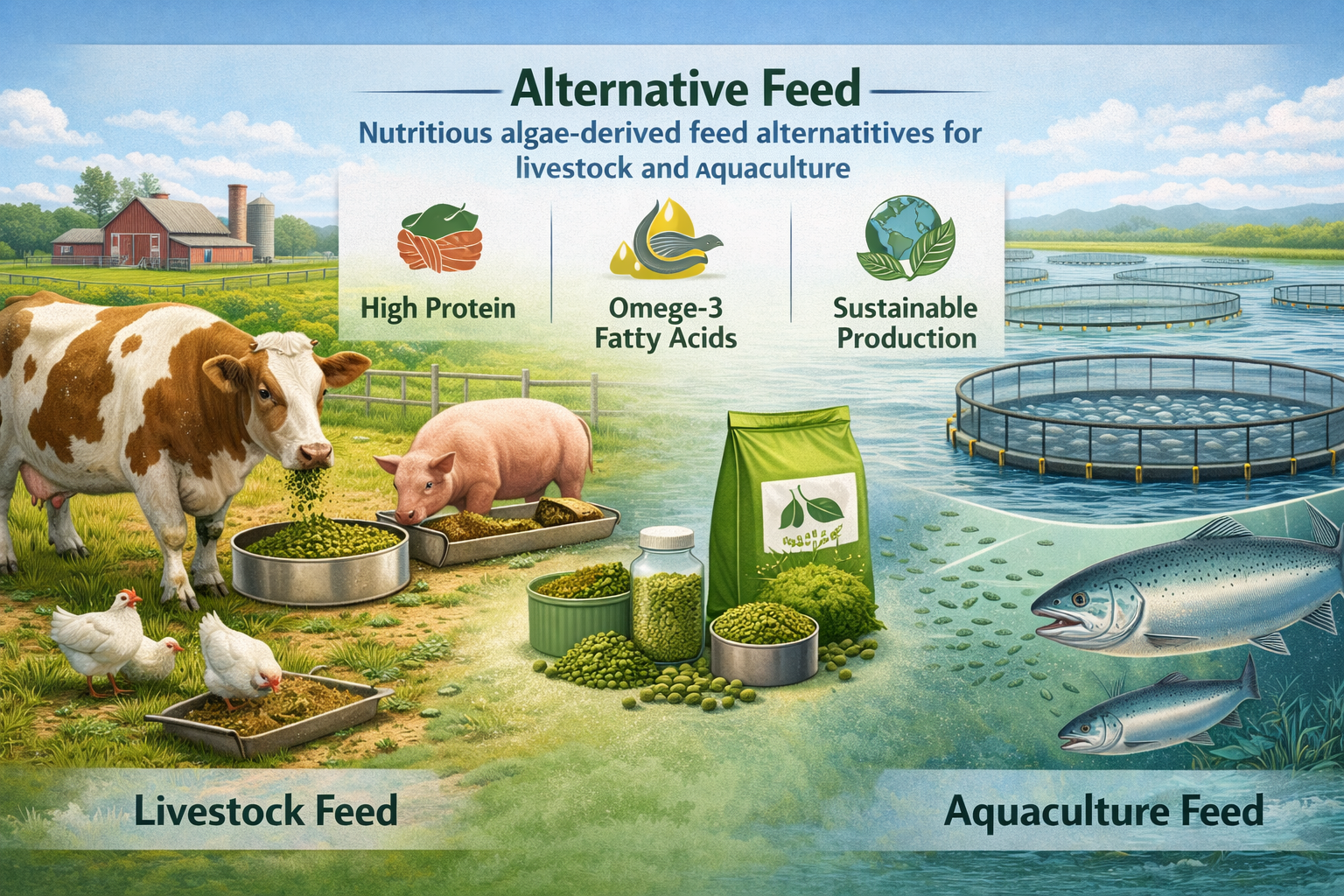
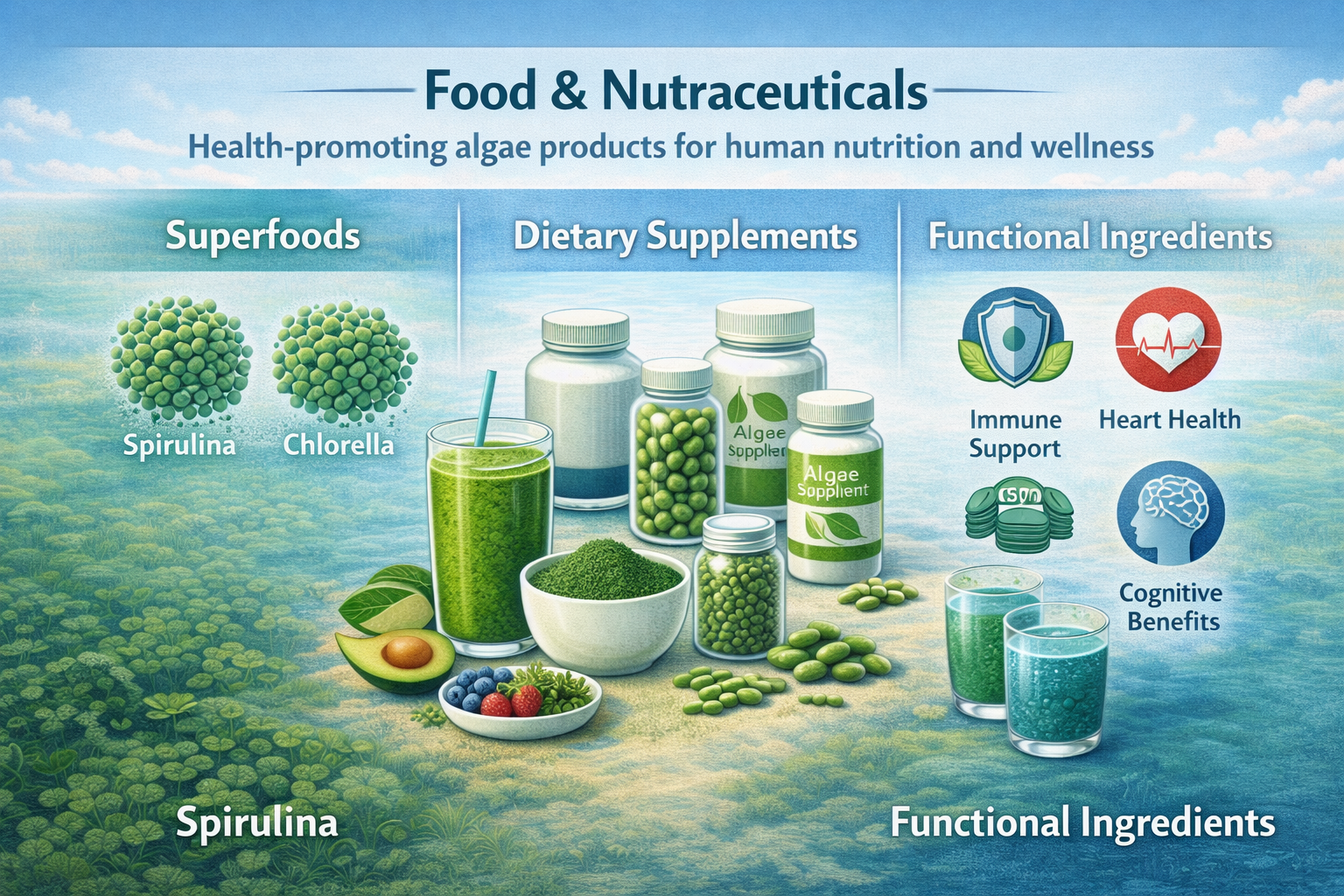
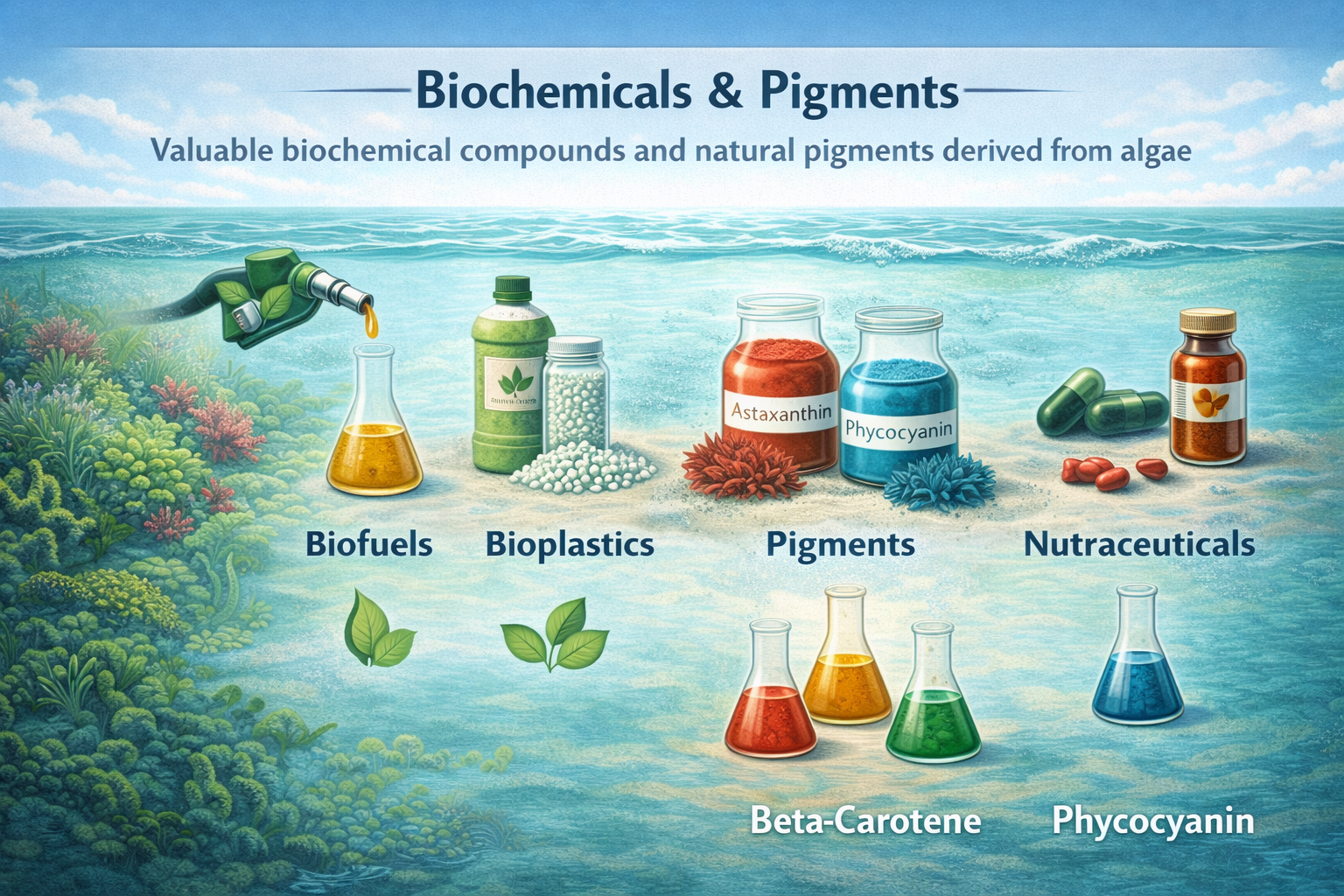
The biomass itself is a major zero-waste asset. Algal biomass from HRPs is rich in nitrogen and phosphorus, so it can be converted into biofertilizer or organomineral fertilizer. Other studies show that wastewater-grown biomass can also go into anaerobic co-digestion, improving biogas yield and shifting more of the remaining carbon into energy recovery rather than residue disposal. That is a classic circular model: wastewater becomes water, nutrients, and energy.
So, HRAP systems can absolutely support zero-waste industrial models in a practical sense, though “zero waste” is best understood as near-zero residual waste rather than literal zero. The most successful setups use integrated resource recovery, product valorization, and life-cycle optimization to turn one waste stream into multiple outputs. Reviews of circular bio-based systems emphasize exactly this: waste streams become feedstock for new products, while environmental impacts and operating costs fall.
Checkout the questions from Wastewater treatment
- What infrastructure and climatic conditions are ideal for setting up large-scale High-Rate Algal Pond facilities?
- How can carbon credits and sustainability incentives improve the profitability of HRAP wastewater treatment projects?
- Can small municipalities and rural communities build decentralized wastewater treatment businesses using HRAP systems?
- What are the major risks involved in commercial algae-based wastewater treatment businesses?
- Which countries and regions have the highest commercial demand for algae-based wastewater treatment technologies?
- Which industries are most likely to adopt algae-based wastewater treatment in the future?
- What are the major business opportunities in the High-Rate Algal Pond (HRAP) wastewater treatment industry?
- Can algae harvested from wastewater ponds create additional revenue streams?
- Can treated wastewater from HRAP systems be commercially reused or sold?
- What are the biggest operational challenges in managing large-scale HRAP systems?
- How can HRAP wastewater treatment companies generate recurring revenue?
- Which business models are most effective for commercial HRAP wastewater treatment companies?
- What factors determine the profitability and commercial success of an HRAP project?
- Is HRAP more cost-effective than activated sludge treatment systems?
- Can HRAP systems become a profitable alternative to conventional wastewater treatment plants?
- What are the operational and maintenance costs of running an HRAP facility?
- How much land is required to build a profitable HRAP wastewater treatment facility?
- What technologies can improve algae growth and wastewater purification efficiency in HRAP systems?
- Which industries generate the most suitable wastewater for algae-based treatment systems?
- Algae-Based Wastewater Treatment – High-Rate Algal Ponds (HRAP)