
Big Impact: The Global Case for Algae-Based Feed
🌍 Overview
Algae-based feed—derived from microalgae such as Spirulina, Chlorella, and other species—is emerging as a sustainable, nutrient-dense alternative to conventional feed ingredients like soybean meal and fishmeal.
With rising pressure on agricultural land, volatile feed prices, and sustainability concerns in livestock and aquaculture, algae offers a high-protein, low-footprint, climate-resilient solution.
🚀 Current High-Impact Solutions
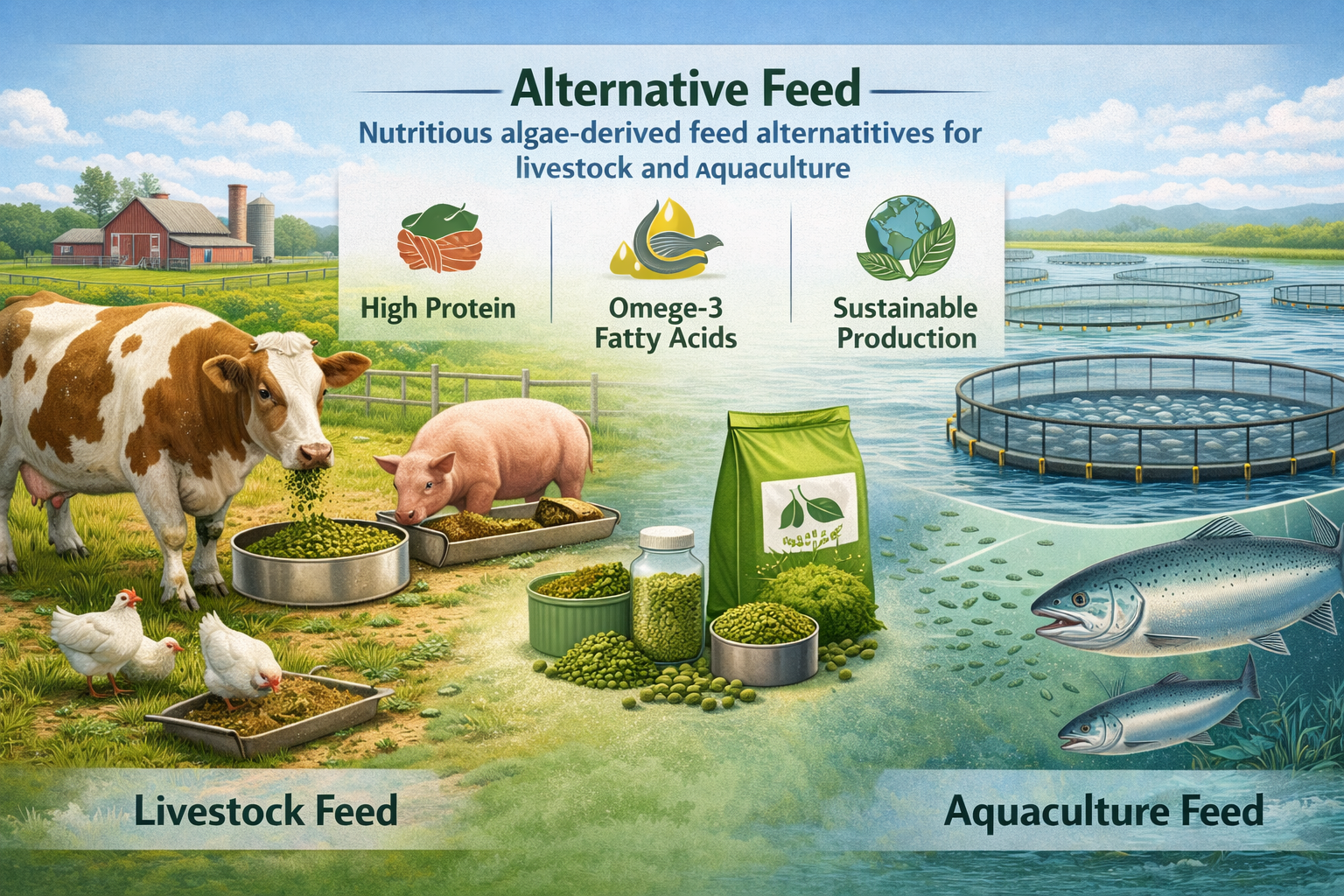
- Aquaculture feed replacement: Partial substitution of fishmeal with algae in fish and shrimp diets
- Dairy cattle supplementation: Improves milk yield, digestion, and reduces methane emissions
- Poultry feed additive: Enhances immunity and egg quality
- Omega-3 enrichment: Algae-based DHA/EPA used instead of fish oil in feeds
🔮 Future Potential
- Fully replacing fishmeal and soy protein in aquaculture diets
- Development of custom algae strains tailored for specific livestock needs
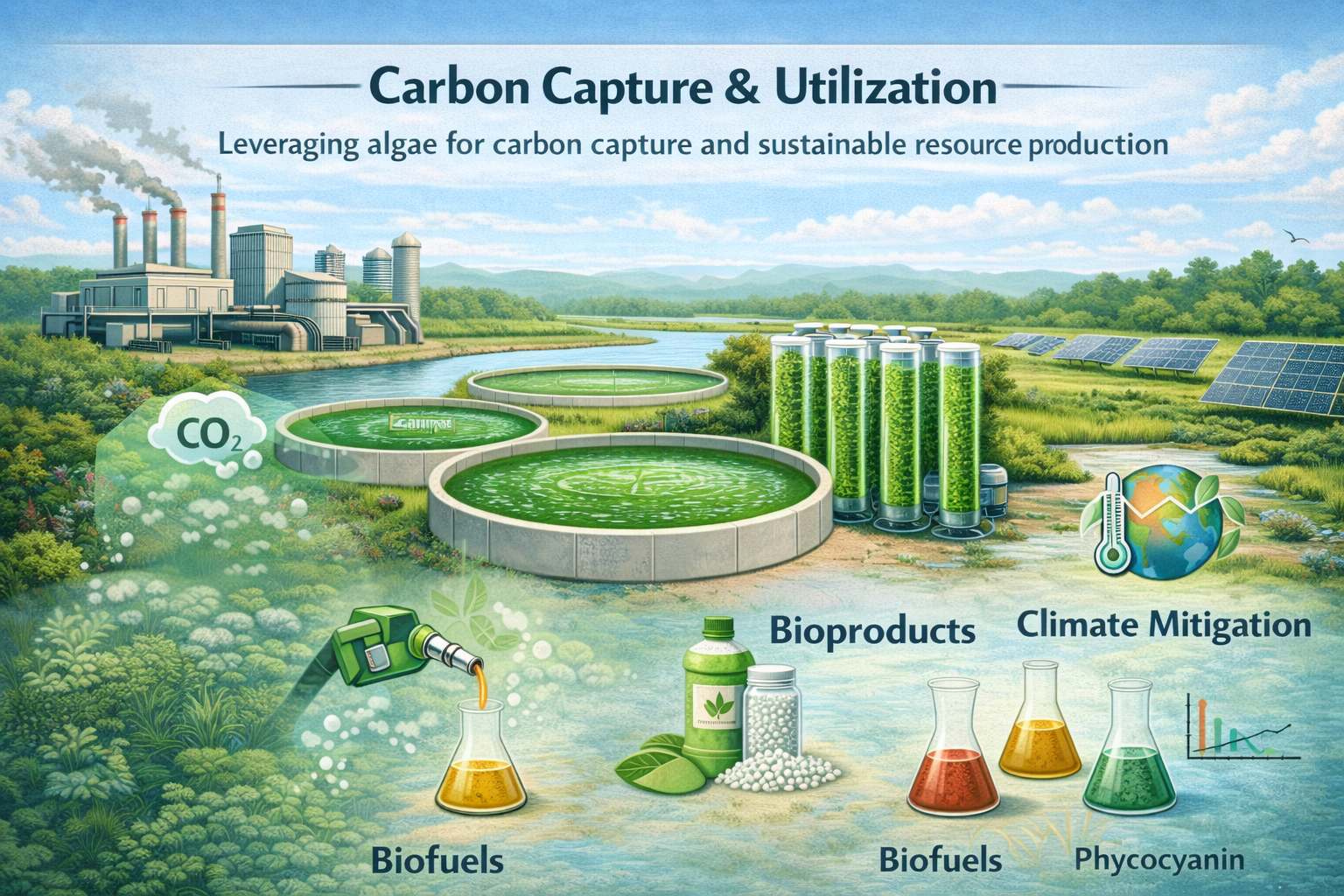
- Integration with carbon capture systems (CO₂ → algae → feed)
- Large-scale fermentation-based algae production independent of climate
Process Overview

⚙️ Technical Pathways
Step-by-step production process:
- Strain Selection:
- High-protein or lipid-rich algae species chosen based on feed application
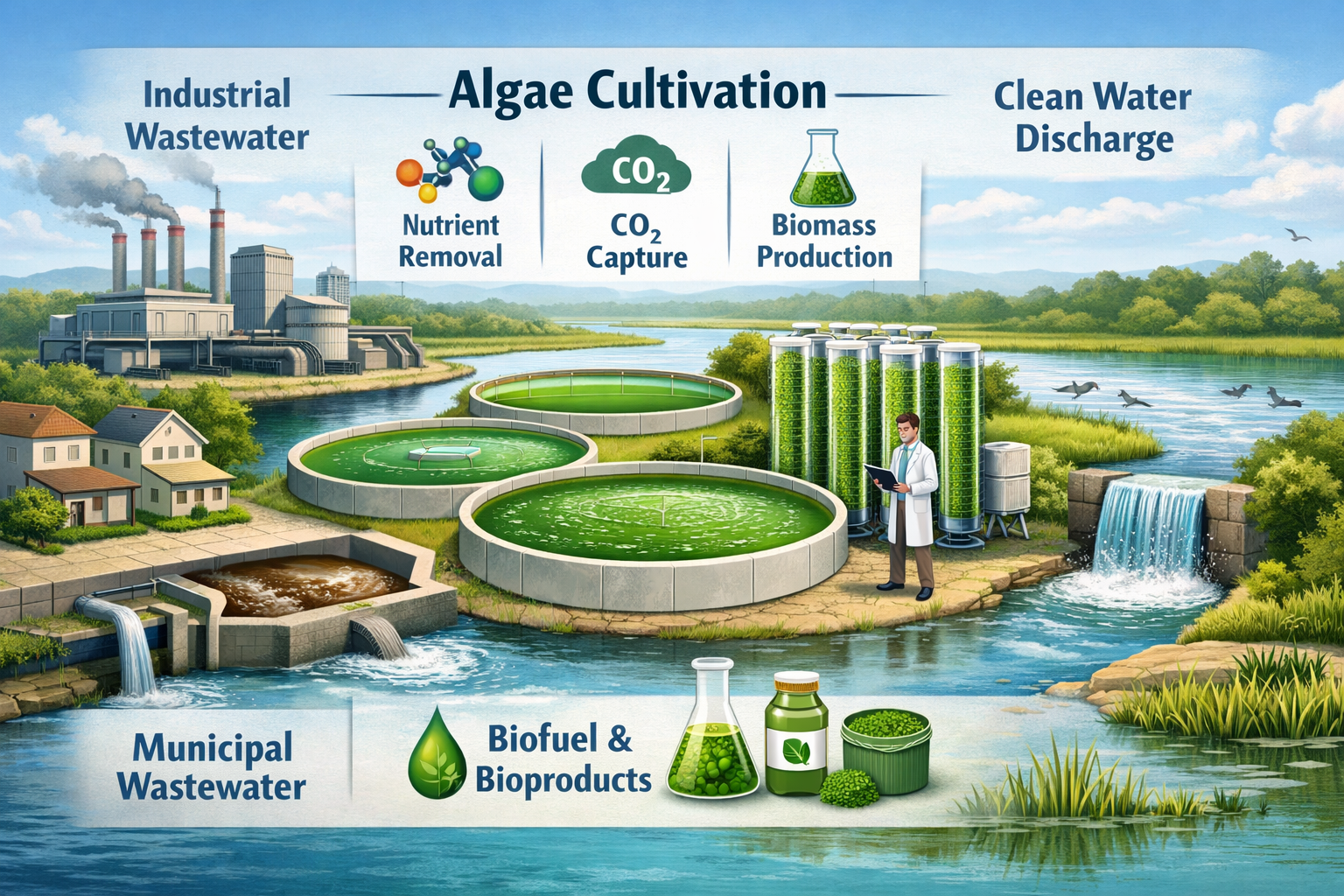
- Cultivation:
- Open ponds or closed photobioreactors
- Inputs: sunlight, CO₂, nutrients
- Biomass Growth:
- Rapid cell multiplication (doubling in hours/days)
- Harvesting:
- Methods: centrifugation, filtration, flocculation
- Drying & Processing:
- Spray drying or solar drying
- Conversion into powder or pellets
- Feed Formulation:
- Blended with other feed ingredients or used as additive
🔄 Input–Output Logic
Inputs:
- CO₂ (industrial emissions or atmosphere)
- Water (can include wastewater streams)
- Nutrients (nitrogen, phosphorus)
- Sunlight or controlled energy input
Outputs:
- Protein-rich biomass (50–70% protein in some strains)
- Omega-3 fatty acids (DHA, EPA)
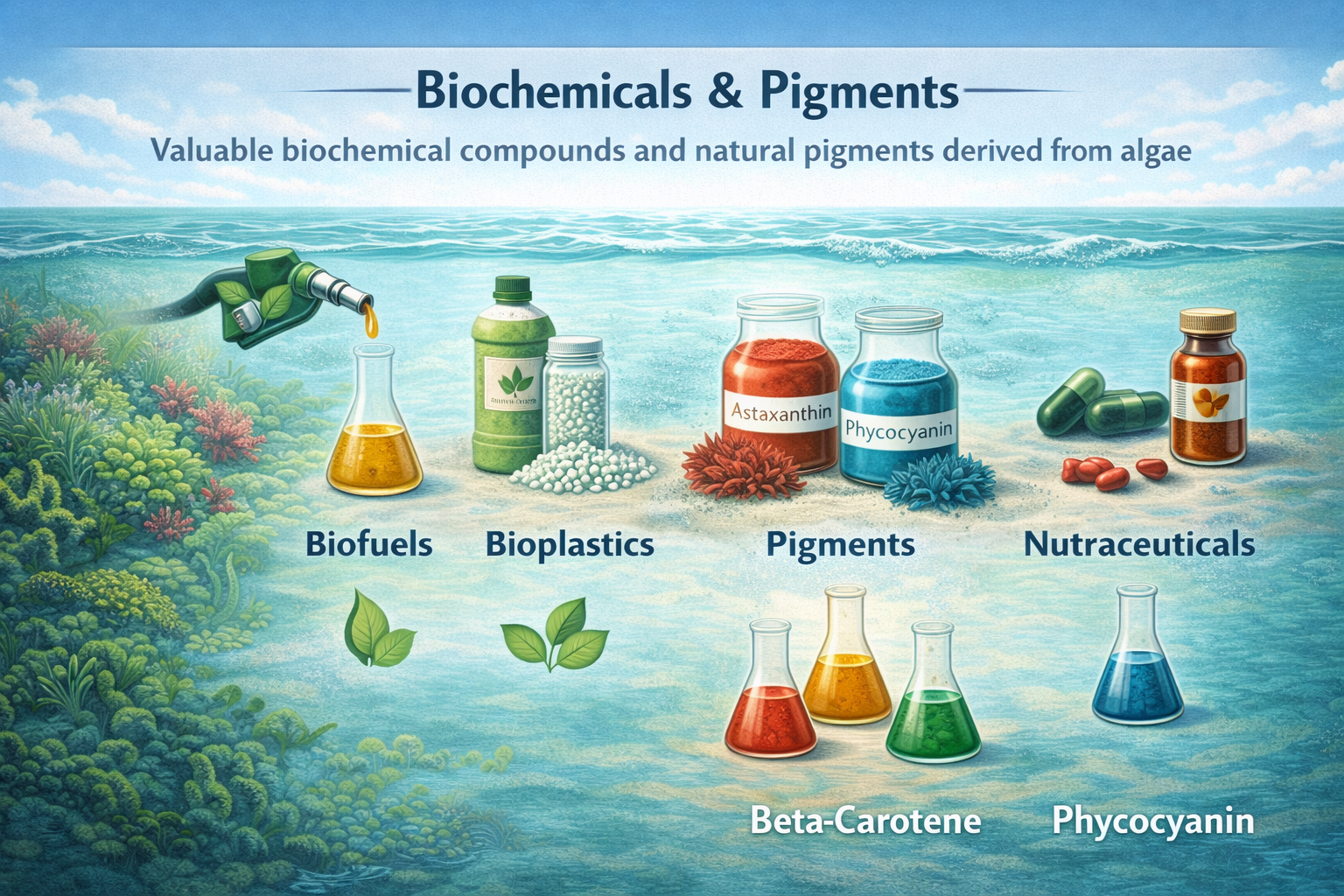
- Pigments (astaxanthin, chlorophyll)
- Functional feed ingredients
Key Gaps and Challenges
⚙️ Technical Bottlenecks
- High cost of large-scale cultivation systems
- Energy-intensive drying processes
- Variability in nutrient composition across batches
💰 Economic Barriers
- Difficulty competing with low-cost soy and fishmeal
- Limited economies of scale
- High capital expenditure for photobioreactors
🚚 Supply Chain Gaps
- Lack of large-scale algae processing infrastructure
- Weak integration with feed manufacturers
- Limited distribution channels for algae-based products
⚠️ Additional Challenges
- Regulatory approvals for new feed ingredients
- Farmer awareness and adoption barriers
- Standardization and quality assurance issues
Stakeholder & Community Action
Key Stakeholders & Strategic Actions
🏛️ Governments & Policymakers
- Provide subsidies for sustainable feed alternatives
- Promote algae under climate-smart agriculture policies
- Fast-track approvals for algae-based feed products
🧪 Research Institutions
- Develop high-yield, low-cost algae strains
- Improve harvesting and drying technologies
- Conduct large-scale feeding trials for validation
🏭 Feed Industry & Corporates
- Integrate algae into commercial feed formulations
- Invest in biorefinery models (multiple products from algae)
- Build supply chains linking algae producers and feed mills
🚀 Startups & Innovators
- Create fermentation-based algae systems (indoor, scalable)
- Use AI for optimizing growth conditions and yield
- Develop specialized feed products (e.g., shrimp, dairy, poultry)
🤝 Partnerships & Collaboration
- Collaborations between aquaculture farms + algae producers
- Joint ventures between oil & gas companies (CO₂ sources) and algae firms
- Public-private partnerships for pilot plants
Conclusion
Algae-based cattle and fish feed represents a strategic breakthrough in sustainable agriculture and aquaculture. With its ability to deliver high nutrition, lower environmental impact, and circular resource utilization, algae is poised to disrupt conventional feed systems.
However, scaling this solution requires coordinated action across technology, policy, and industry ecosystems. As production costs fall and awareness grows, algae-based feed can become a mainstream, economically viable alternative—reshaping how the world feeds its animals while reducing pressure on land, oceans, and climate.