
Yes—small municipalities and rural communities can build decentralized wastewater treatment businesses around HRAP systems, but the model works best where land is available, regulation is manageable, and the operator can monetize more than just treatment. Decentralized wastewater systems are widely described as a long-term solution for small communities and rural areas because they are more reliable and cost-effective than centralized systems in places that lack the funding and technical capacity for large plants.
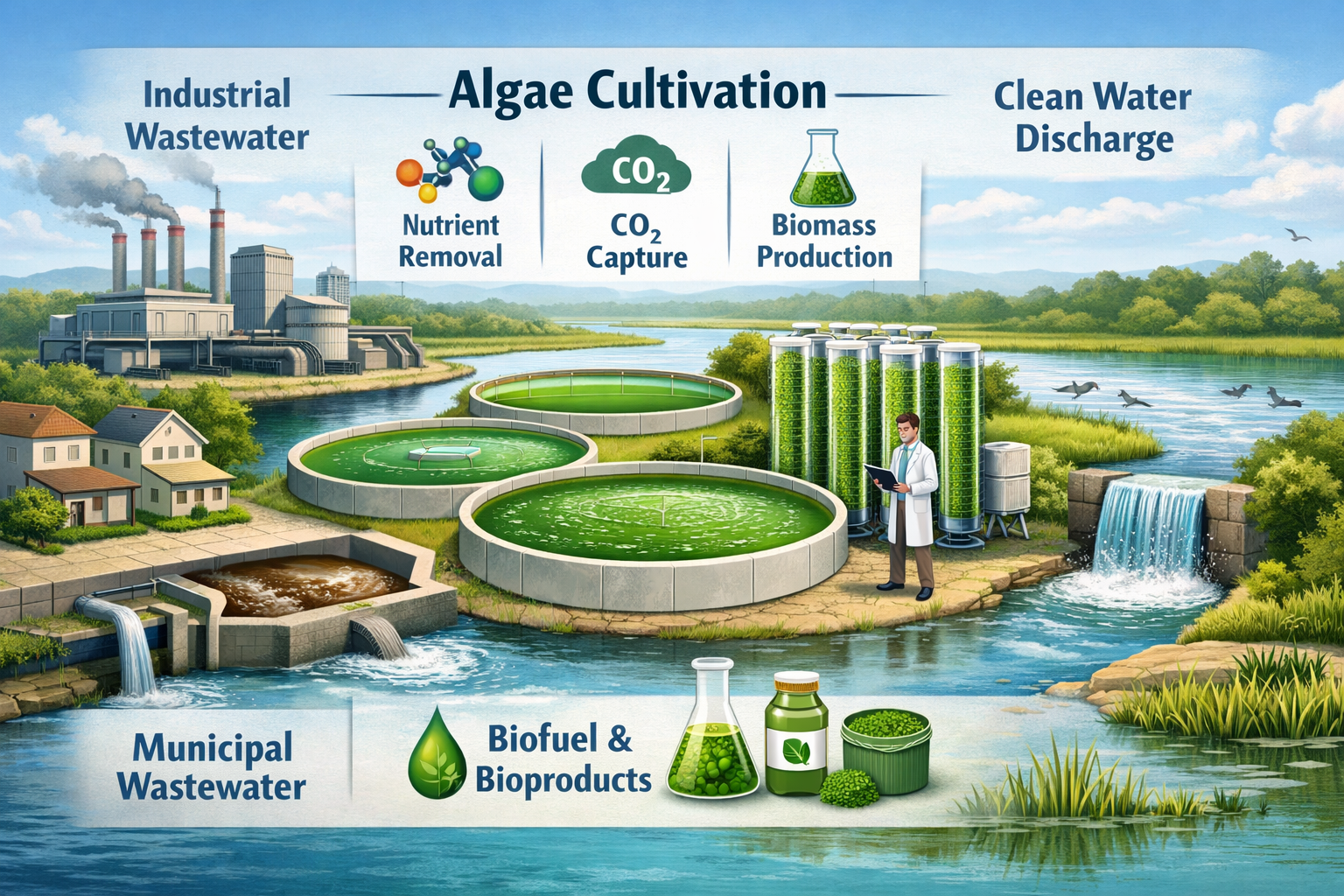
HRAPs fit this niche particularly well because they are designed as cost-effective systems that use microalgae and bacteria to treat wastewater while producing biomass. The SSWM factsheet notes that HRAPs can generate clean water suitable for reuse plus biomass that can be converted into biofertilizers, biostimulants, biogas, pigments, and bioplastics. It also states that HRAPs are suitable for urban wastewater, industrial wastewater, digester effluent, piggery wastewater, and dairy farm wastewater.
For small towns, the scale is realistic but land-dependent. The same source states HRAPs typically need about 3–5 m² per person equivalent, which makes them especially suitable for communities around 2,000 PE, and potentially up to 10,000 PE. That is a strong fit for rural settlements and peri-urban districts where land is cheaper than in dense cities and where decentralized treatment avoids the cost of long sewer networks.
The business case improves when the community operator captures multiple revenue streams. A life-cycle assessment of HRAPs for small communities found that HRAP systems had similar environmental performance to activated sludge, and another comparative study reported that HRAPs consume almost two-thirds less energy while producing almost four times more biomass than activated sludge. That combination supports a business model built on treatment fees, reclaimed-water sales, and by-product recovery rather than on wastewater treatment alone.
The main constraint is not technical possibility but deployment discipline. HRAP use in small communities has been limited partly because systems still need validation and regulatory approval; one South Australian project had to demonstrate pathogen reduction under monitored conditions before joining the community wastewater scheme. That means rural HRAP businesses are feasible when they are professionally operated, centrally monitored, and designed for local climate and wastewater characteristics. In practice, the best opportunities are small municipalities that want a lower-energy, resource-recovery model and can secure permit approval, maintenance capacity, and offtake markets for water or biomass.