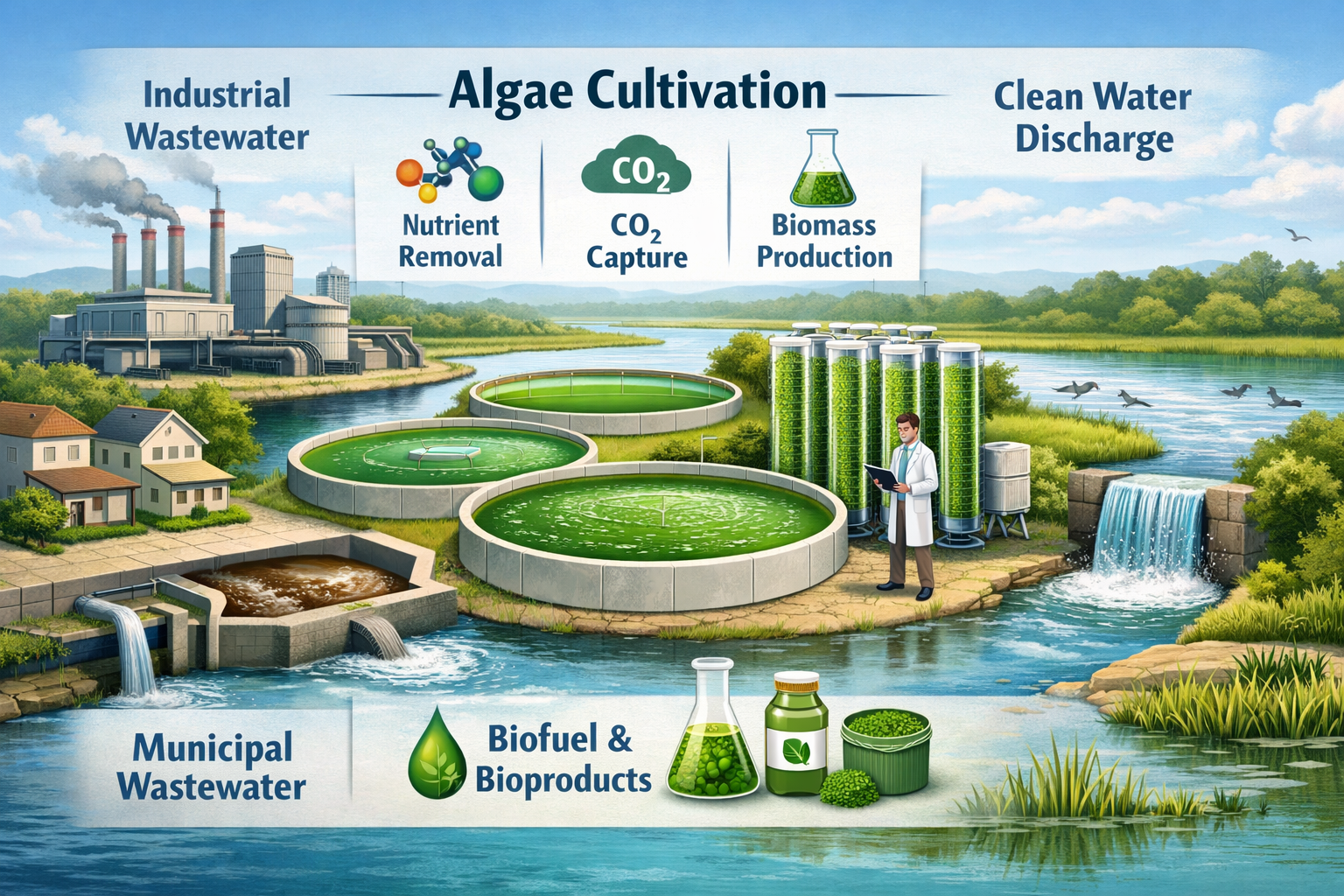
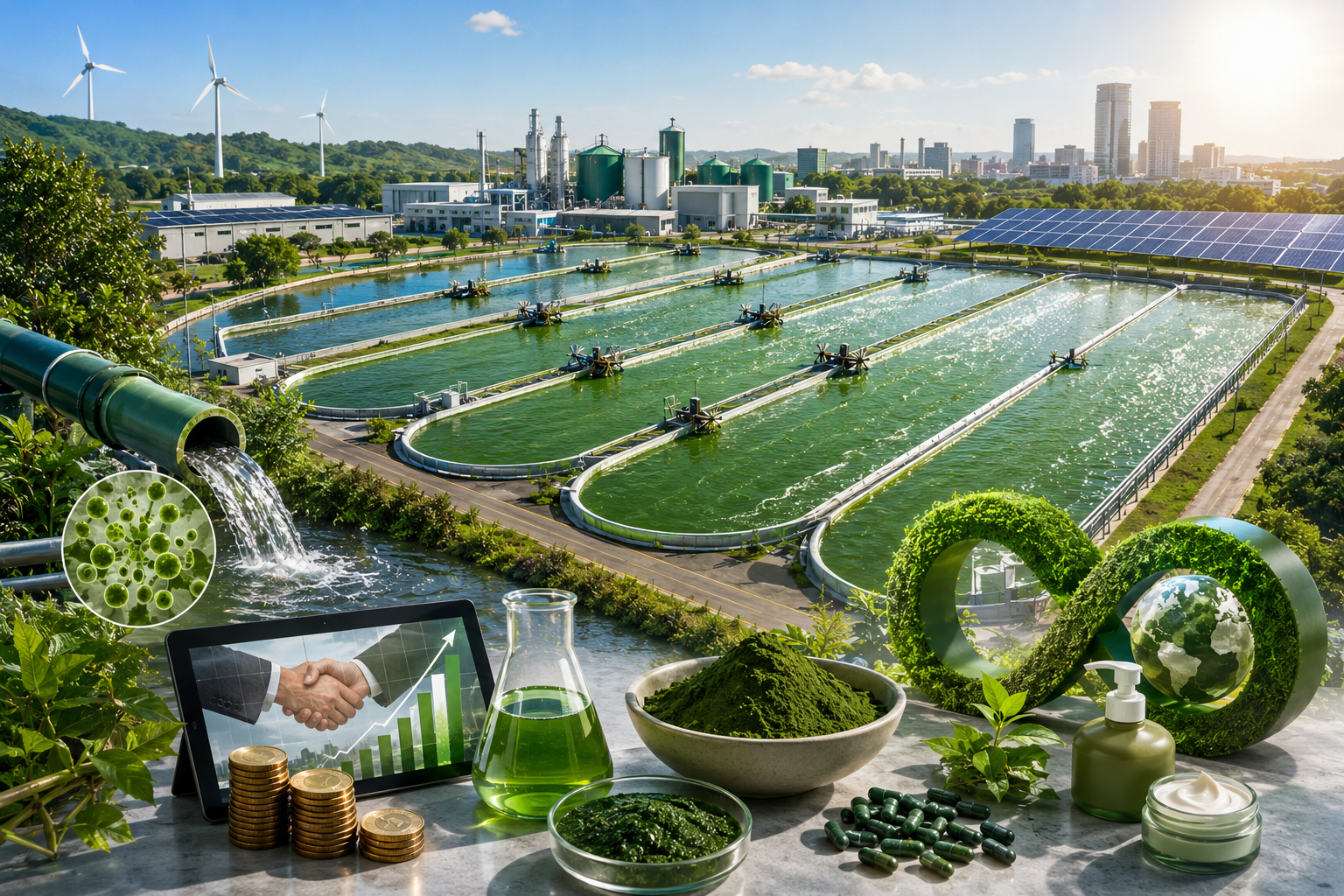
Large-scale High-Rate Algal Pond (HRAP) facilities require specific infrastructure and climatic conditions to achieve efficient algae growth, wastewater treatment, and carbon capture performance. HRAP systems are shallow raceway ponds designed to maximize sunlight exposure and algae productivity while enabling continuous water circulation through paddle wheels. Studies show that pond depth is typically maintained between 0.2 and 0.5 meters to ensure sufficient light penetration and oxygen transfer. Large flat land areas with low construction costs are highly preferred because HRAP facilities require extensive pond networks, settling units, harvesting systems, and water management infrastructure. Proper site planning is therefore critical for achieving commercial-scale operational efficiency.
Climatic conditions play a major role in determining HRAP productivity. The ideal regions are areas with high solar radiation, warm temperatures, and long sunlight hours throughout the year. Research indicates that optimal algal growth generally occurs at temperatures between 20°C and 35°C, while excessive cold conditions significantly reduce biomass productivity. Tropical and subtropical regions, including parts of India, Australia, the Middle East, Africa, and Latin America, are considered highly suitable for HRAP deployment because they provide strong year-round sunlight and relatively stable temperatures. High solar availability directly increases photosynthetic efficiency, which improves biomass yield and carbon dioxide absorption capacity.
Access to reliable water and nutrient sources is another critical infrastructure requirement. HRAP systems are most economically viable when integrated with municipal wastewater treatment plants, industrial effluents, or agricultural wastewater streams, because these waters provide nitrogen and phosphorus required for algal growth. Studies show that HRAP systems can remove more than 70–90% of nitrogen and phosphorus under optimized conditions while simultaneously generating useful algal biomass. Co-location with wastewater infrastructure reduces freshwater demand and lowers operational nutrient costs, making the overall process more sustainable and commercially attractive.
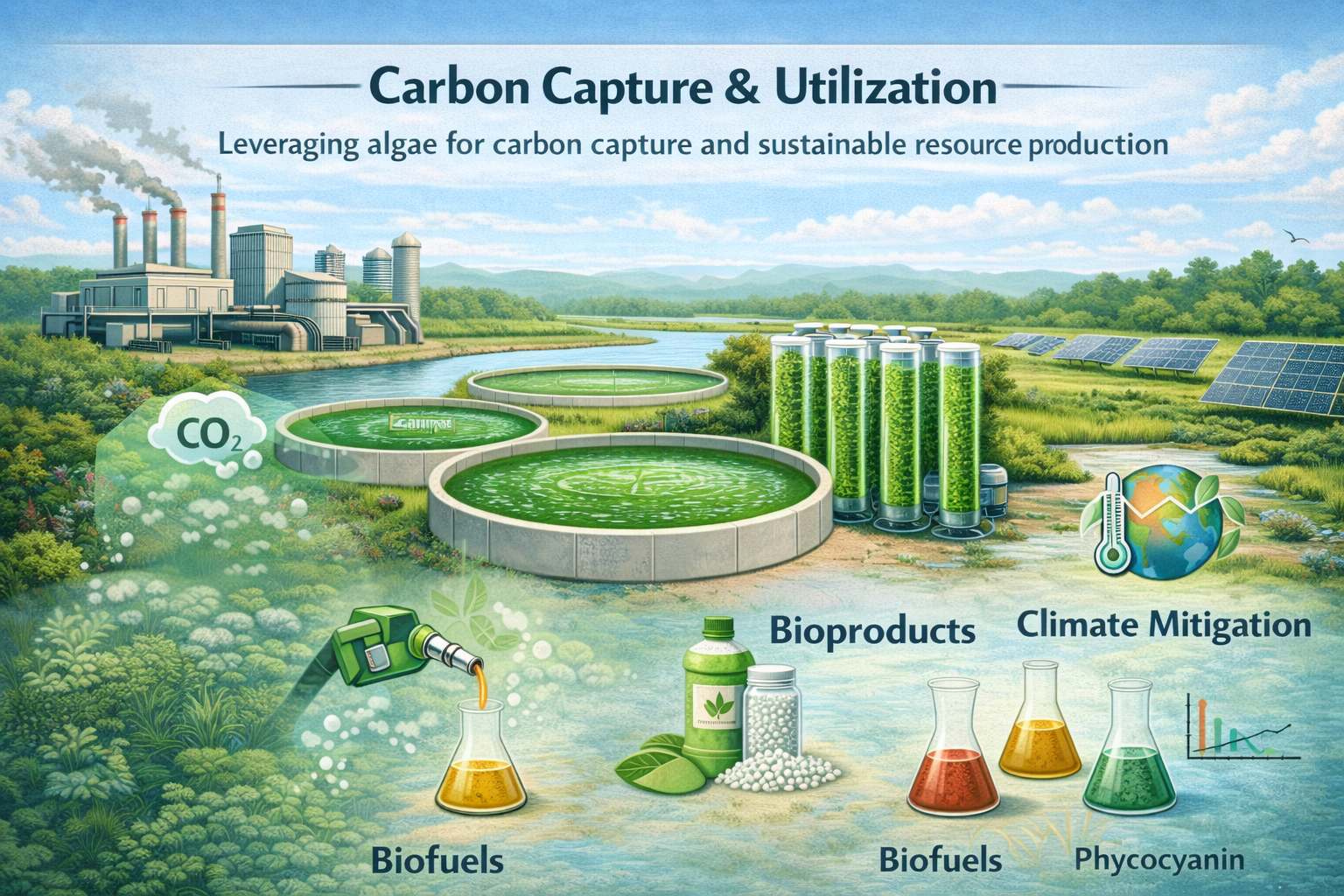
Efficient carbon dioxide delivery and energy infrastructure are also important for large-scale HRAP operations. Facilities located near power plants, cement plants, biogas facilities, breweries, or industrial emission sources can utilize flue gas as a low-cost CO2 supply for algae cultivation. Since algae growth depends heavily on carbon availability, integrating industrial carbon streams can significantly improve productivity while supporting carbon capture goals. Infrastructure such as paddle wheels, aeration systems, harvesting equipment, sedimentation tanks, and automated monitoring systems must also be designed for continuous operation at industrial scale. Increasingly, HRAP facilities are adopting AI-based monitoring and sensor technologies to optimize pH, dissolved oxygen, nutrient concentration, and biomass growth in real time.
Finally, land characteristics and environmental stability strongly influence long-term HRAP success. Ideal sites have flat topography, low flood risk, good soil stability, and access to transportation networks and electricity infrastructure. Regions with moderate evaporation rates and limited extreme weather events are preferred because excessive evaporation, storms, or heavy rainfall can disrupt pond stability and water balance. Governments in several countries are also encouraging algae-based wastewater treatment and carbon utilization projects through climate and circular economy initiatives. As industries increasingly seek low-carbon wastewater treatment and carbon capture solutions, HRAP facilities are expected to become an important part of sustainable industrial and environmental infrastructure worldwide.