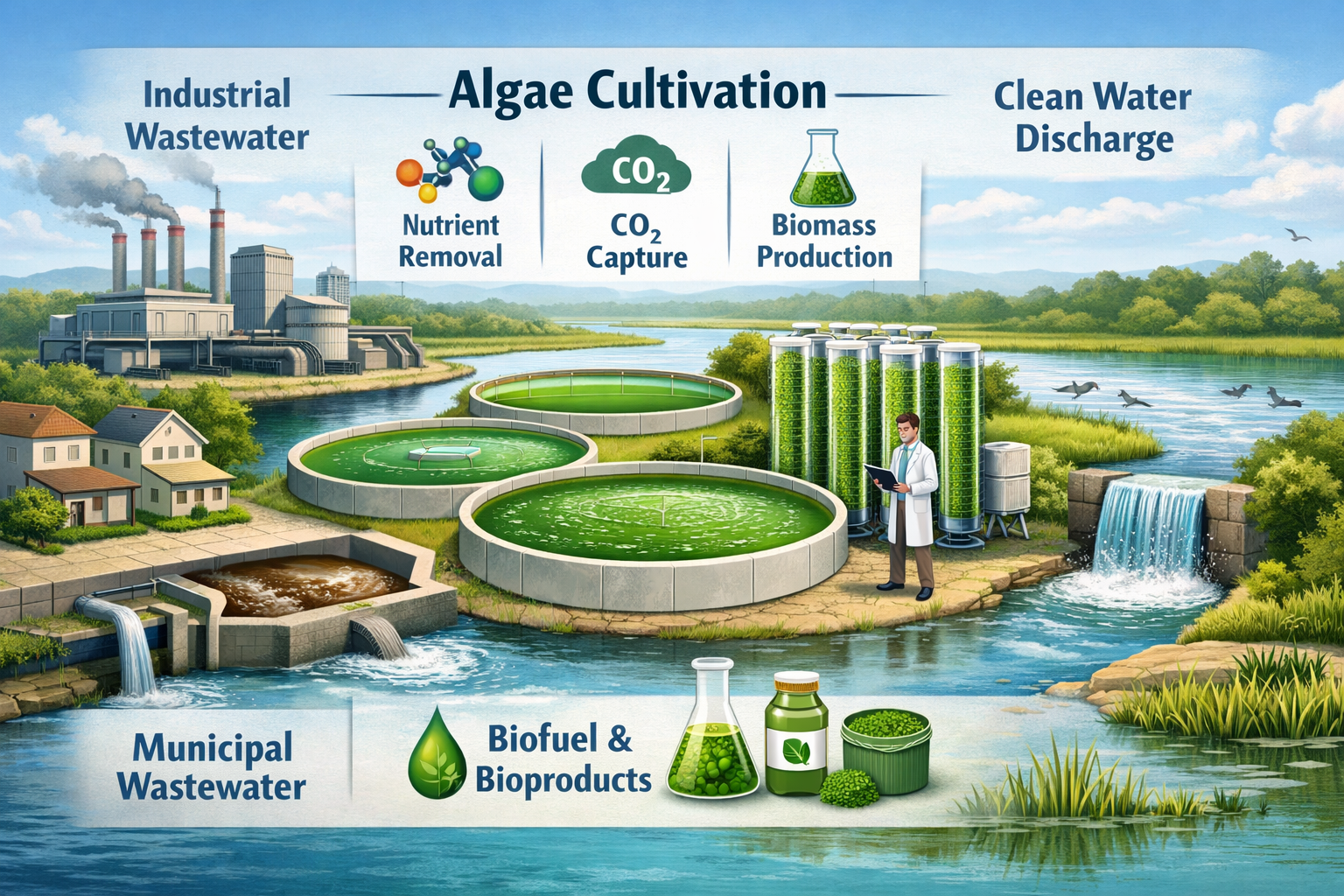
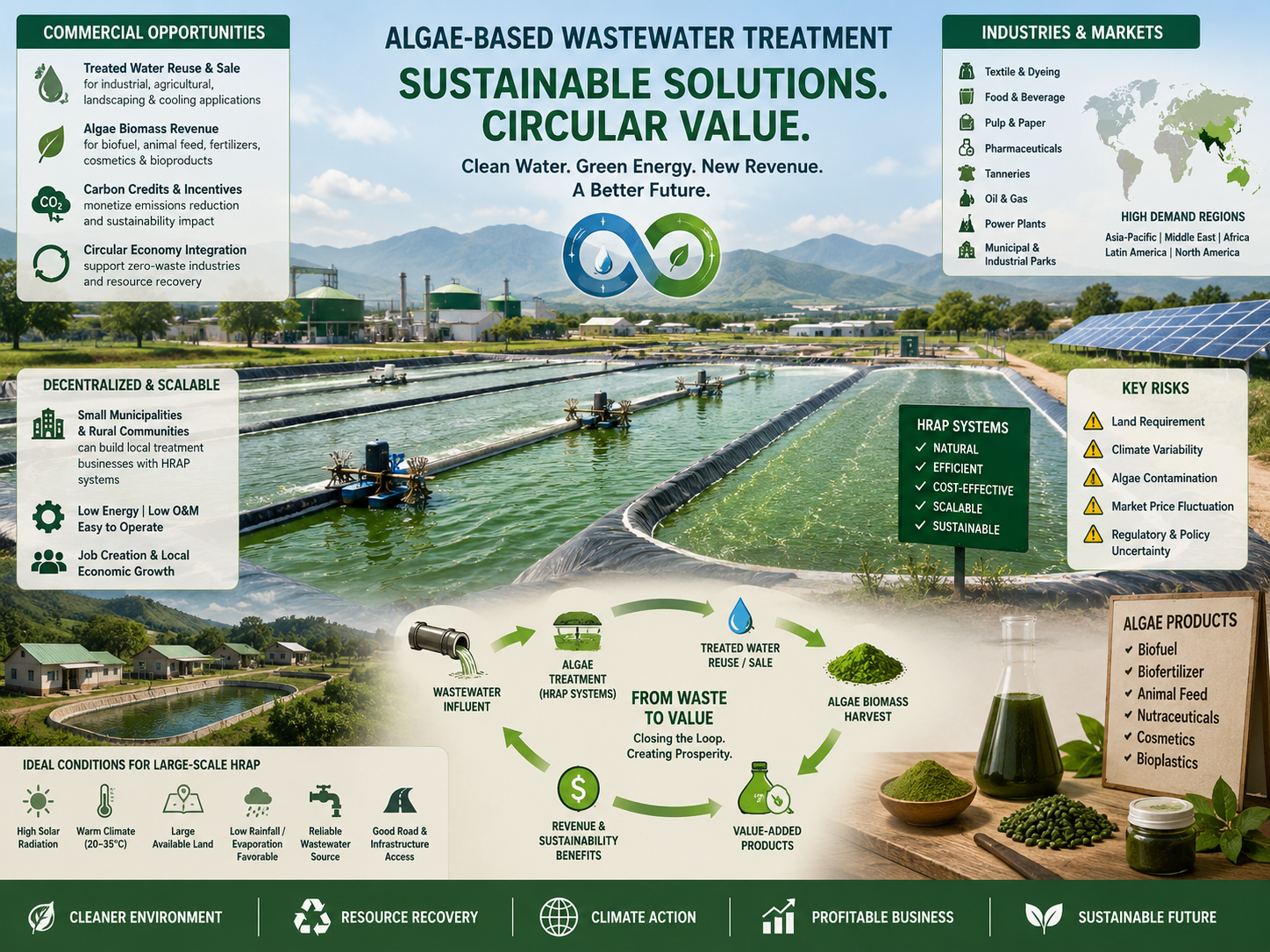
The industries most likely to adopt algae-based wastewater treatment first are those that produce nutrient-rich, biodegradable effluents and also face pressure to reduce discharge costs and reuse water. Globally, wastewater treatment still has a major gap: UN-Water says only 38% of industrial wastewater is safely treated, while the untapped potential for wastewater reuse is about 320 billion m³ per year. That combination makes algae attractive because microalgae can remove nitrogen and phosphorus while turning wastewater into biomass.
Food and beverage processing is one of the strongest future adopters. Reviews describe food-processing wastewater as relatively safe for microalgae because it is typically rich in organic matter, fats, and nutrients but has lower toxicity than many chemical industries. That makes it suitable for algae systems that recover nutrients and produce valuable biomass at the same time. Within this category, dairy plants, breweries, starch processors, and meat-processing facilities are especially promising because their wastewater often contains high COD, BOD, nitrogen, and phosphorus loads that algae can capture efficiently.
Aquaculture is another likely high-growth sector. FAO reported that global fisheries and aquaculture production reached 223.2 million tonnes in 2022, with aquaculture producing 130.9 million tonnes and now supplying more than half of farmed aquatic animal production. Because aquaculture effluent is rich in ammonia, nitrate, and phosphate, microalgae are a natural fit for nutrient polishing and reuse. As aquaculture continues to expand through 2034, algae-based treatment is likely to spread in hatcheries, shrimp farms, recirculating systems, and intensive fish farms.
Agriculture and livestock operations are also strong candidates, especially large dairies, pig farms, and mixed farm effluent systems. Reviews show that agricultural wastewater is increasingly studied for microalgae cultivation because it supplies nitrogen and phosphorus while reducing disposal pressure. Livestock manure streams are also attractive in regions where nutrient runoff is tightly regulated, since algae can help cut eutrophication risk and potentially generate biomass for fertilizers or energy recovery. This is particularly relevant in countries pursuing circular agriculture and nutrient recycling.
A final likely adopter group is pulp and paper and broader industrial wastewater operators, especially where source-separated streams can be pretreated before algae use. These sectors generate large volumes of wastewater with organic load, color, and solids, and algae-based systems are increasingly discussed as a polishing or tertiary step rather than a complete replacement for conventional treatment. In the future, adoption will likely be strongest where companies can combine compliance, water reuse, and biomass value. So the leading global adopters are most likely to be food and beverage, dairy, aquaculture, agriculture/livestock, and selected industrial sectors such as pulp and paper, with municipalities following where reuse and nutrient removal become economic priorities.