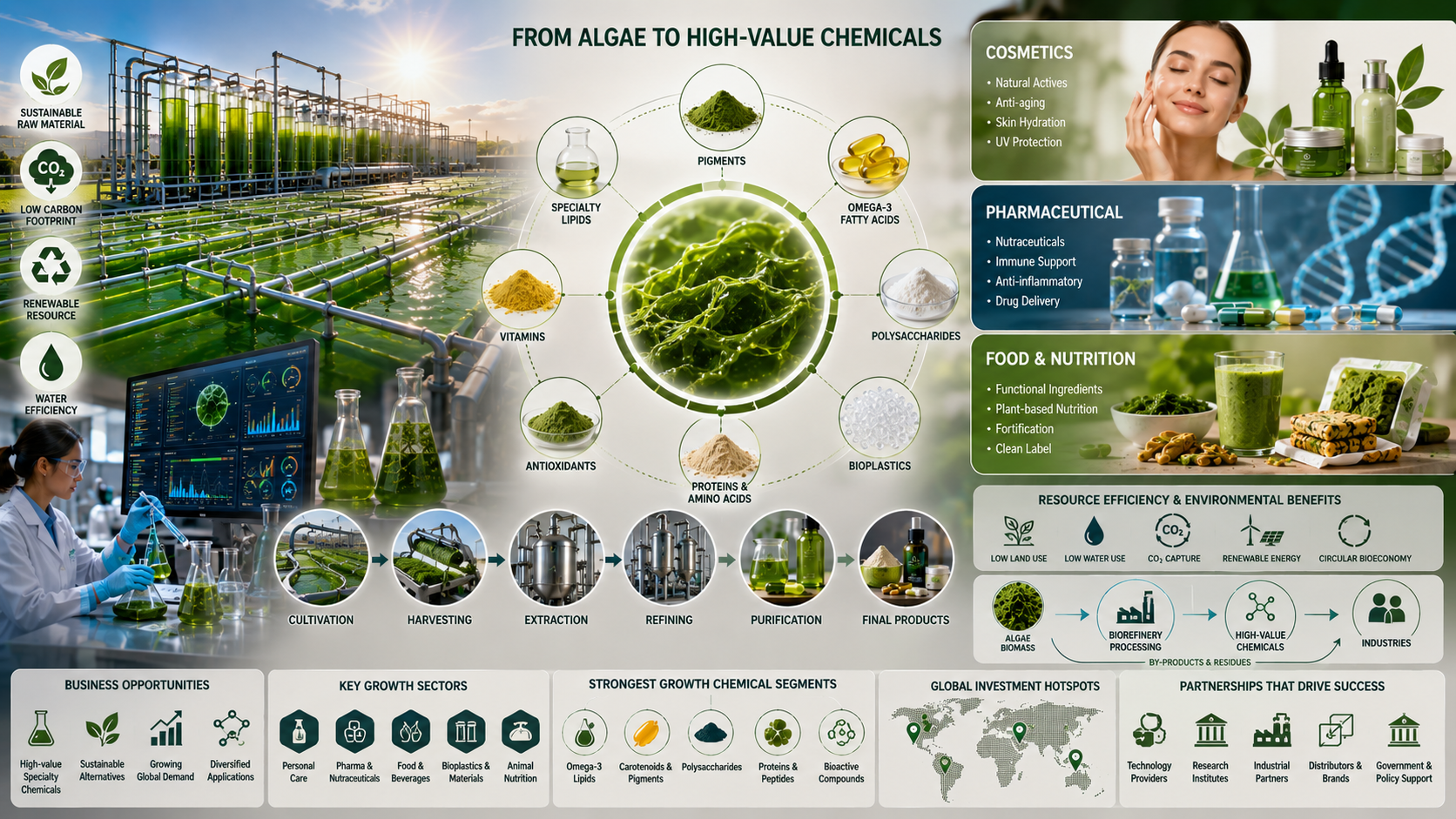
The most important partnerships for scaling algae-based chemical businesses are those that connect feedstock supply, production, processing, and market access. The sector is growing, with the global algae-based chemical market estimated at USD 4.1 billion in 2025 and projected to keep expanding, but scale is still constrained by cost and execution risk. In practice, the companies that grow fastest are the ones that build multi-partner ecosystems rather than trying to do everything in-house.
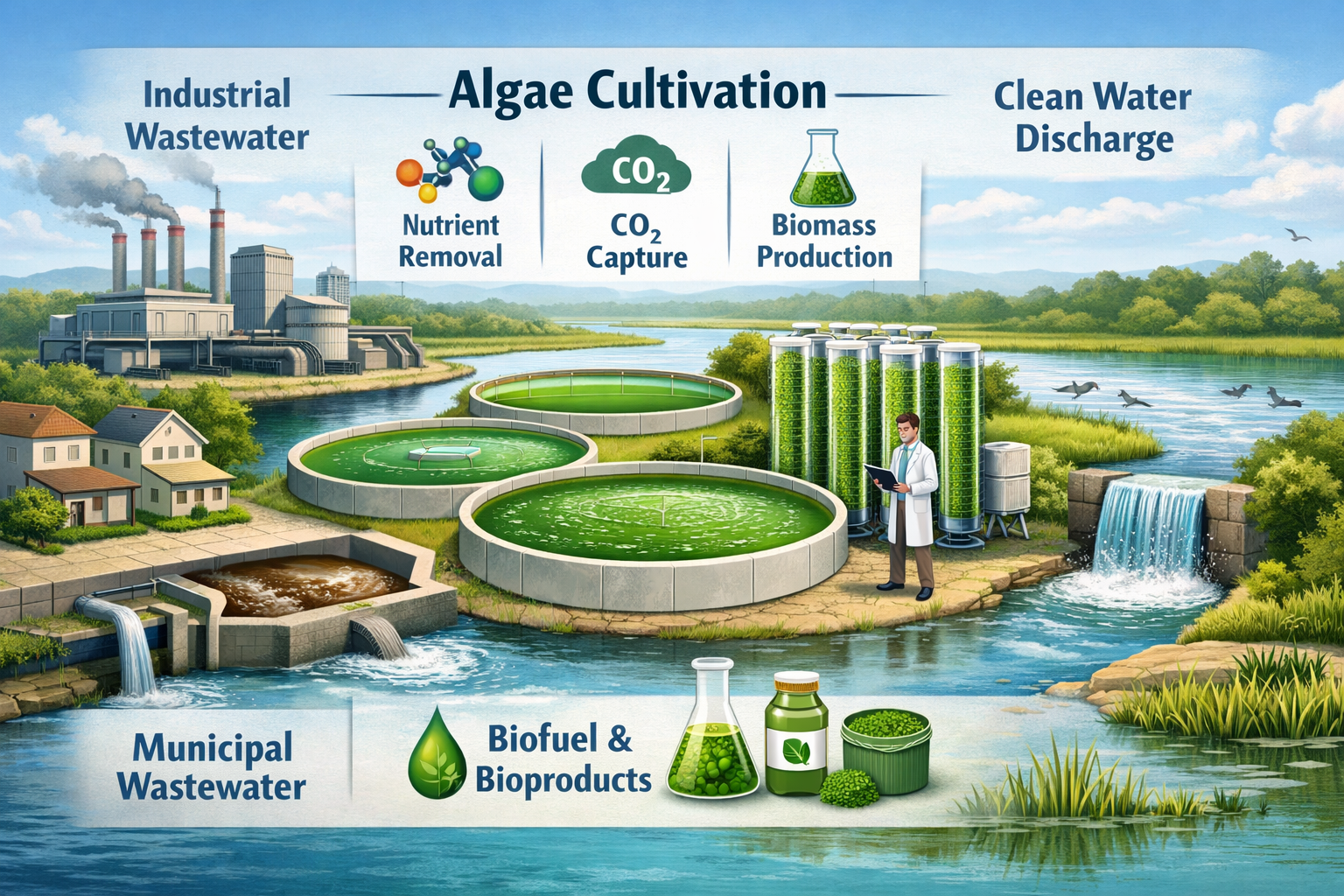
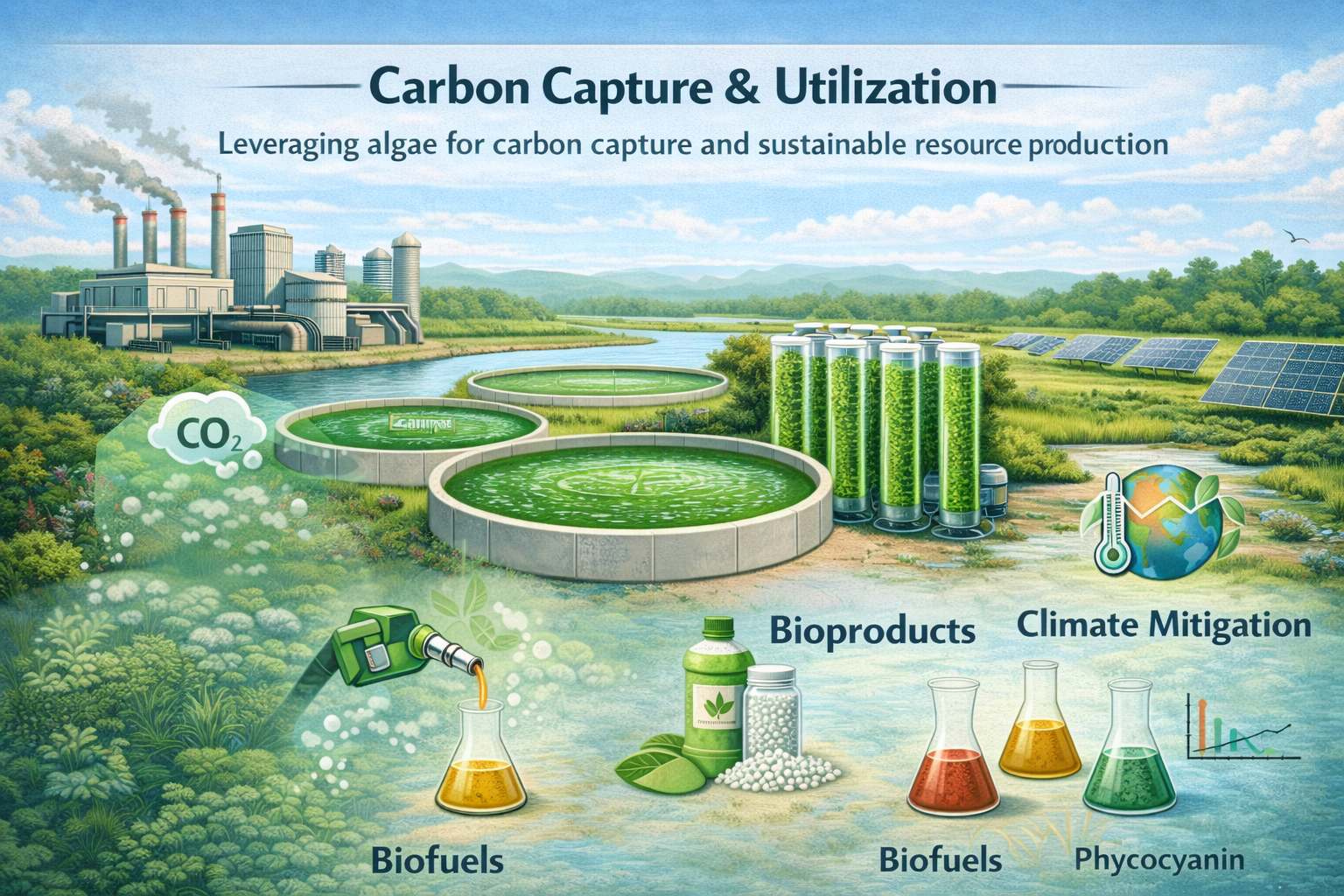
First, partnerships with industrial CO₂ emitters, wastewater operators, and utility providers are essential. Microalgae can use waste gas and wastewater as inputs, while simultaneously removing CO₂, nitrogen, phosphorus, and other pollutants, which improves both economics and sustainability. This is especially important because algae cultivation becomes more competitive when it is co-located with facilities that supply free or low-cost carbon and nutrients. These circular-input partnerships are one of the clearest routes to lower operating costs.
Second, R&D and pilot-scale partnerships with universities, public testbeds, and applied research centers are critical because algae chemistry still needs strain improvement, process optimization, and scale-up validation. Public-private test environments and pilot platforms help companies move from lab-scale strains to commercially robust systems through metabolic modeling, productivity optimization, and pilot verification. This matters because many promising algae products fail not on biology, but on the transition from controlled experiments to reliable industrial operation.
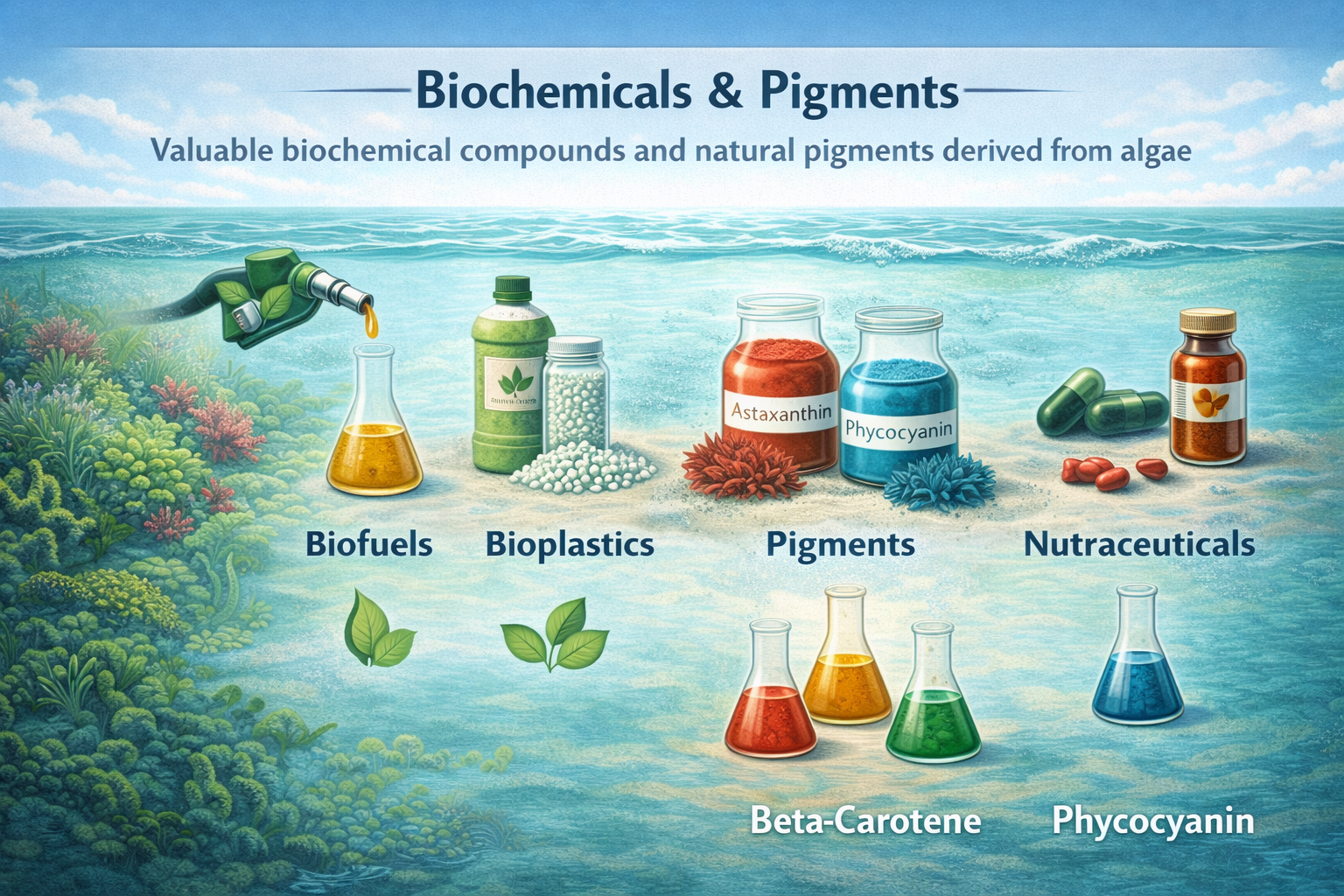
Third, scaling requires partnerships with contract manufacturers, downstream processors, and biorefinery operators. The main commercial logic is to convert biomass into multiple outputs—such as pigments, proteins, lipids, biochemicals, and residual energy products—instead of relying on a single product stream. Reviews of algal biorefineries show that conversion technology and coproduct recovery are central to increasing commercial value, and integrated biorefinery models are repeatedly highlighted as the most viable path to profitability.
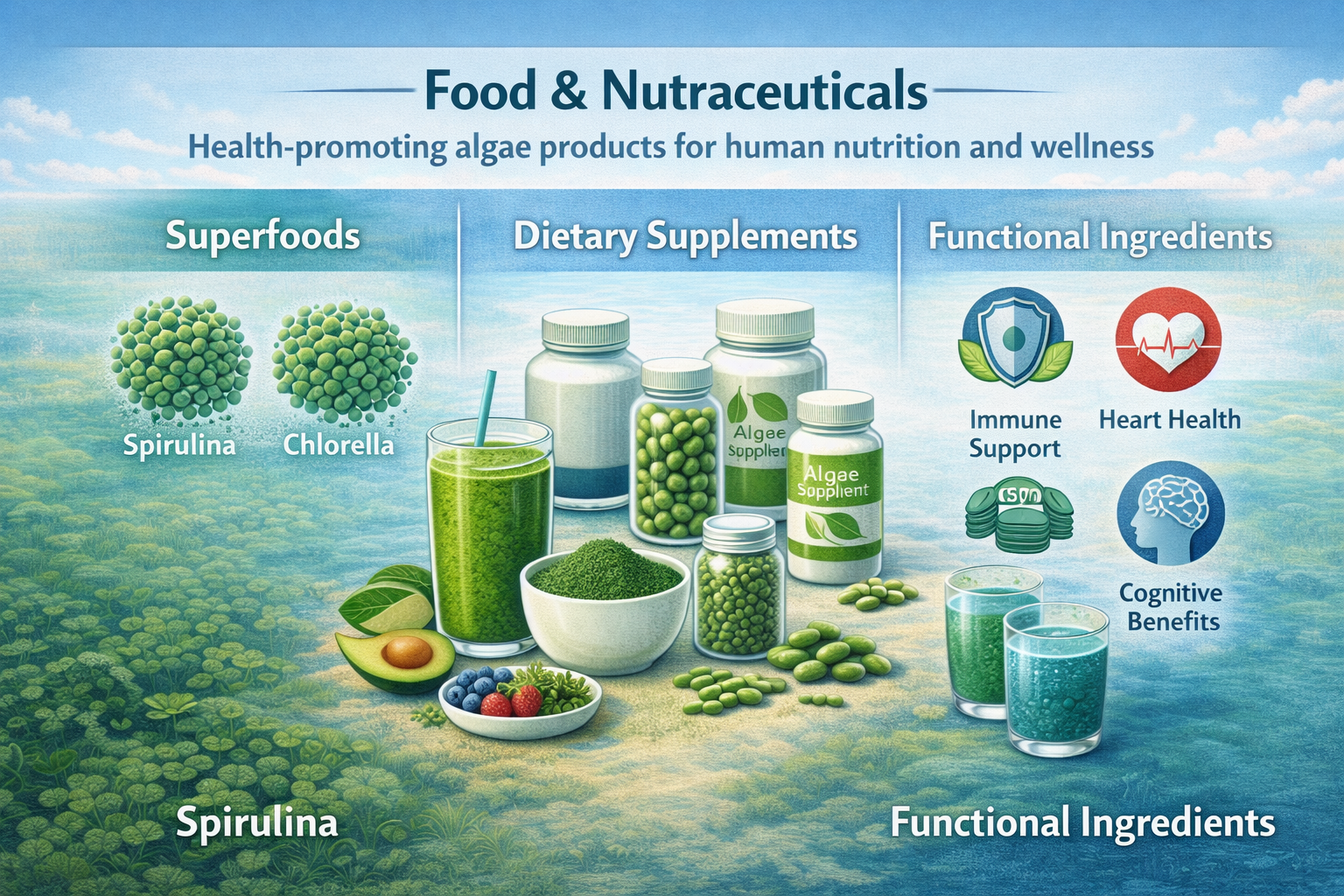
Finally, algae businesses need partnerships for off-take, certification, and distribution with brands in food, cosmetics, pharmaceuticals, and specialty chemicals. These buyers provide the recurring demand needed to justify investment in large-scale capacity, while regulatory and quality partners help meet global standards for purity, traceability, and safety. Partnerships are especially valuable in regions with strong algae growth conditions, including arid and sunny markets, where algae can support food security, decarbonization, and industrial diversification. In short, the winning model is a cluster of partners, not a standalone factory.