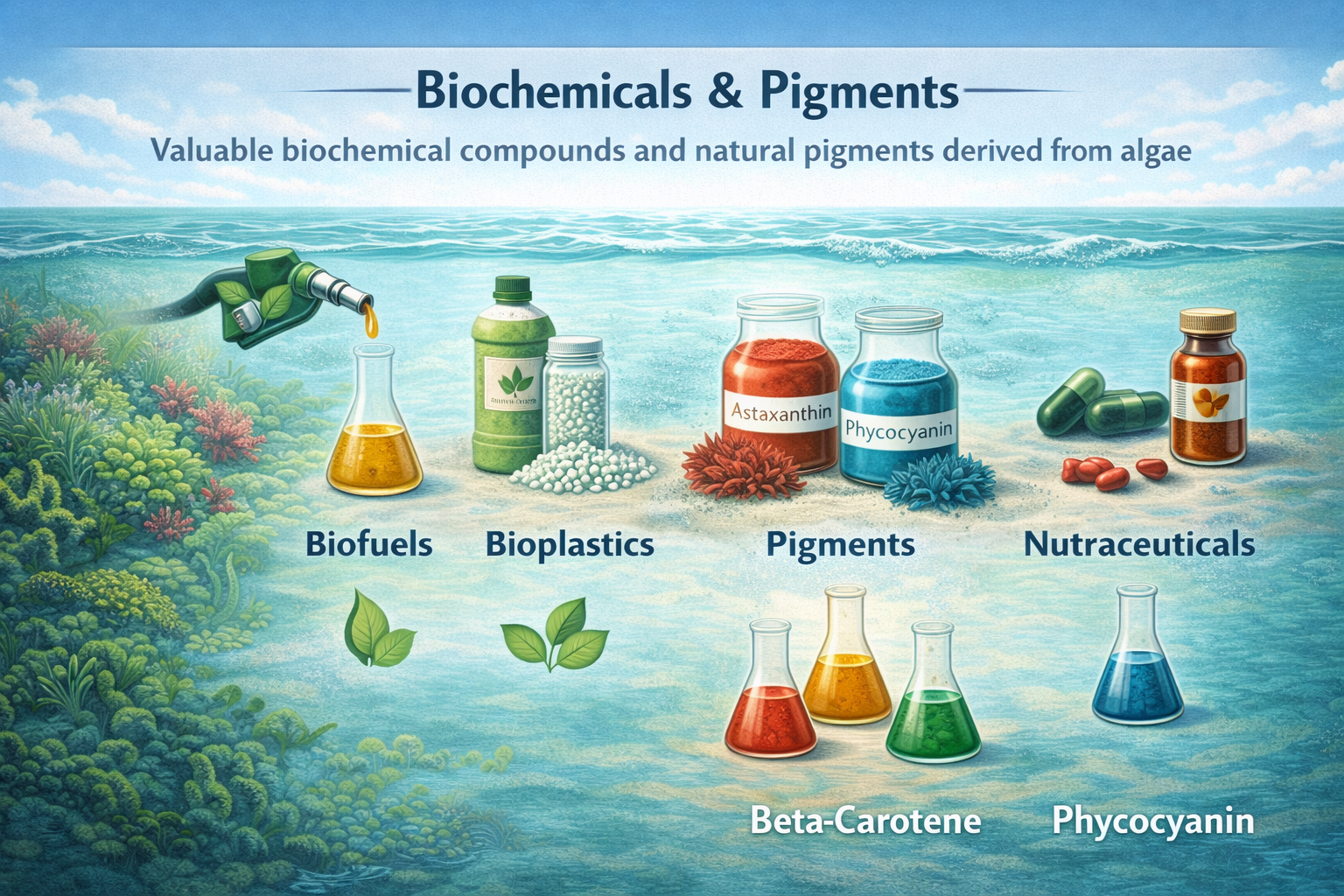
Algae-based chemicals can be integrated across industries because algae provide a versatile mix of polysaccharides, pigments, lipids, proteins, vitamins, and carotenoids. The most commercially important seaweed-derived compounds include alginate, agar, and carrageenan, which are already used as industrial hydrocolloids. FAO notes that algae contribute to food and nutrition security and also support employment, showing that this is a global raw-material platform rather than a niche ingredient source.
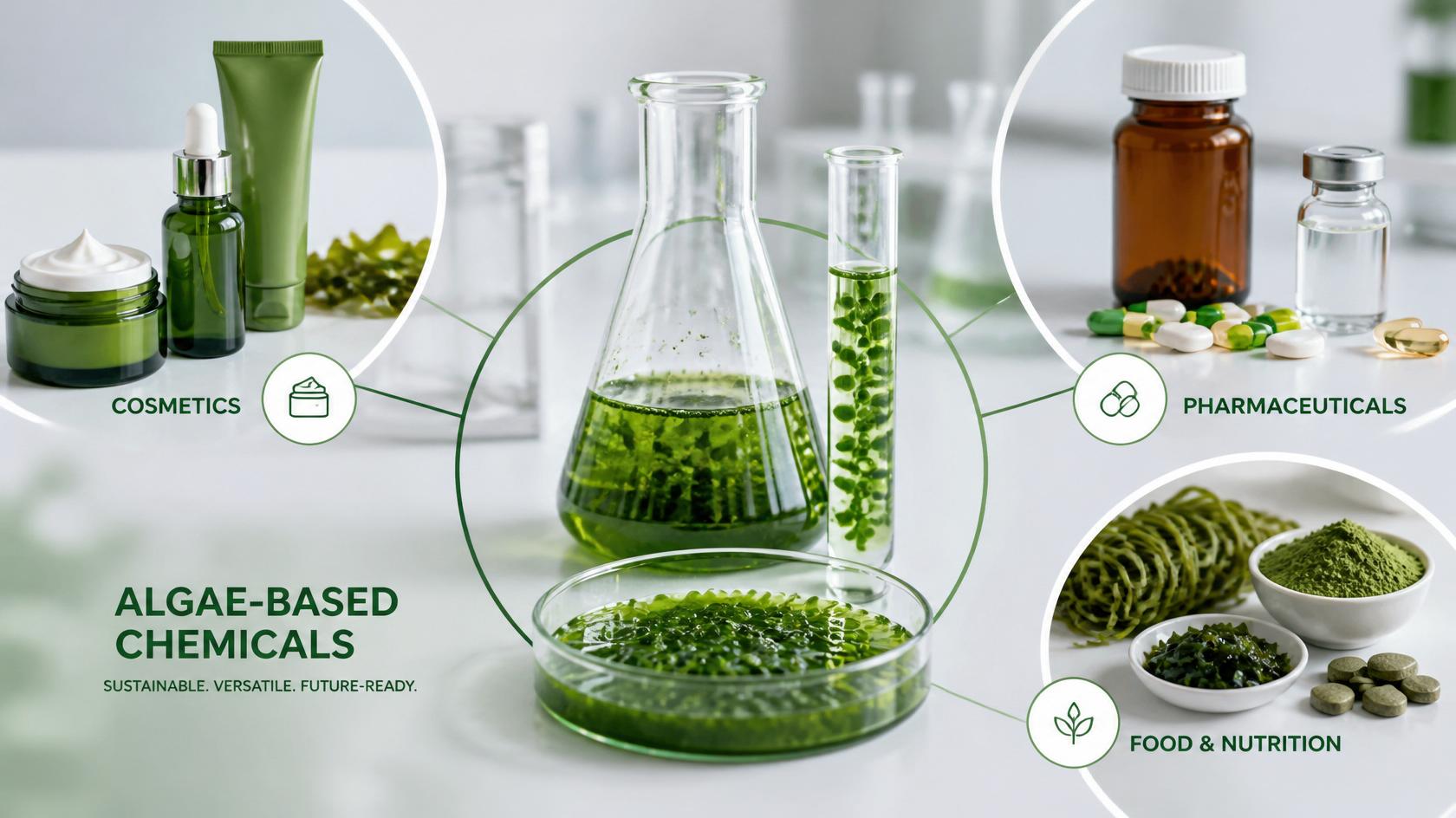
In cosmetics, algae extracts are typically incorporated as humectants, film-formers, thickeners, antioxidants, and photoprotective actives in creams, serums, masks, and sunscreens. Recent reviews and patent analyses show strong interest in marine-derived algae for skin hydration, barrier support, anti-aging, pigmentation control, and protection from environmental stress. In practice, manufacturers usually standardize the extract to specific bioactives, such as sulfated polysaccharides or carotenoid-rich fractions, to keep performance consistent across batches.
In pharmaceuticals, algae-based chemicals are valuable because many of them are biocompatible, biodegradable, and easy to formulate into gels, capsules, microspheres, and wound products. Reviews show that carrageenan and alginate are widely studied for drug delivery, controlled release, wound dressings, tissue engineering, and even gene delivery, while modified alginates can be tuned chemically to change release behavior and stability. This makes algae-derived materials useful both as excipients and as active biomedical platforms.
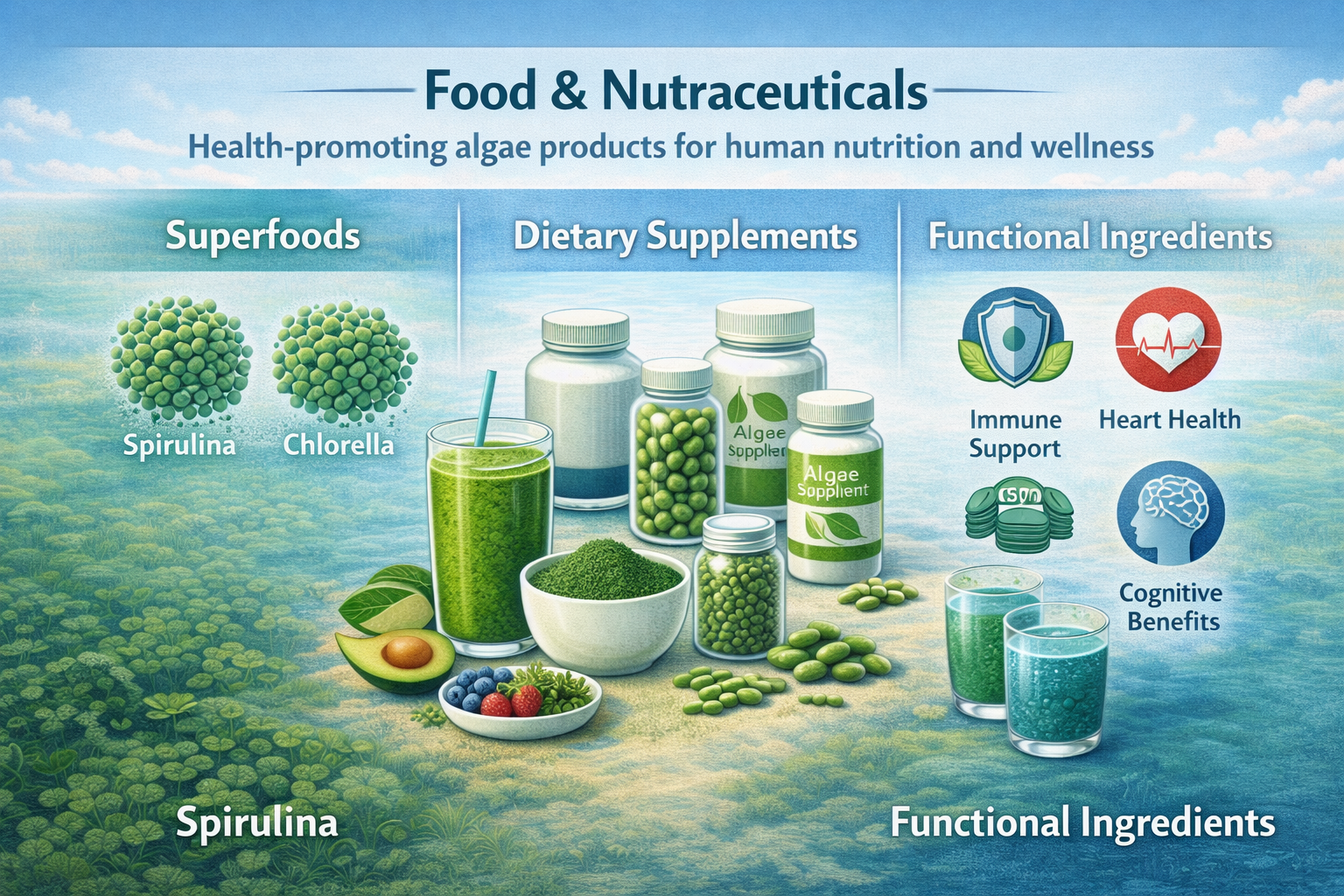
In the food industry, algae chemicals are already mainstream as emulsifiers, stabilizers, thickeners, gelling agents, and natural colors. The FDA lists sodium alginate for use as an emulsifier, stabilizer, texturizer, and processing aid, and in May 2025 it approved Galdieria extract blue, a blue color derived from the red alga Galdieria sulphuraria, for a wide range of foods and beverages. Seaweed hydrocolloids are also a globally traded category, with agar, alginate, and carrageenan forming the core ingredient set.
To integrate algae-based chemicals successfully, companies need a biorefinery model: choose the right strain, use green or enzyme-assisted extraction, purify and standardize the active fraction, and validate safety and regulatory compliance for each market. Global commercialization depends on controlling contaminants, batch variability, taste or color issues, and product-specific limits set by regulators such as FDA and EFSA. The strongest business model is often a multi-output one, where the same algae biomass yields food ingredients, cosmetic actives, and pharmaceutical excipients, improving economics while reducing waste.