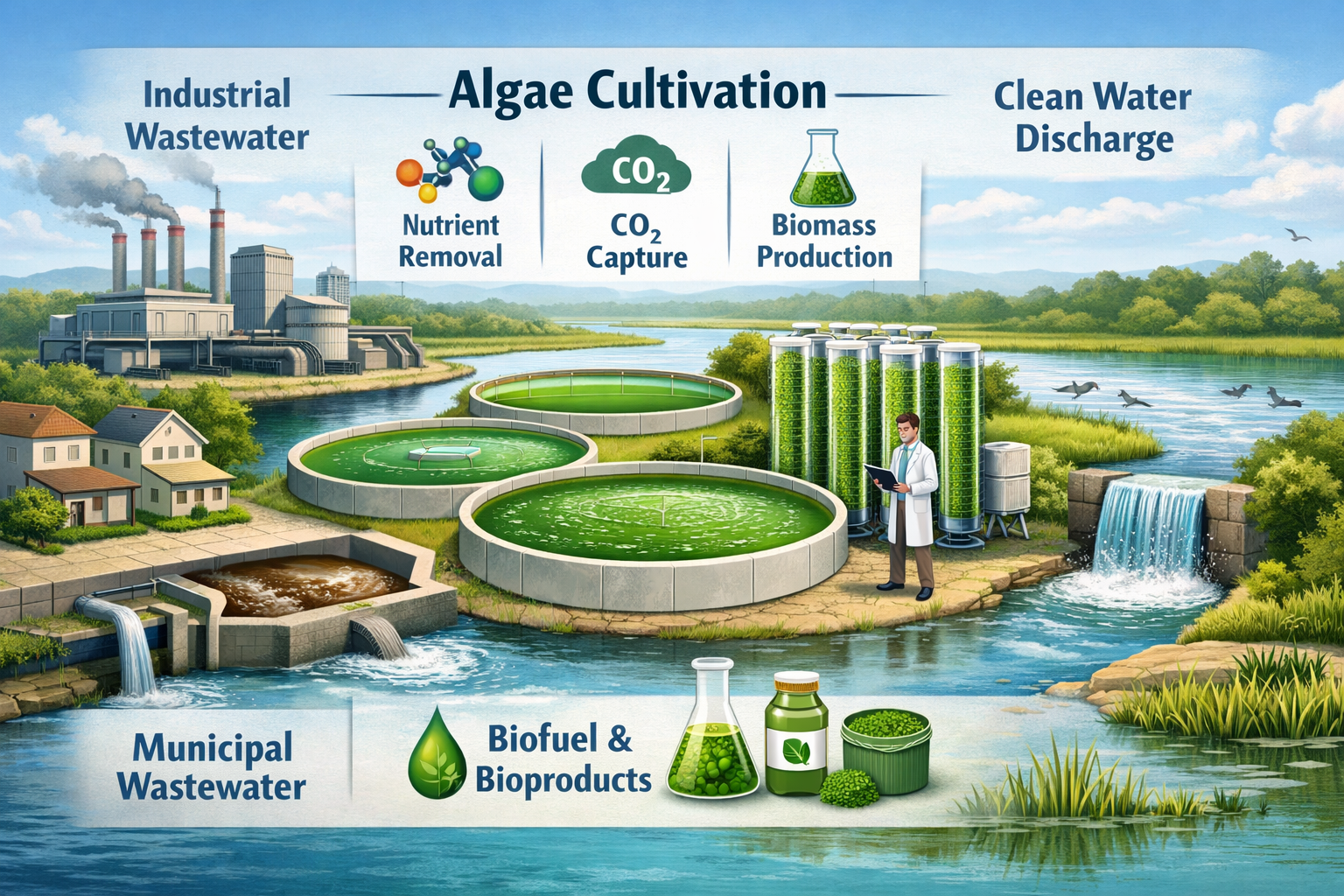

Industrial algae cultivation requires significant inputs of land, water, energy, nutrients, and carbon dioxide, but the exact requirements vary widely depending on whether production uses open ponds or closed photobioreactors (PBRs). Open raceway ponds are the dominant large-scale method because they are cheaper and easier to scale, while photobioreactors offer higher productivity but at much higher capital and energy costs. Reviews of commercial algae systems report biomass productivities commonly ranging from 10–50 g/m²/day, with some optimized systems achieving higher levels under ideal sunlight and nutrient conditions. This means industrial facilities often require large land areas to achieve meaningful output volumes.
Land demand depends heavily on the target product and cultivation technology. Large-scale assessments suggest algae biofuel systems may require roughly 2,000–5,000 hectares to produce fuel volumes comparable to major conventional biofuel plants, although algae still provide much higher theoretical yields per hectare than crops such as soybean or corn. Open pond systems are usually built on non-arable land in sunny regions to avoid competition with agriculture. Countries investing in industrial algae cultivation—including the United States, China, India, Australia, and Gulf nations—typically prioritize regions with high solar radiation and inexpensive land. However, land preparation, pond lining, and infrastructure remain major capital costs at commercial scale.
Water demand is one of the most debated issues in industrial algae cultivation. Algae require large volumes of water because cultivation systems are dilute, but many projects reduce freshwater demand by using brackish water, seawater, or wastewater. Studies from the U.S. National Renewable Energy Laboratory indicate that open pond systems can require substantial water replacement because of evaporation losses, especially in hot climates. However, algae can often utilize water unsuitable for agriculture, which improves sustainability compared with traditional crops. Wastewater integration is increasingly important because it simultaneously supplies water and nutrients while reducing treatment costs.
Energy input is another critical factor because harvesting, drying, mixing, pumping, and extraction can consume large amounts of electricity and fuel. Reviews consistently show that downstream processing—especially dewatering and drying—is among the most energy-intensive parts of the algae value chain. Open ponds generally consume less energy than photobioreactors, but they also produce lower biomass concentrations and face contamination risks. To improve economics, companies increasingly use low-energy harvesting methods, solar-powered systems, anaerobic digestion, and integrated biorefineries that recover energy from residual biomass. Commercial viability depends heavily on lowering the energy return-on-investment gap.
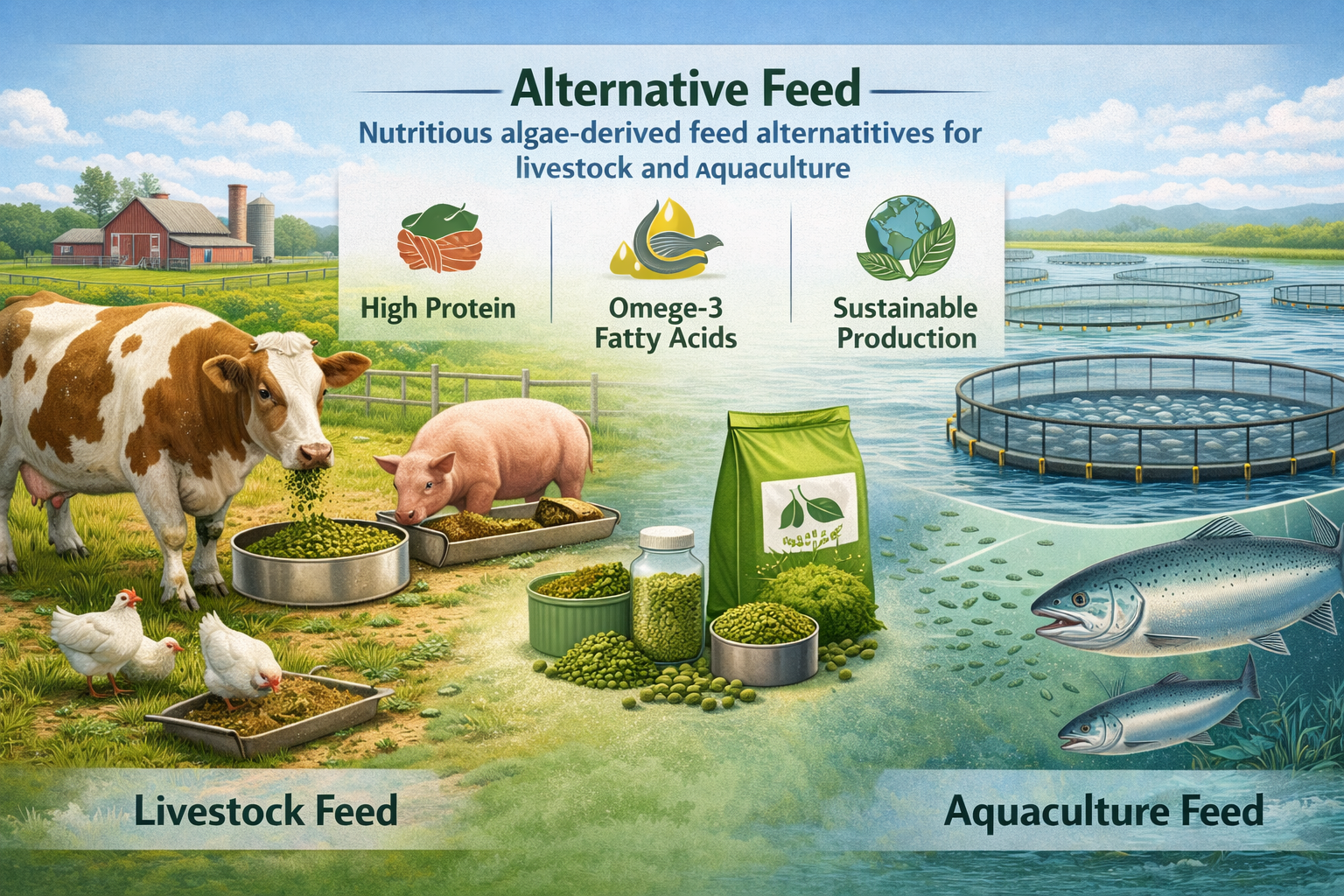
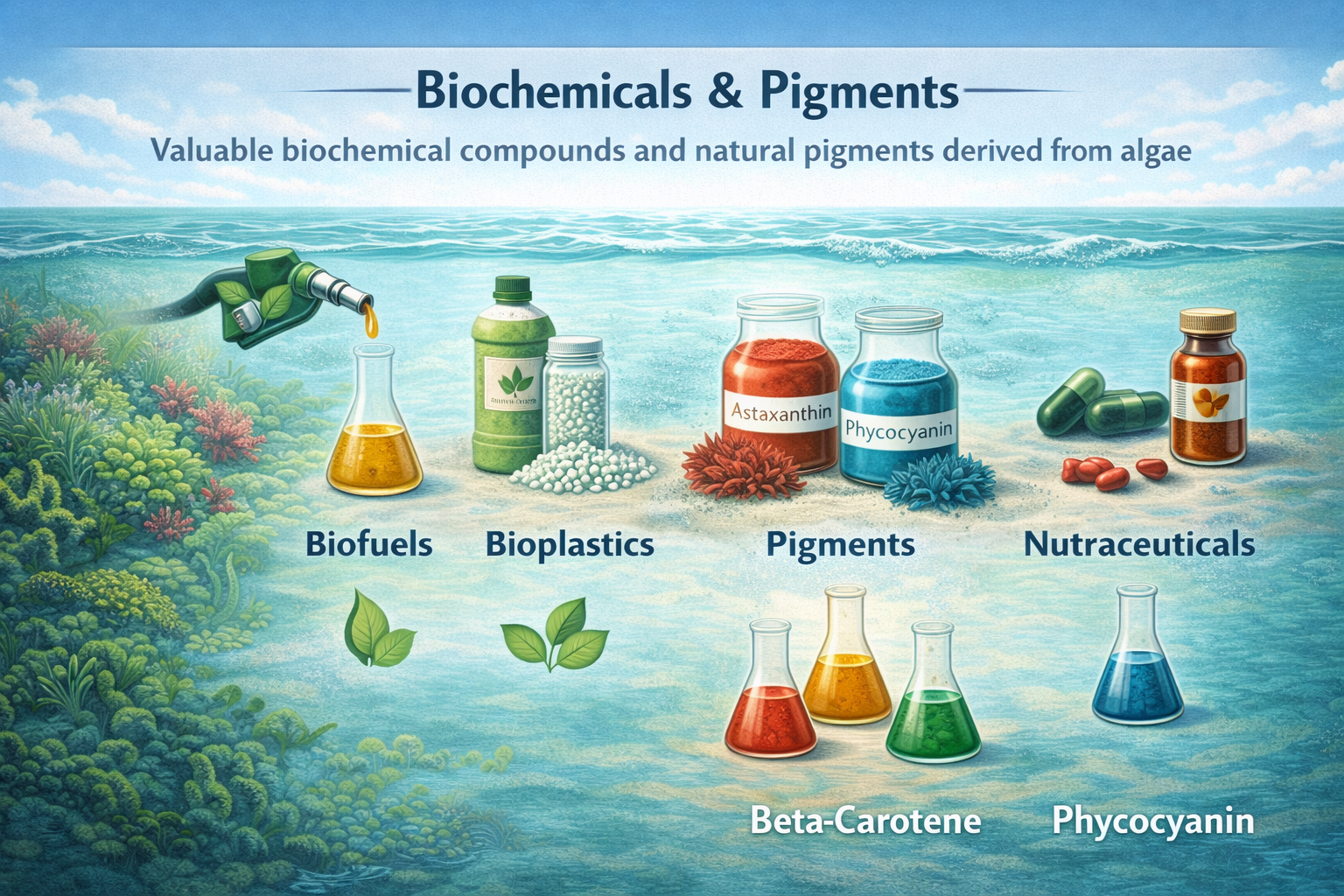
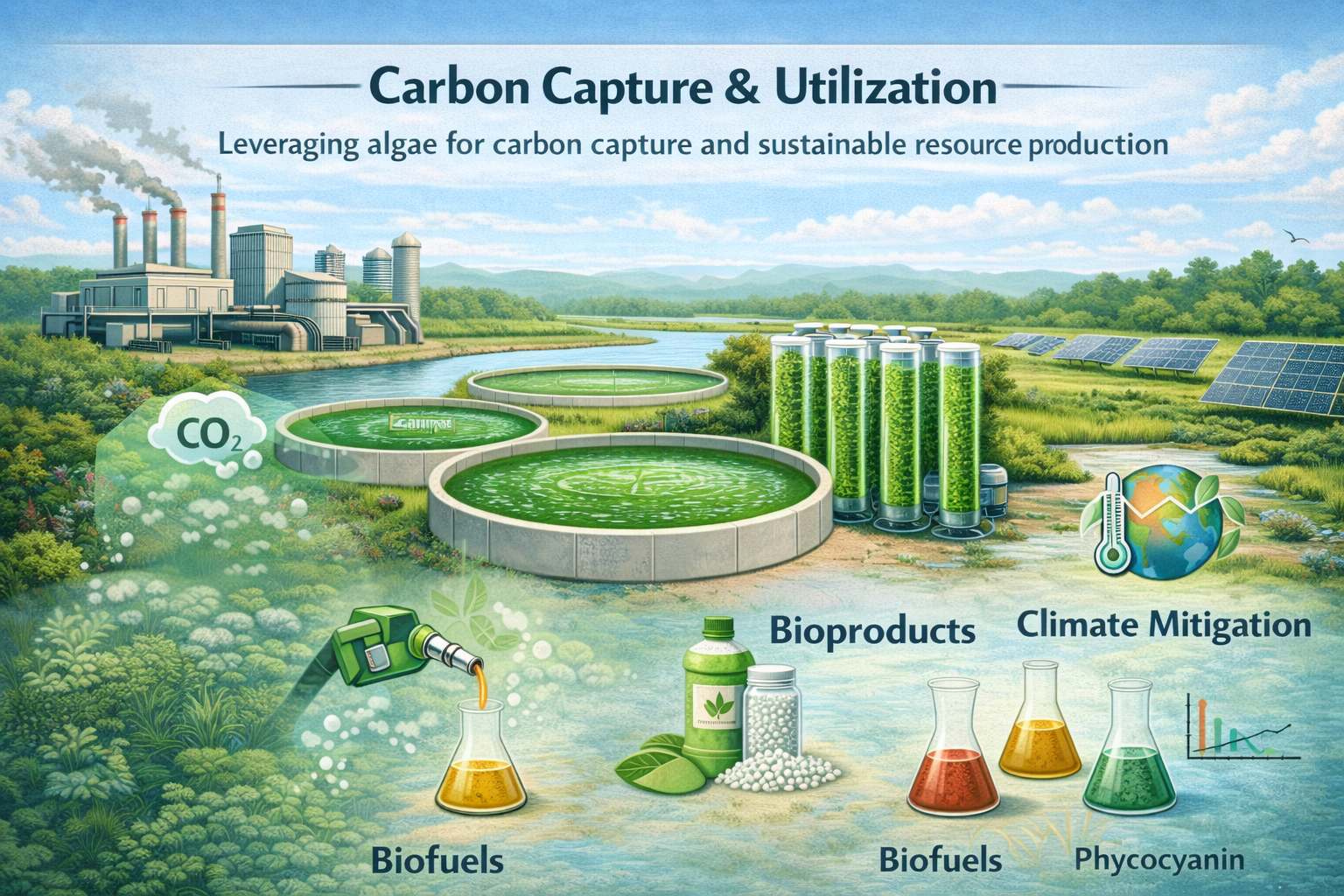
Carbon dioxide is both a requirement and an opportunity for industrial algae cultivation. Algae consume CO₂ through photosynthesis, and many industrial systems use concentrated CO₂ streams from power plants, cement factories, breweries, or industrial emissions. Studies estimate that approximately 1.8 kg of CO₂ may be consumed to produce 1 kg of algal biomass, although this varies by species and cultivation conditions. This has made algae attractive for carbon capture and utilization projects worldwide. However, the economic challenge remains balancing high operational inputs with the value of the final products, which is why high-value chemicals, nutraceuticals, and specialty feed ingredients currently dominate the commercial algae market more than bulk biofuels.