Yes—algae-based chemical businesses can become a meaningful part of the global green economy, but their biggest impact will come first in high-value specialty chemicals rather than low-margin bulk commodities. The broader algae products market is already projected to rise from USD 5.87 billion in 2025 to USD 8.07 billion by 2030, showing steady commercial momentum. That matters because the green economy rewards technologies that reduce fossil inputs, cut emissions, and create circular revenue streams, all of which algae can support.
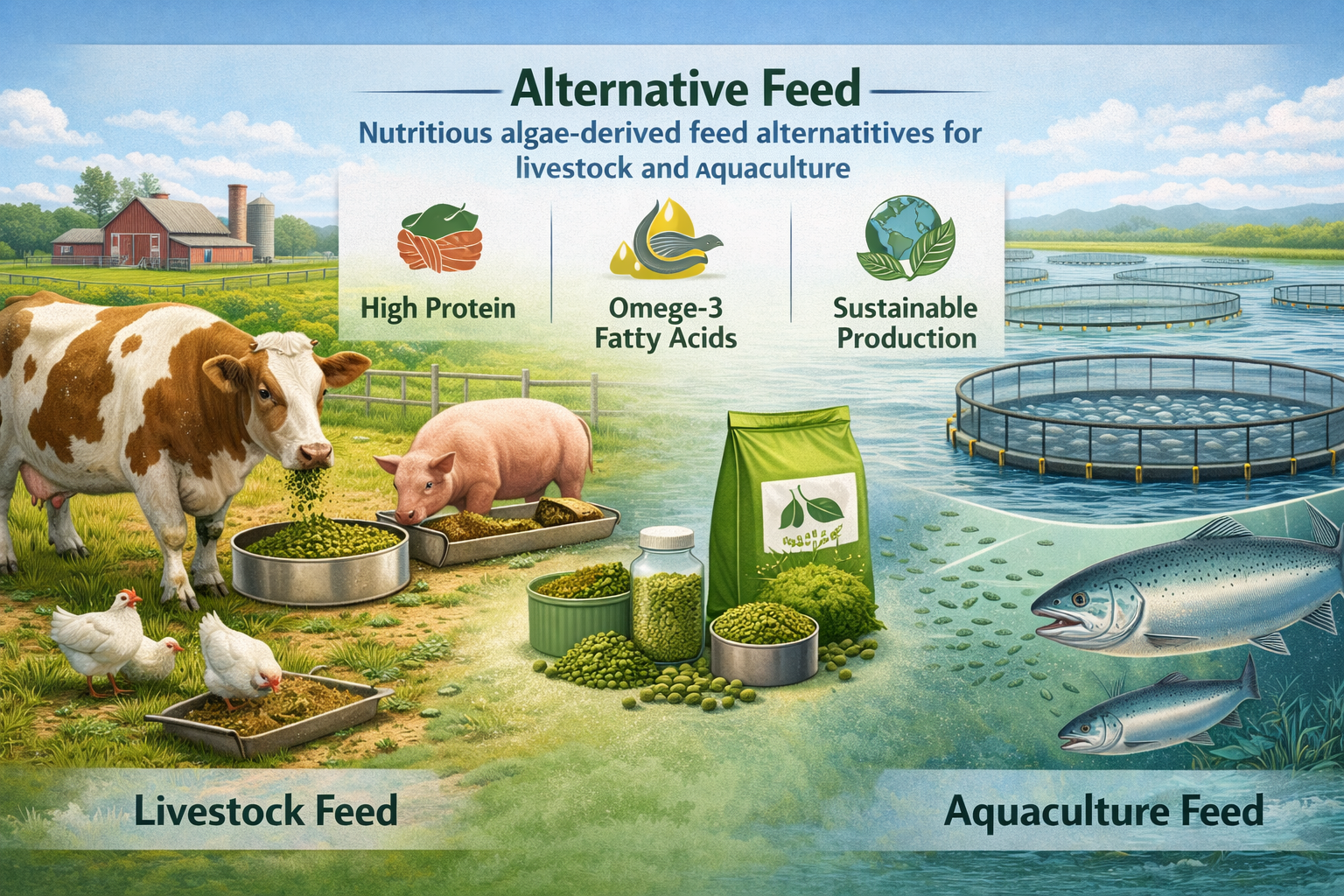
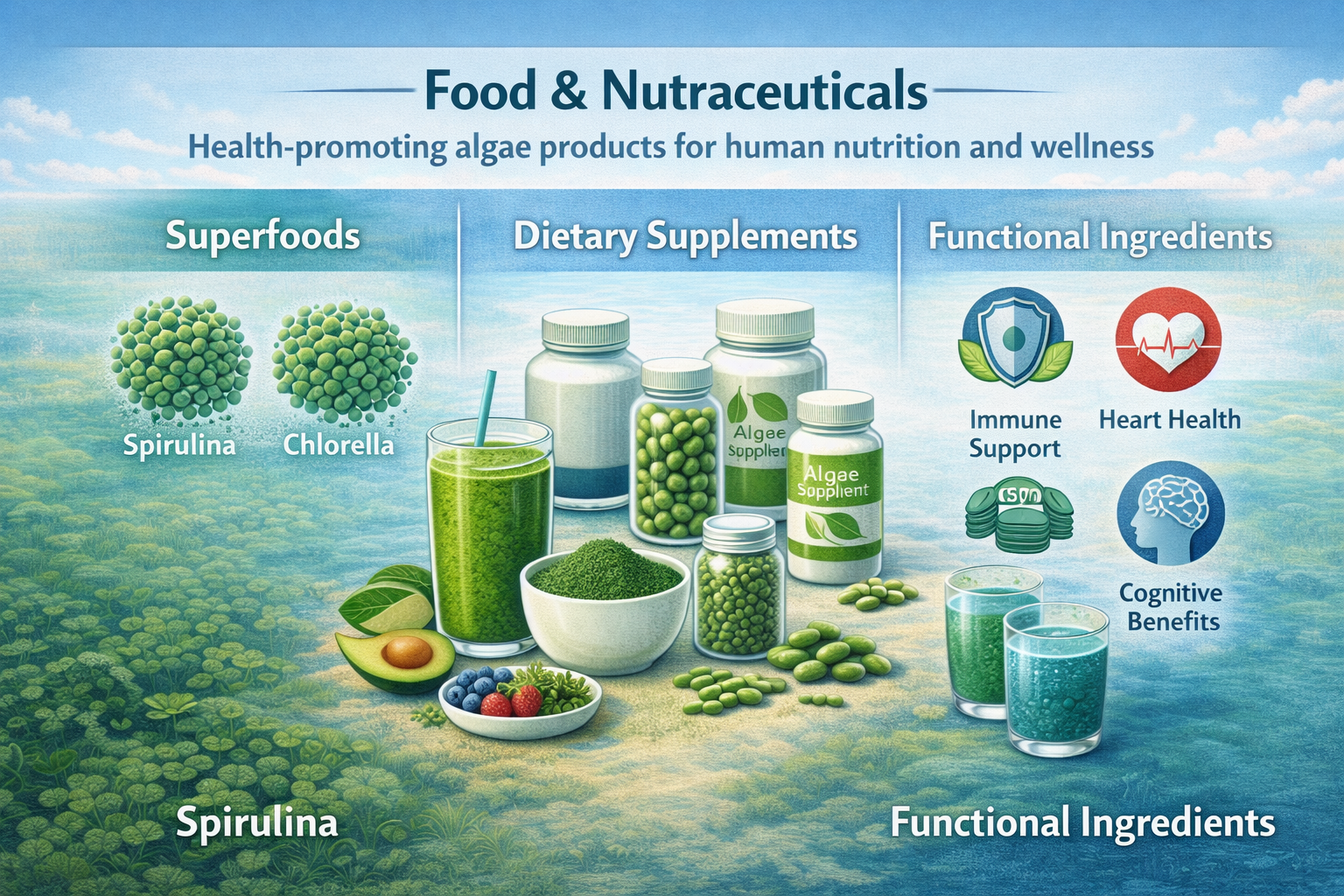
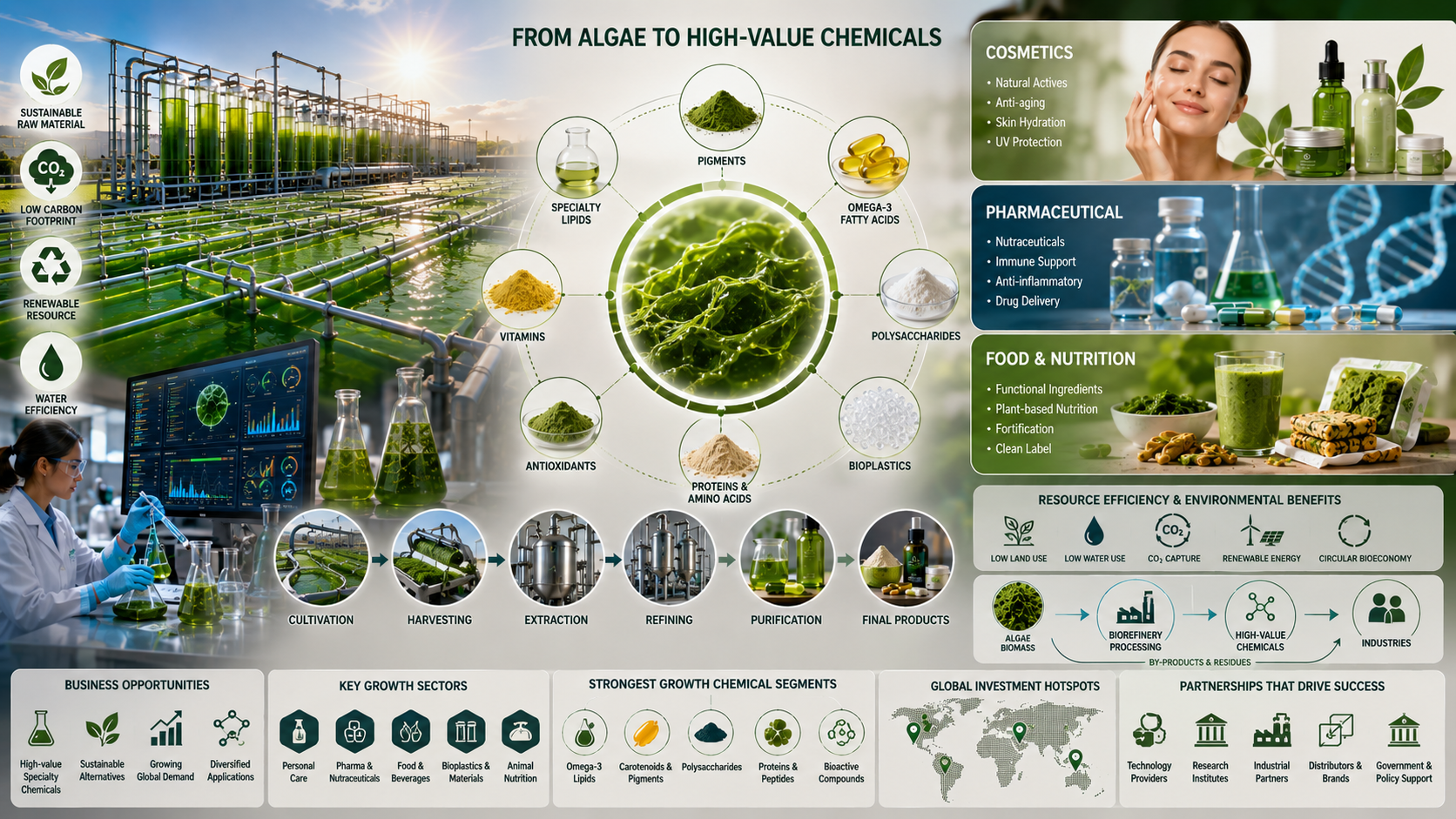
Their strongest advantage is that algae can generate multiple products from the same biomass. Microalgae are a flexible feedstock for proteins, lipids, pigments, antioxidants, hydrocolloids, and specialty intermediates, which makes them suitable for biorefinery models instead of single-product plants. This is important for profitability and scale, because a multi-output system improves margins and lowers waste. In practical terms, that means algae businesses can serve food, feed, cosmetics, pharmaceuticals, materials, and industrial chemistry at the same time.
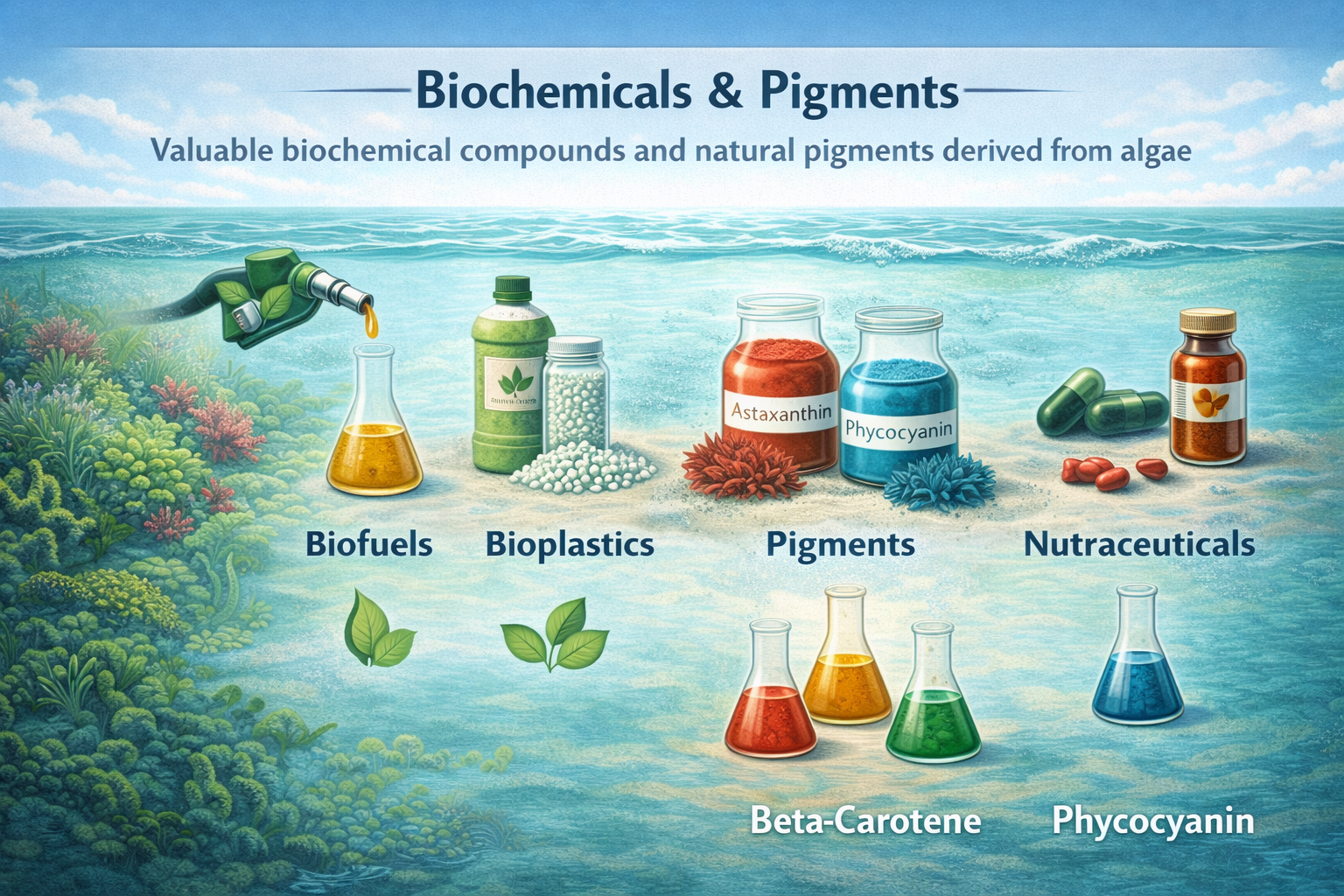
The commercial traction is already visible in several markets. Astaxanthin is projected to grow from USD 1.96 billion in 2025 to USD 4.27 billion by 2033, while algae-based bioplastics are expected to rise from USD 106.0 million in 2024 to USD 146.2 million by 2030. Algae-based building materials are projected to expand from USD 0.76 billion in 2024 to USD 2.82 billion by 2033. These numbers show that algae are not just a lab concept; they are already entering premium segments where buyers pay for sustainability, performance, and natural origin.
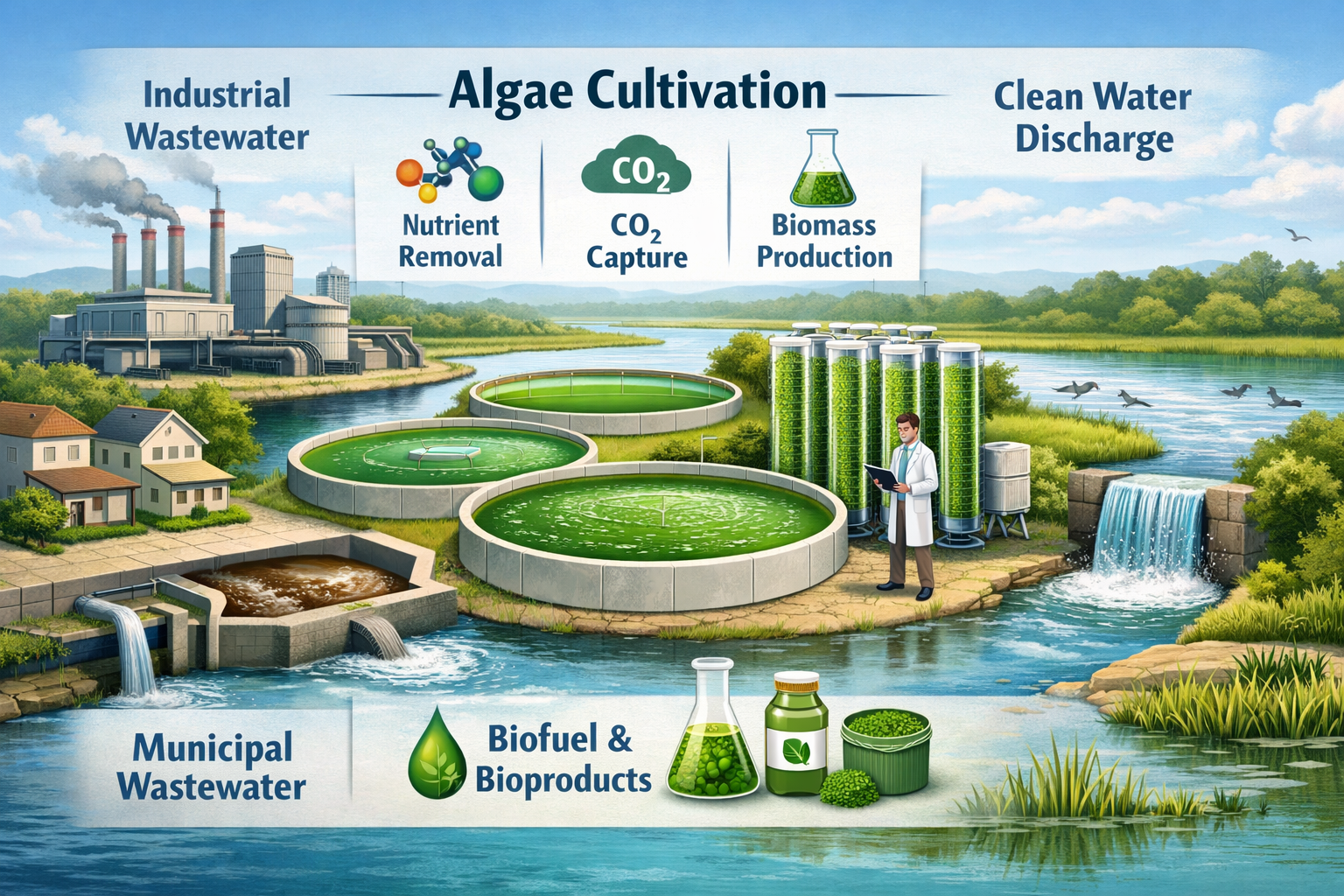
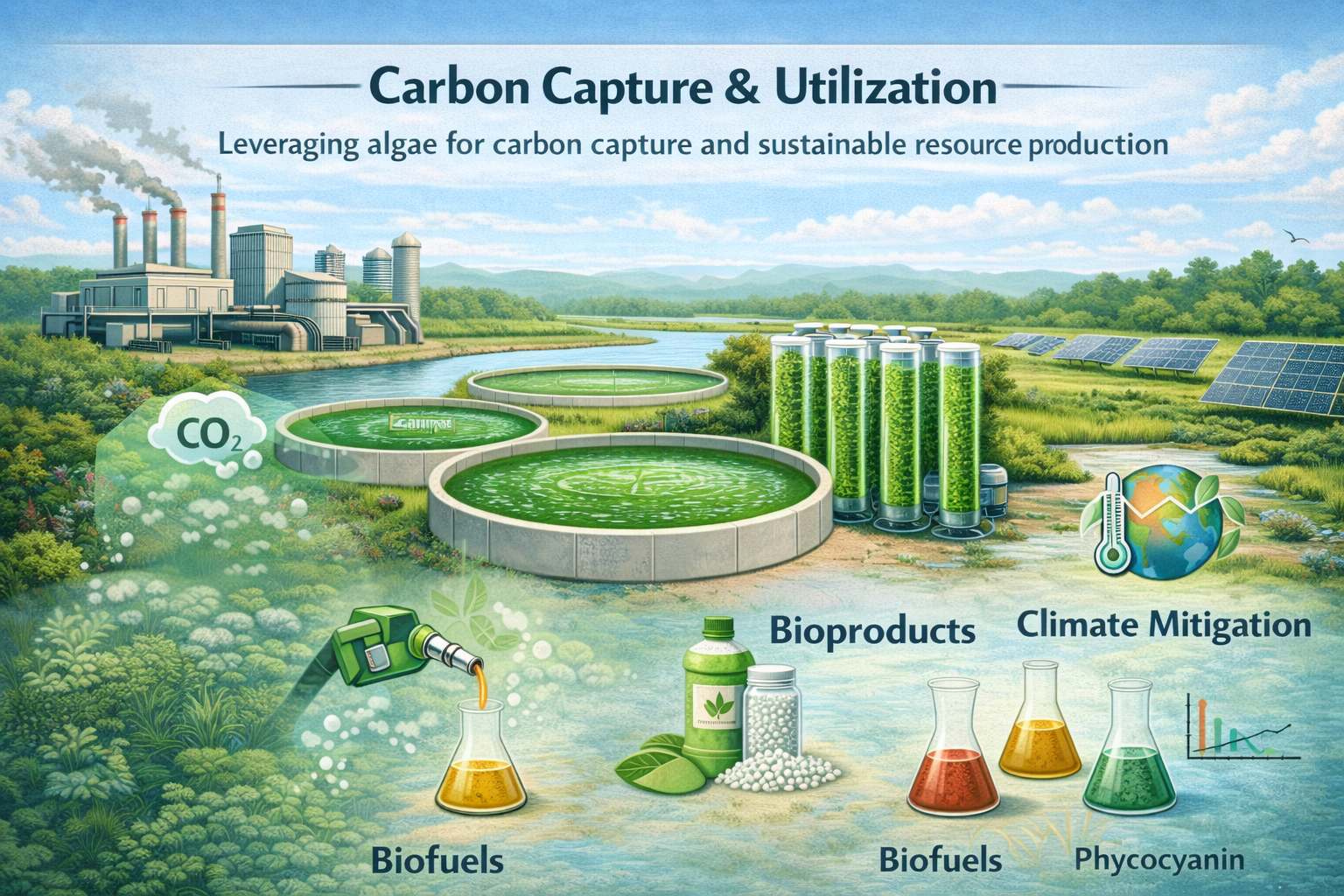
Algae also fit the green economy because they can be linked to wastewater treatment, carbon utilization, and renewable feedstocks. This creates “waste-to-value” business models, where nutrients and CO₂ become inputs rather than liabilities. That is especially powerful in regions with industrial emissions, food-processing wastewater, or water reuse needs. In those settings, algae-based chemical businesses can reduce pollution while producing marketable compounds, which is exactly the kind of circular value chain that the green economy is built around.
The main constraint is scale economics. Harvesting, dewatering, drying, and extraction still make algae more expensive than many fossil-based or crop-based inputs, so bulk commodity displacement remains difficult. But the long-term outlook is still favorable because demand is growing for sustainable protein, omega-3s, natural colorants, bio-based materials, and low-carbon ingredients. In global terms, algae-based chemical businesses are most likely to become a major niche pillar of the green economy first—and, as technology costs fall, a much broader industrial platform later.
Checkout the questions from Chemicals
- Which partnerships are important for scaling algae-based chemical businesses successfully?
- Which business models are most effective for algae-based chemical companies: ingredient supply, contract manufacturing, or branded products?
- Which countries are investing heavily in algae-based chemical technologies?
- Which sectors generate the highest demand for sustainable algae-based chemicals?
- What are the major business opportunities in the algae-based chemical industry?
- Can algae biomass waste be converted into additional high-value chemical products?
- Can small-scale algae chemical production units compete with large petrochemical companies?
- Can algae-based chemicals be produced profitably at commercial scale?
- What are the biggest challenges in scaling algae-based chemical manufacturing?
- What are the biggest operational and maintenance challenges in algae-based chemical plants?
- How much land, water, energy, and carbon input are required for industrial algae cultivation?
- What are the major operating costs involved in algae harvesting, extraction, refining, and purification?
- What machinery and processing systems are required for large-scale algae chemical production?
- What technologies can improve the efficiency of algae chemical extraction and processing?
- How can algae-based chemicals be positioned as premium sustainable alternatives in the market?
- Which algae species are best suited for high-value chemical extraction?
- Can algae-based chemicals commercially compete with petroleum-based chemicals?
- How can algae-based chemicals be integrated into the cosmetics, pharmaceutical, and food industries?
- Algae-Based Chemicals: Building a Sustainable Bio-Based Chemical Industry