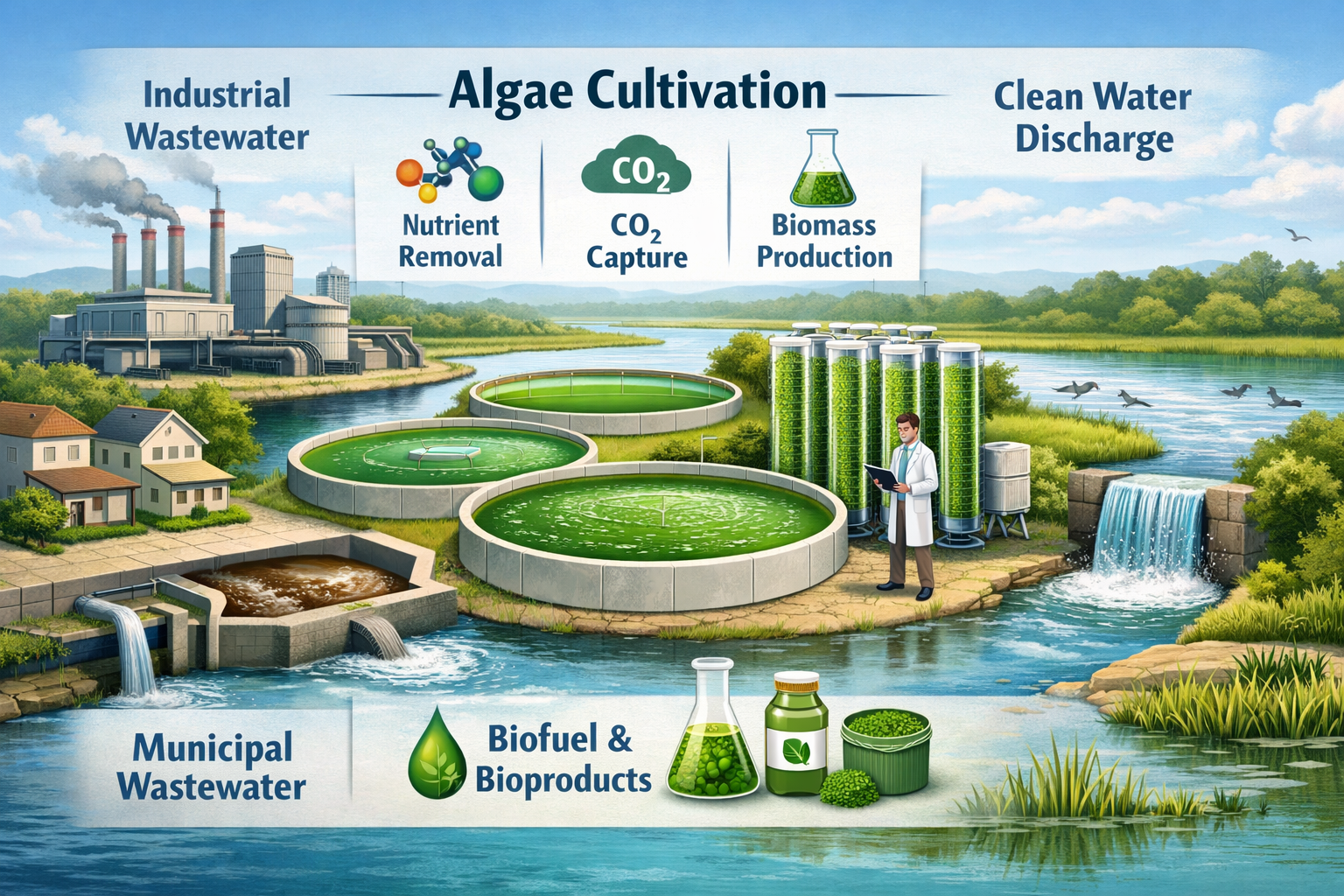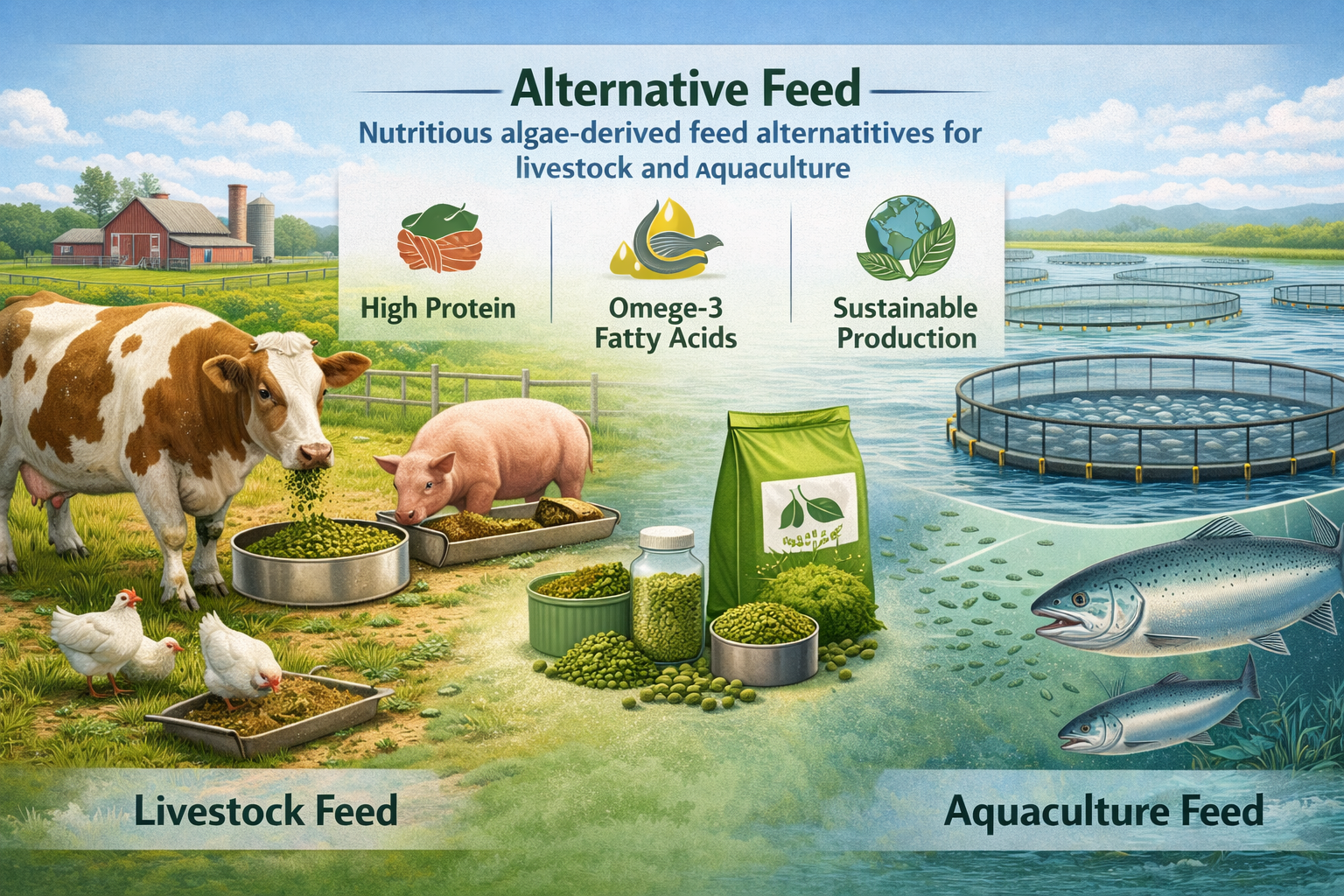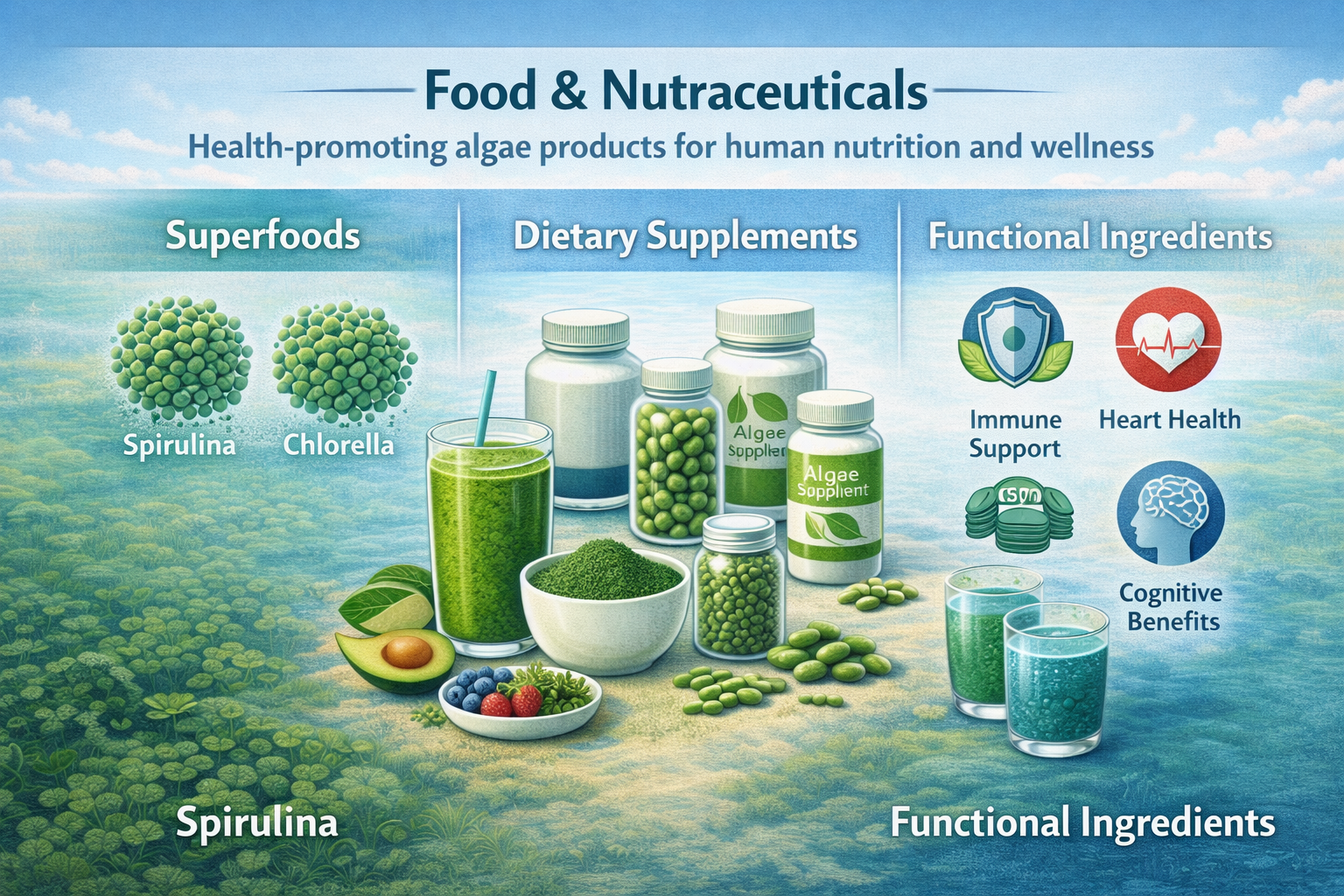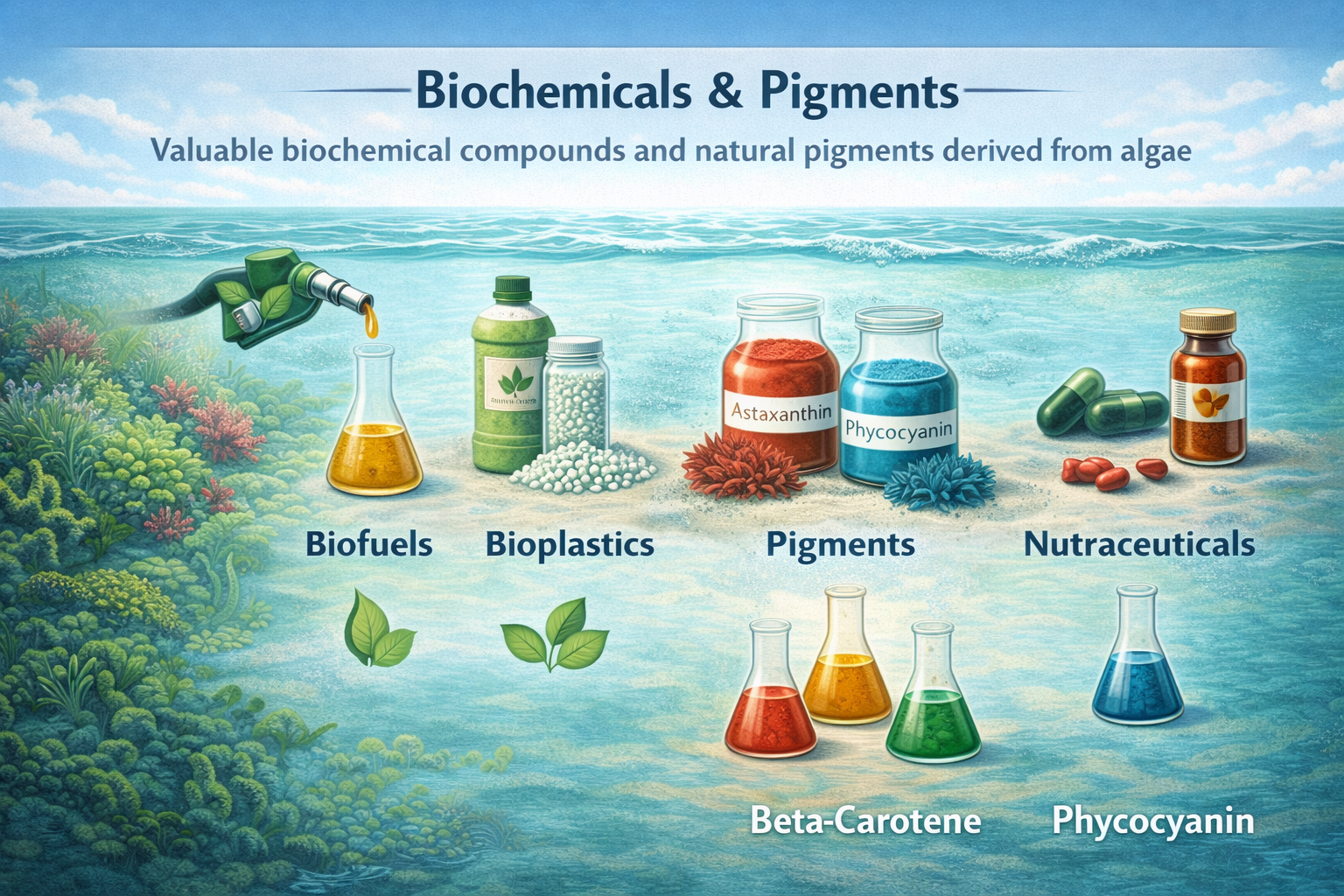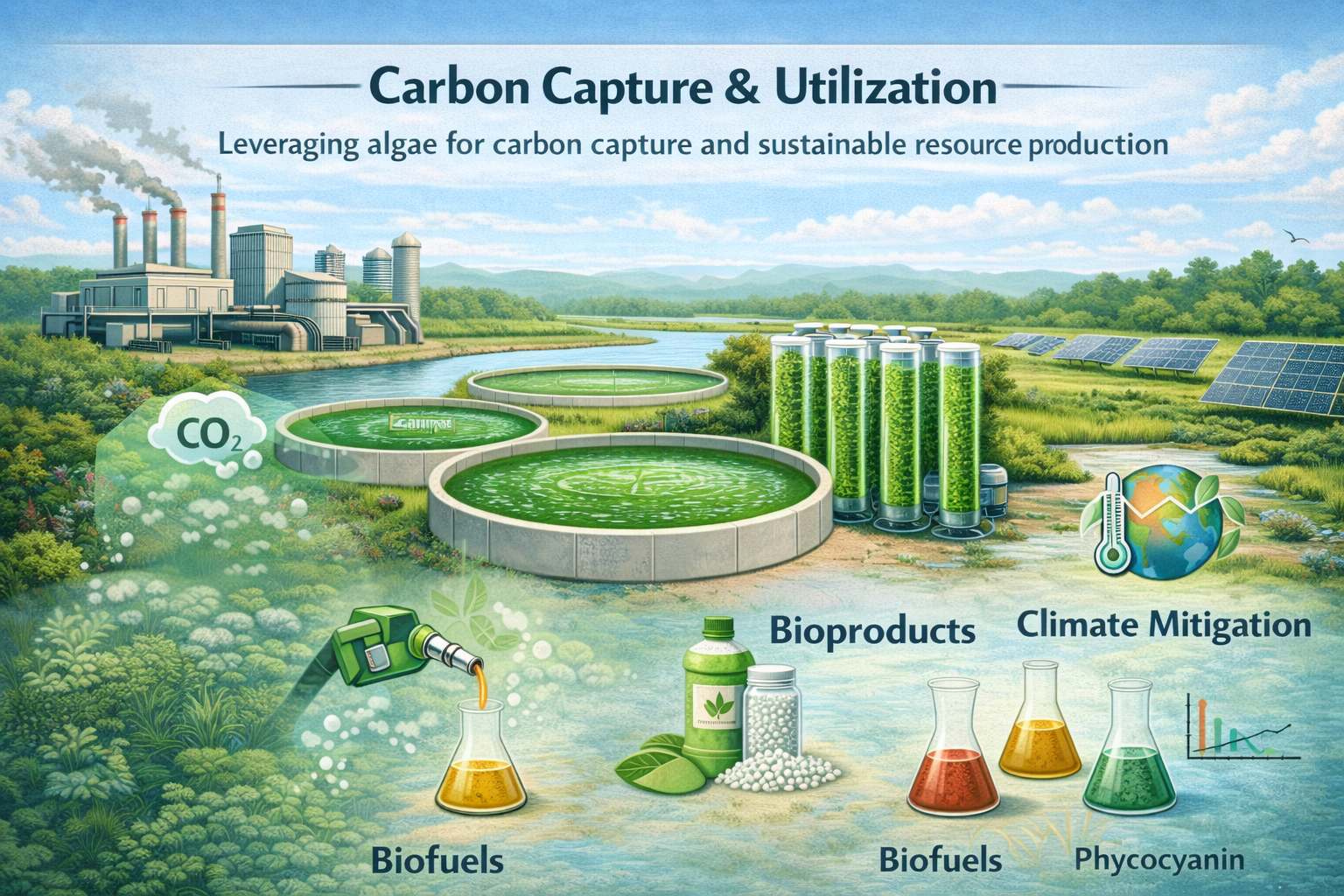
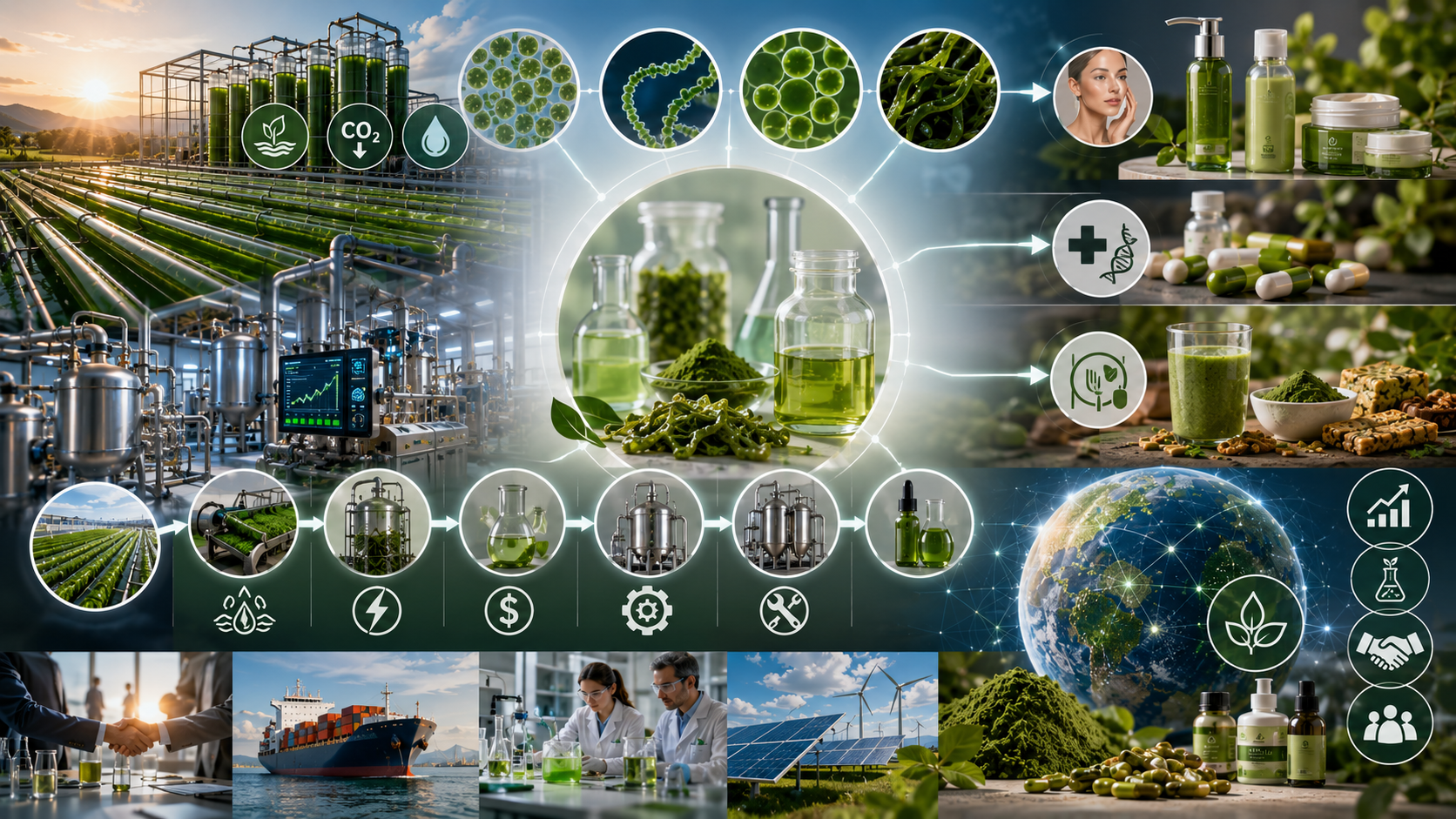
Algae-based chemicals can be produced profitably at commercial scale, but profitability currently depends far more on producing high-value specialty chemicals than on low-margin bulk commodities. Commercial success is strongest in products such as omega-3 oils, astaxanthin, beta-carotene, phycocyanin, nutraceutical ingredients, cosmetics compounds, and specialty feed additives. These products command premium prices that can offset the still relatively high cultivation, harvesting, and processing costs associated with industrial algae production. In contrast, bulk products such as algae biofuels remain economically challenging because their market prices are much lower relative to production costs.
The strongest evidence for commercial viability comes from the global success of companies producing Spirulina, Chlorella, astaxanthin, DHA oils, and natural pigments. For example, natural astaxanthin derived from Haematococcus pluvialis is one of the highest-value algae chemicals globally and is widely used in nutraceuticals, aquaculture, cosmetics, and functional foods. Similarly, algae-derived DHA oils from species such as Schizochytrium are increasingly replacing fish oil in infant formula and vegan nutrition products. These markets are commercially attractive because consumers are willing to pay premium prices for sustainable, natural, and health-focused ingredients.
One major factor improving commercial profitability is the rise of the biorefinery model. Instead of producing only one output, modern algae businesses increasingly aim to extract multiple products from the same biomass stream. A single cultivation system may simultaneously generate proteins, omega-3 oils, pigments, antioxidants, fertilizers, and residual biomass for bioenergy or animal feed. This multi-product approach significantly improves revenue potential and reduces waste. Studies consistently show that integrated biorefineries provide a far stronger economic model than single-product algae operations because they maximize the value recovered from each unit of biomass.
However, several major economic barriers still limit large-scale profitability. The biggest challenges are typically high energy consumption, harvesting costs, drying costs, nutrient supply, and capital-intensive infrastructure. Microalgae cultivation systems are dilute, meaning large volumes of water must be processed to recover relatively small amounts of biomass. Photobioreactors offer higher productivity and contamination control but require far higher capital investment than open ponds. As a result, commercial profitability today is much more achievable in premium specialty markets than in low-cost commodity sectors such as fuels or bulk industrial chemicals.
The long-term outlook remains highly positive because several global trends strongly favor algae commercialization. Demand is rising for sustainable ingredients, natural colorants, alternative proteins, plant-based omega-3s, carbon-efficient manufacturing, and climate-smart industrial materials. At the same time, technological improvements in genetic engineering, automated cultivation, AI-driven process optimization, wastewater integration, and low-energy extraction are steadily reducing production costs. Many analysts expect algae chemicals to become increasingly competitive as carbon regulations tighten and consumers shift toward bio-based products. In global terms, algae-based chemicals are already commercially profitable in several high-value sectors, and broader profitability is likely to expand significantly over the next decade as production technologies mature.