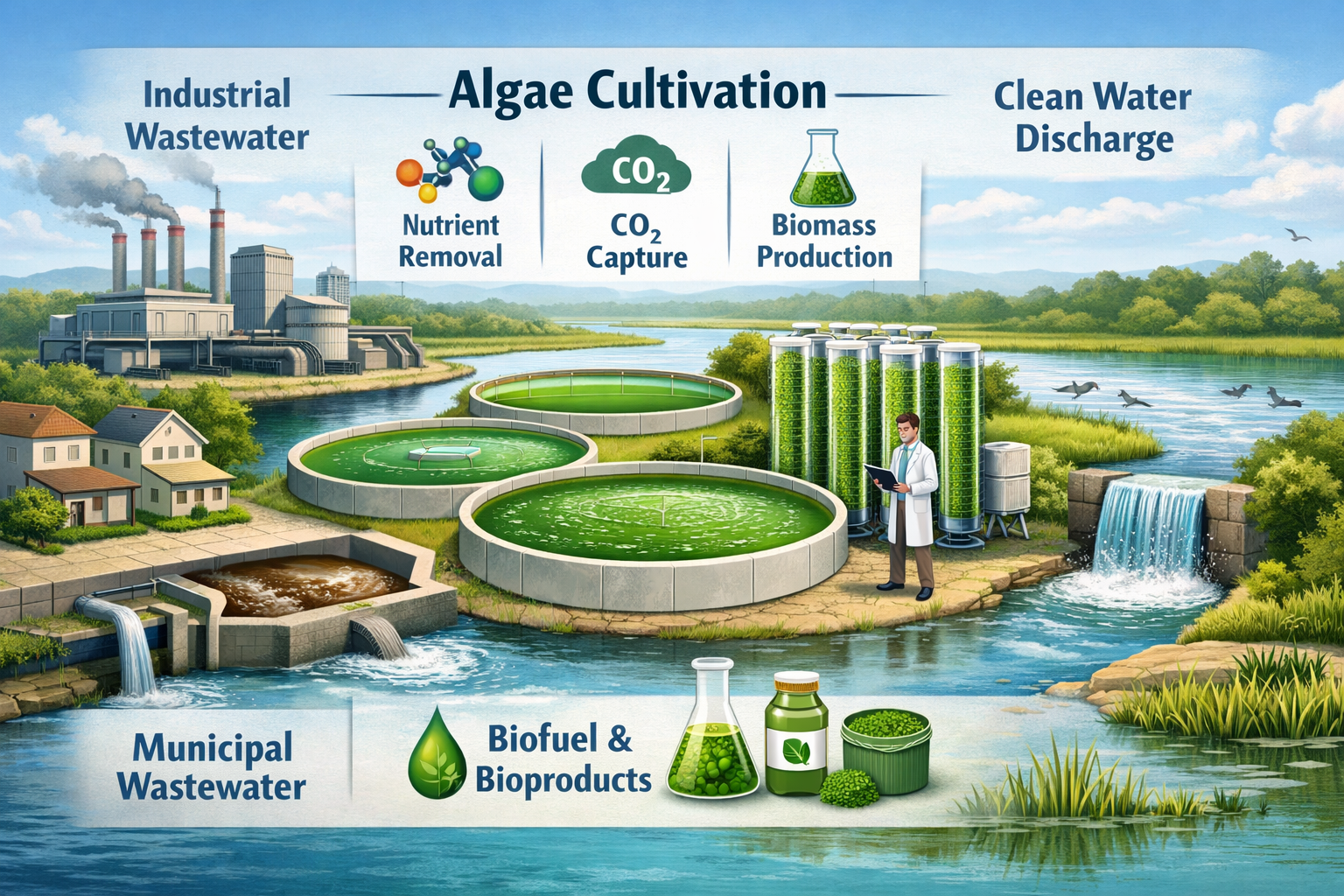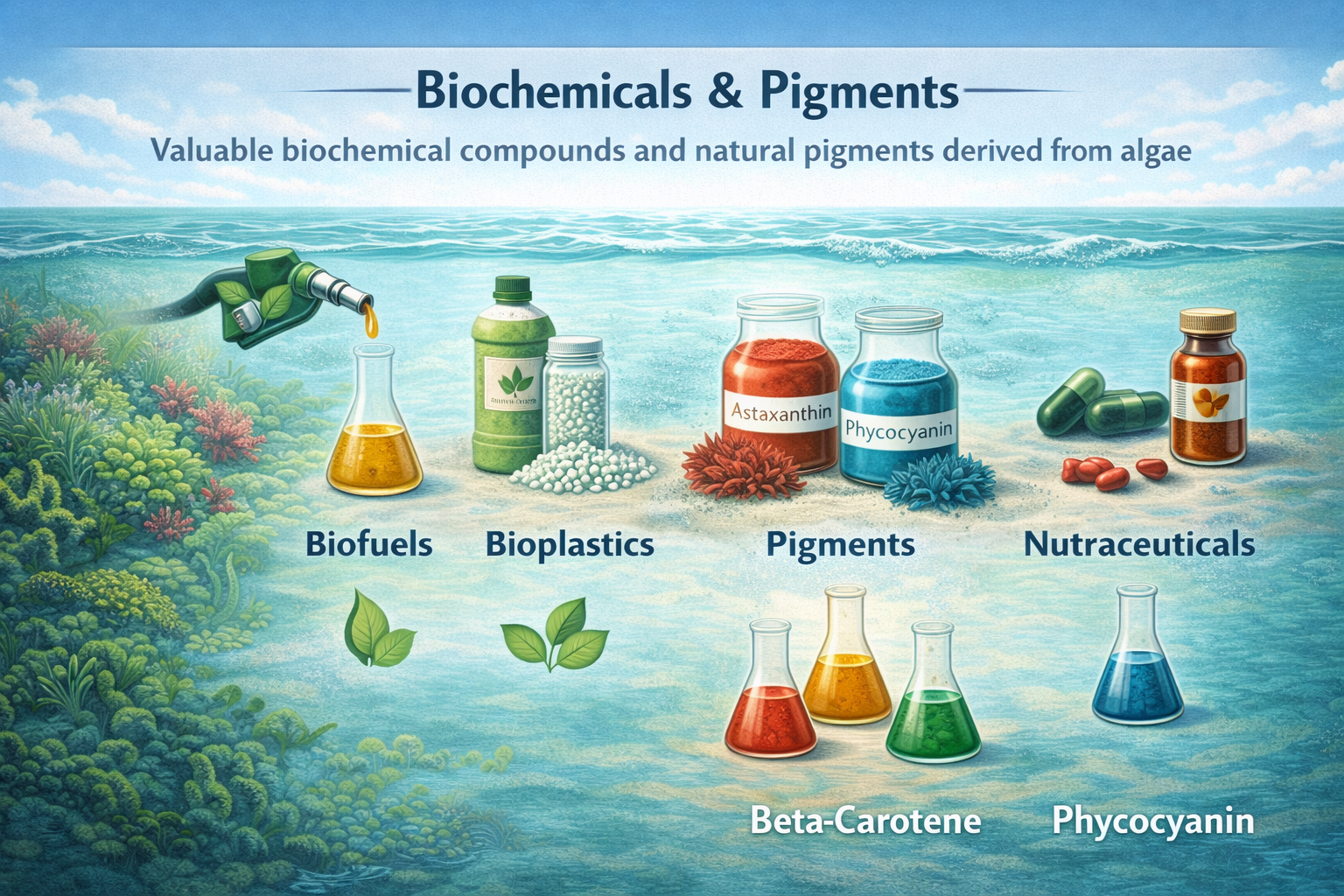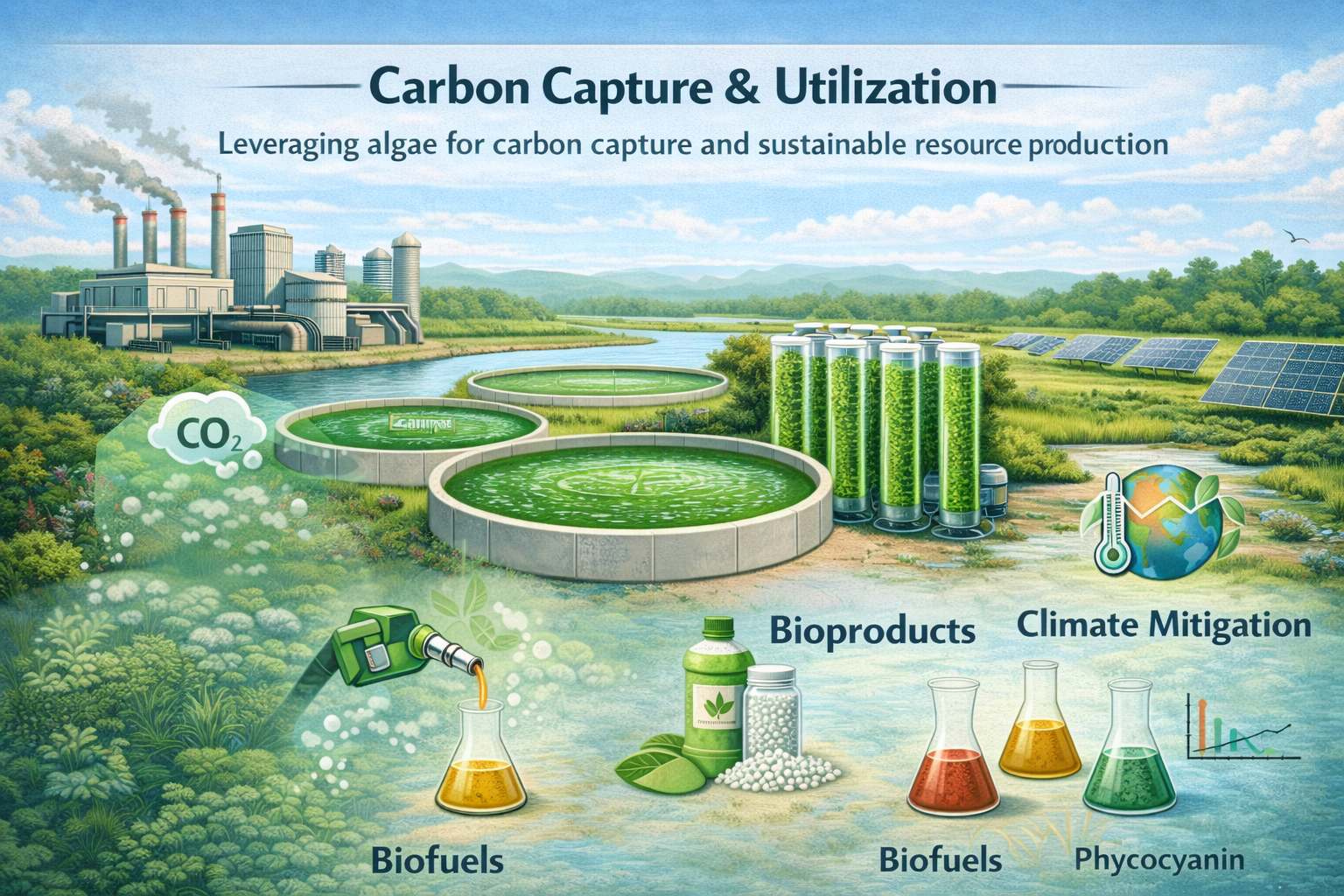

The biggest challenge in scaling algae-based chemical manufacturing is that production is still expensive at every step of the value chain. Even recent reviews say commercialization is held back by the cost of cultivation, harvesting, and purification, and by the fact that only a small number of microalgae species are currently used commercially out of a very large natural diversity. Open ponds are cheaper, but closed photobioreactors bring higher infrastructure, operation, and maintenance costs. That means scale is technically possible, but economically fragile unless the final product has high value.
A second major bottleneck is harvesting and dewatering. Microalgae are dilute in culture, so concentrating biomass is difficult and costly. Reviews report that harvesting alone can account for about 20–30% of total production cost, which is a very large share for an industrial process. This is one reason many projects stall between pilot and commercial scale: even if the algae grow well, separating them efficiently from thousands of liters of water is still a major engineering challenge.
The third challenge is downstream processing, especially drying and extraction. Once biomass is collected, many target molecules require energy-intensive disruption, solvent recovery, and purification. A review of extraction methods notes that lipid extraction is still a major process constraint, and another study found some dry-route algal fuel pathways can require up to 120 MJ per kg of biodiesel, with production costs as high as $25/kg in dry routes and $12/kg in wet routes. For chemical manufacturing, that means the process chain can erase margins unless energy use is sharply reduced.
A fourth challenge is biological consistency at scale. Industrial systems must deal with low cell density, seasonal variability, contamination, and culture crashes, especially in open ponds. These risks become more severe when production is expanded globally across different climates and water qualities. Reviews also note that water evaporation, especially in open systems, and the need for strains that tolerate changing conditions remain practical barriers. In other words, the algae must perform not just in the lab, but reliably in real outdoor operations.
Finally, the industry faces a market-structure problem: many algae chemicals are promising, but they often need premium pricing to justify the process cost. Reviews of algal biorefineries repeatedly stress the need for multi-product models, circular-economy integration, wastewater use, and life-cycle assessment to make the economics work. They also identify water footprint, energy balance, production cost, market potential, and policy support as core scale-up issues. So the real challenge is not only producing algae chemicals, but making them competitive, stable, and financeable at industrial scale worldwide.