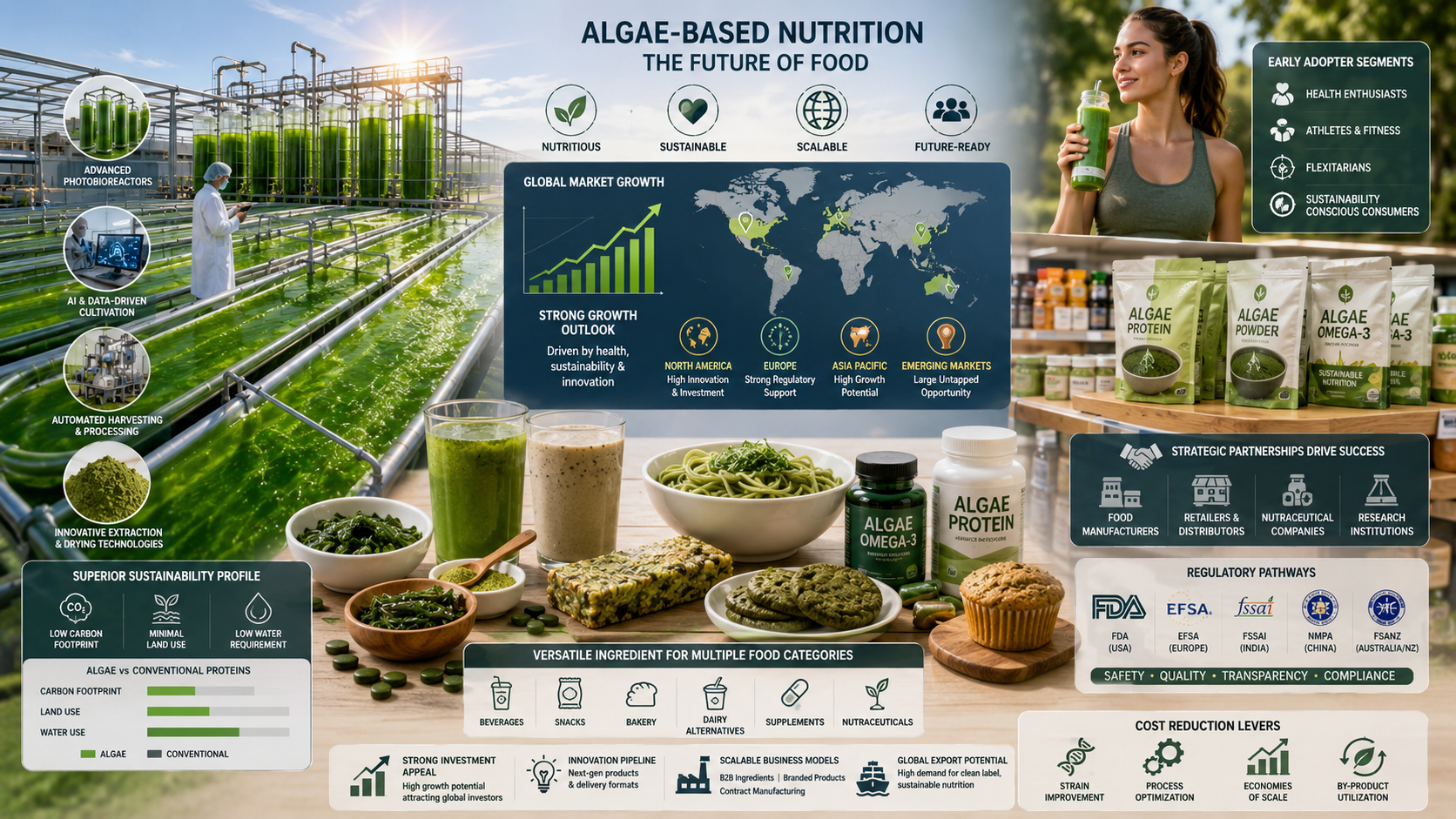
Algae-based foods can be positioned successfully across premium, functional, and mass-market categories because algae offer a rare combination of high nutrition, sustainability, and product versatility. Species such as Spirulina, Chlorella, Schizochytrium, and Nannochloropsis contain protein, omega-3 fatty acids, antioxidants, vitamins, minerals, and natural pigments, allowing food companies to target multiple consumer segments simultaneously. Global demand for plant-based nutrition and sustainable food ingredients is increasing rapidly, creating opportunities for algae products to move beyond niche supplements into mainstream food systems. Positioning strategy depends mainly on pricing, formulation, branding, and consumer education.
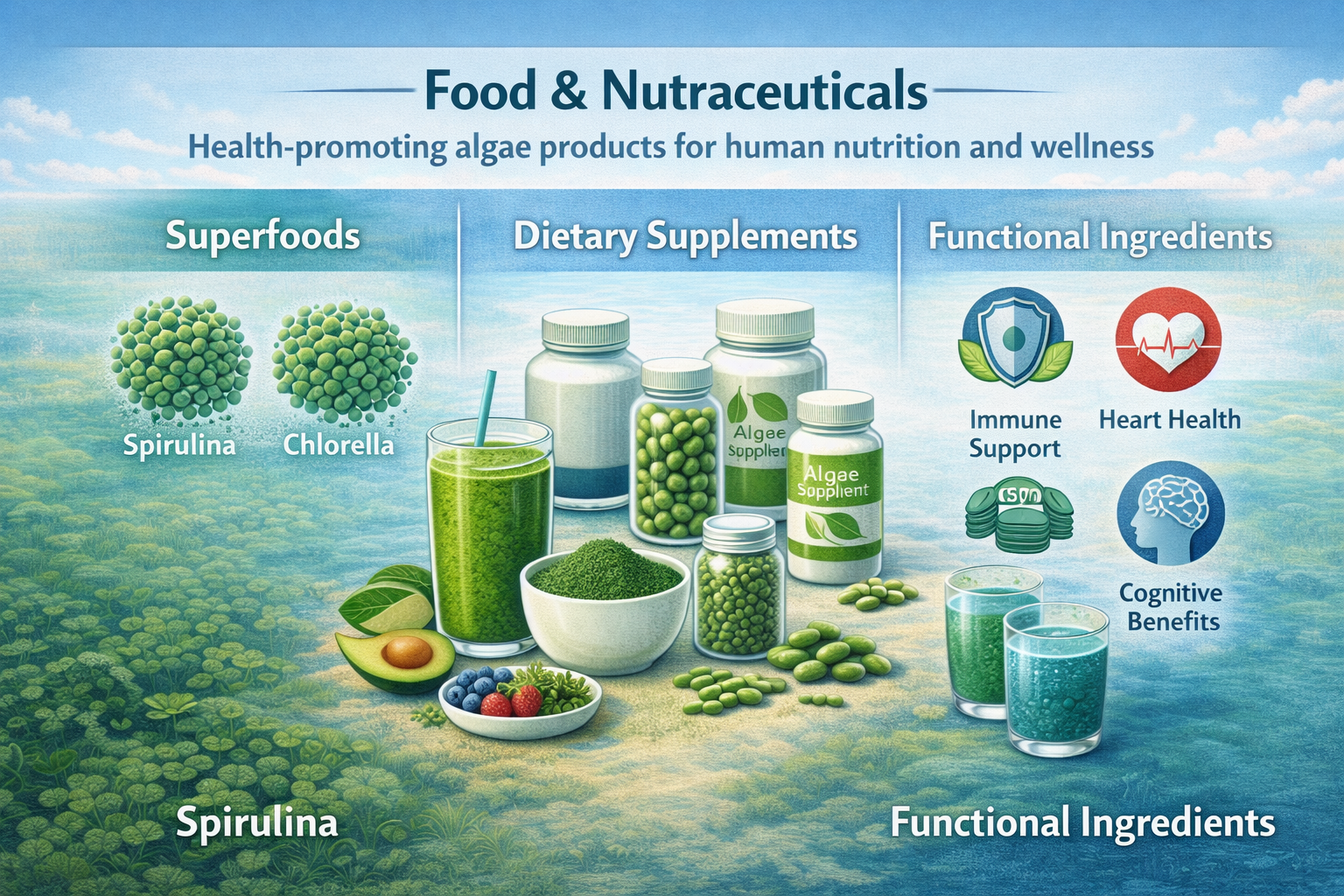
For the premium market, algae-based foods can be positioned as high-performance wellness and sustainability products. Premium consumers are willing to pay more for products associated with advanced nutrition, clean-label ingredients, climate responsibility, and scientific innovation. Companies can market algae as a future superfood rich in protein, omega-3s, antioxidants, and micronutrients. Products such as algae-based protein powders, functional beverages, nutraceutical capsules, vegan DHA supplements, and anti-aging nutrition blends fit strongly into this category. Premium positioning works particularly well in North America, Europe, Japan, South Korea, and urban health-conscious markets where consumers already pay higher prices for organic and functional nutrition.
In the functional food segment, algae can be marketed based on targeted health benefits. This is currently one of the fastest-growing opportunities globally. Different algae species can support different functional claims: Spirulina for protein and energy, Chlorella for detox and immunity, Schizochytrium for brain and heart health through DHA omega-3s, and Haematococcus for antioxidant support through astaxanthin. Functional positioning allows algae ingredients to enter categories such as fortified snacks, meal replacements, sports nutrition, healthy beverages, infant nutrition, elderly nutrition, and medical nutrition products. Consumers increasingly prefer foods that deliver measurable health benefits beyond basic calories, making algae highly attractive in this sector.
For the mass market, algae-based foods must focus on affordability, accessibility, and ingredient integration rather than niche health branding alone. The most effective strategy is often to incorporate algae ingredients into familiar everyday foods such as noodles, bakery products, dairy alternatives, sauces, snacks, breakfast cereals, and beverages. In this segment, algae may not always be marketed as the primary ingredient; instead, companies can emphasize benefits such as higher protein, natural coloring, added omega-3s, or improved sustainability. Large-scale commercialization will depend heavily on reducing production costs, improving taste profiles, and scaling cultivation technologies to compete with conventional food ingredients.
Globally, the strongest long-term opportunity may come from combining all three strategies simultaneously. Food companies can use premium products to establish brand value and consumer trust, functional foods to target health-focused markets, and mass-market integration to achieve scale. This approach is already visible in the broader plant-based food industry. As algae production technologies improve and consumer awareness increases, algae-based foods are expected to transition from niche health products into mainstream global nutrition systems. Their commercial attractiveness is strengthened by multiple converging trends including plant-based diets, climate-conscious consumption, alternative proteins, functional nutrition, and demand for sustainable food innovation.