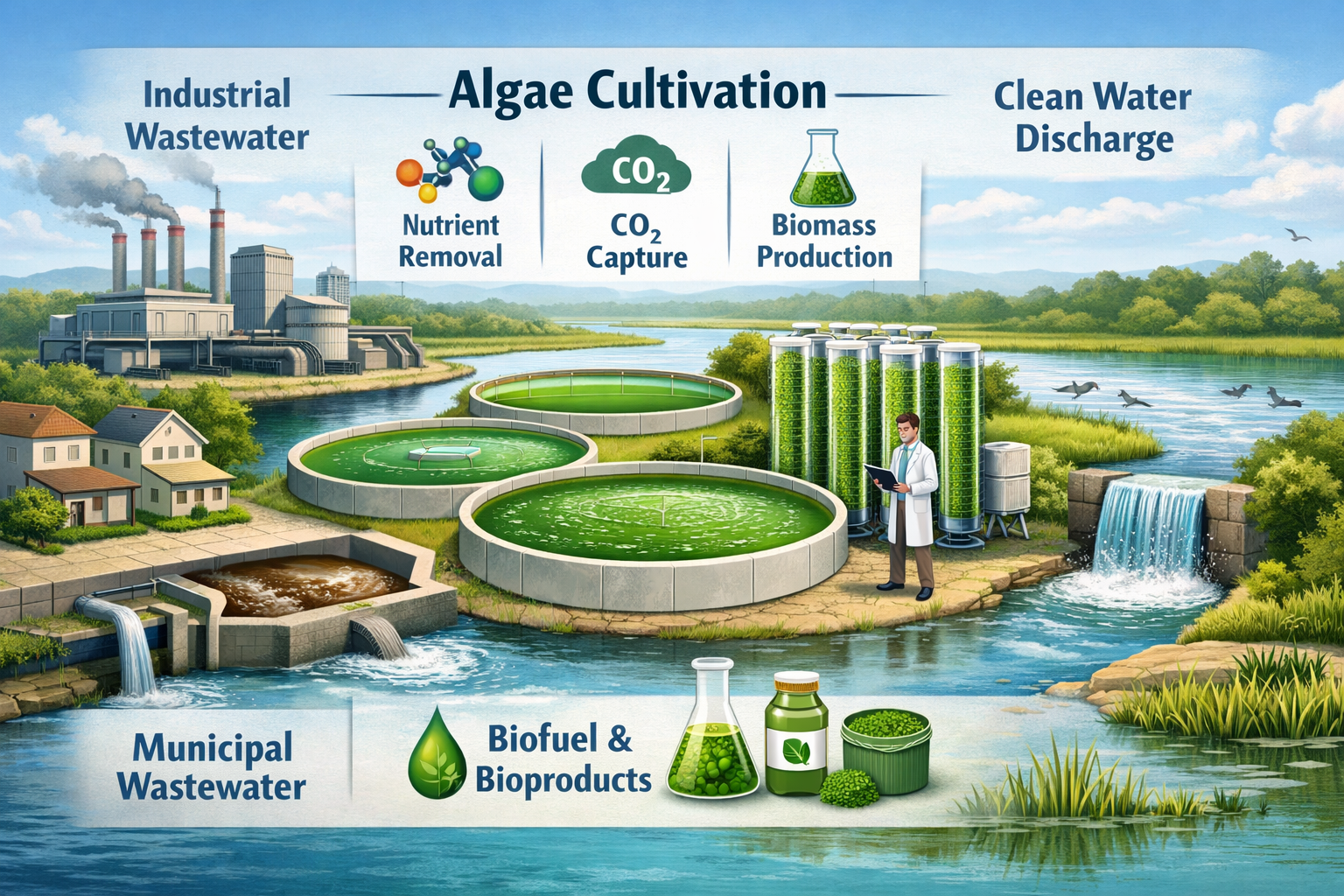
One of the biggest supply chain challenges in the algae-based ingredient industry is the difficulty of producing algae at large industrial scale while maintaining stable quality and competitive costs. Commercial algae cultivation depends heavily on sunlight, temperature, water quality, nutrient availability, and contamination control. Open pond systems are cheaper but highly vulnerable to contamination from unwanted microorganisms, weather fluctuations, and evaporation losses. Closed photobioreactors provide better control and higher purity but require significantly higher capital and operating costs. Because of these limitations, global algae production capacity is still relatively small compared with mainstream agricultural commodities such as soybean, corn, or fishmeal, creating supply constraints for large food and nutraceutical companies.
Another major challenge is the high cost and complexity of harvesting and processing algae biomass. Microalgae are typically grown in very dilute water systems, meaning large volumes of water must be removed before the biomass can be processed. Harvesting, dewatering, drying, and extraction are among the most energy-intensive stages in the entire value chain. In many commercial systems, downstream processing can account for a substantial portion of total production costs. Technologies such as centrifugation, membrane filtration, freeze drying, and supercritical extraction improve product quality but also increase operational expenses. This creates a major challenge for companies trying to compete with lower-cost conventional ingredients.
The supply chain is also affected by geographic concentration and limited global production infrastructure. Much of the world’s commercial algae cultivation is concentrated in China, India, the United States, and a few Southeast Asian countries. As a result, many food and pharmaceutical companies rely on long international supply chains for raw materials and extracted compounds. Transportation costs, export restrictions, fluctuating freight prices, and climate-related disruptions can all affect supply reliability. In addition, algae biomass is sensitive to moisture, oxidation, and contamination, which means companies require specialized storage, cold-chain management, and quality-control systems during distribution.
Regulatory and quality-standard challenges further complicate the global algae supply chain. Different countries maintain different rules regarding food safety approvals, novel food regulations, contaminant limits, labeling standards, and nutritional claims. Some algae species have broad international acceptance, while others still face lengthy approval processes before entering mainstream food markets. Companies must also monitor risks involving heavy metals, toxins, microbial contamination, and inconsistent nutrient composition. Maintaining standardized quality across multiple cultivation sites and international suppliers remains difficult, especially as demand for algae-based proteins, omega-3 oils, pigments, and nutraceutical ingredients continues to expand rapidly.
Finally, one of the most important long-term challenges is balancing scalability, sustainability, and affordability simultaneously. Algae are promoted as sustainable alternatives to fish oil, animal protein, and synthetic additives, but achieving true commercial competitiveness still requires major improvements in cultivation efficiency, automation, extraction technologies, and logistics networks. At the same time, consumer demand for plant-based nutrition, functional foods, omega-3 products, and climate-friendly ingredients continues to rise globally. This creates strong market opportunity, but also pressure on producers to build more resilient, integrated, and cost-efficient supply chains capable of supporting mass-market adoption over the next decade.