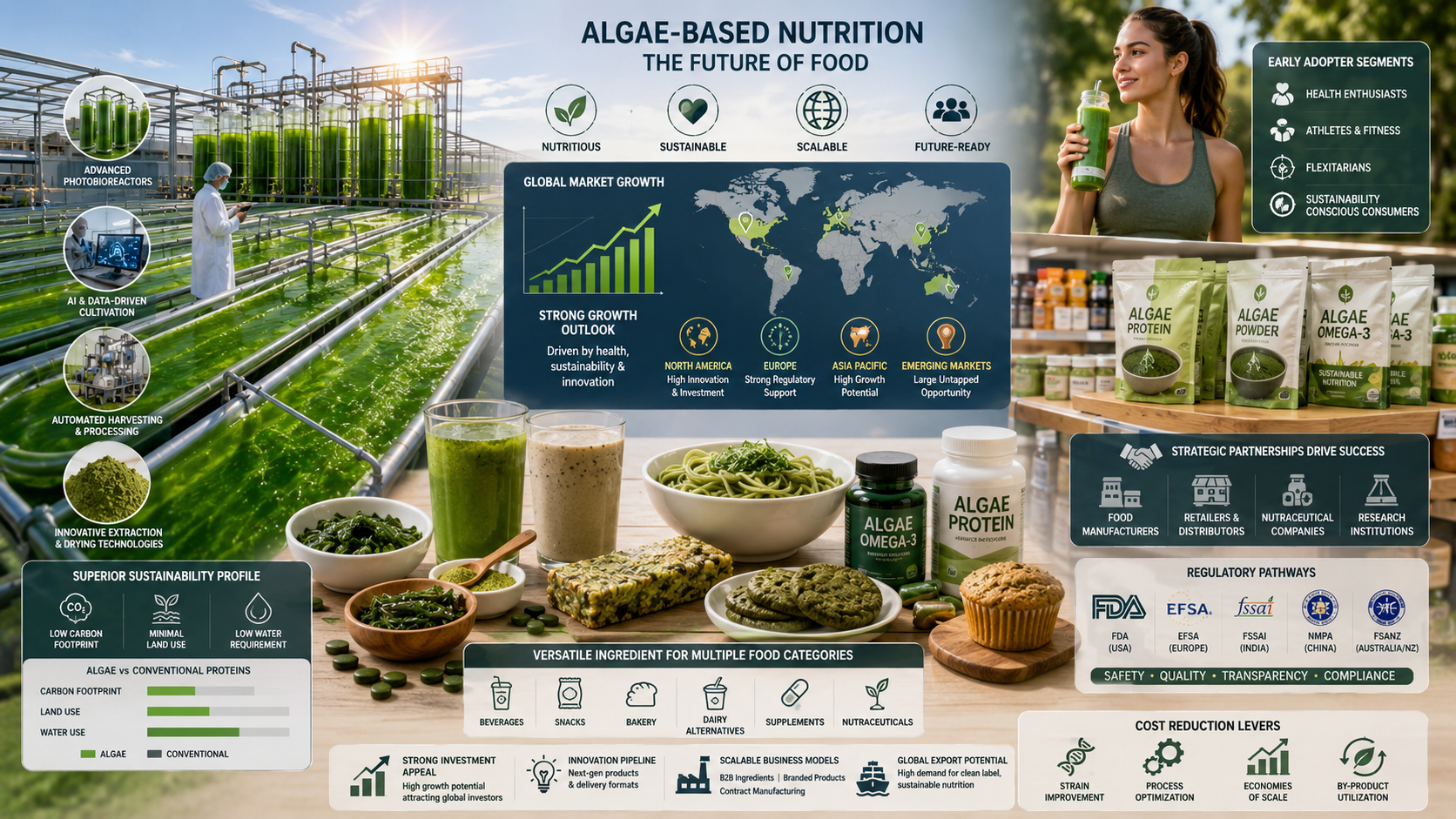
The food categories most suitable for algae ingredient integration are currently dietary supplements, functional beverages, snacks, bakery products, plant-based foods, and fortified nutrition products. Algae ingredients such as Spirulina, Chlorella, Schizochytrium, Dunaliella, and Haematococcus are increasingly attractive because they provide high protein, omega-3 fatty acids, antioxidants, vitamins, minerals, and natural pigments in compact quantities. Global demand for clean-label foods, sustainable proteins, and functional nutrition is accelerating the adoption of algae across multiple food sectors, especially in North America, Europe, and Asia-Pacific.
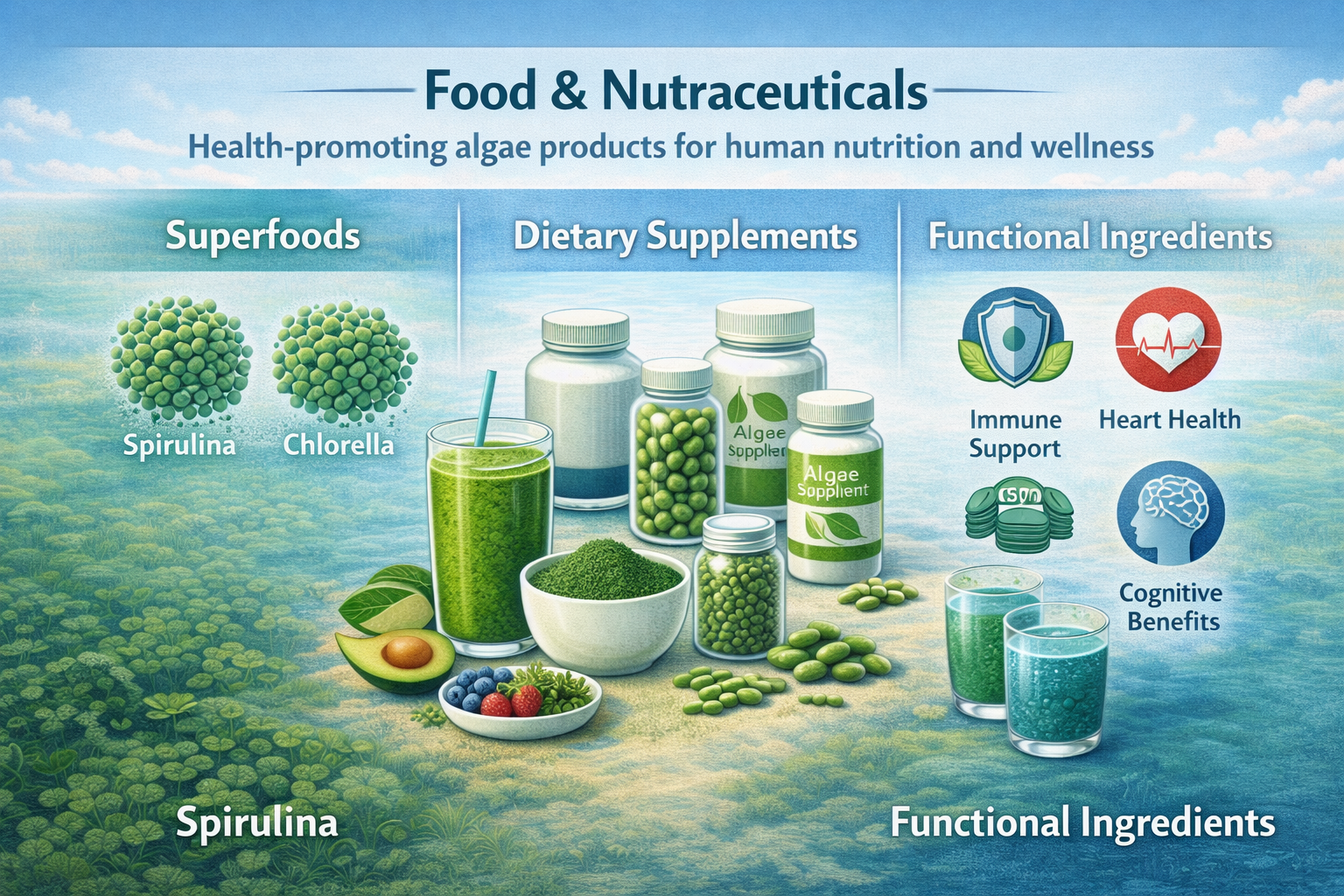
The strongest and most commercially mature category is dietary supplements and nutraceuticals. Spirulina and Chlorella tablets, powders, capsules, and drink mixes dominate the current algae food market because consumers already associate them with wellness, immunity, detoxification, and high nutrition density. Algae-derived omega-3 oils rich in DHA and EPA are also widely used in supplements, infant nutrition, and cardiovascular health products. This category is highly suitable because algae ingredients can be consumed in concentrated form without major taste or texture challenges, making commercialization easier compared with mainstream processed foods.
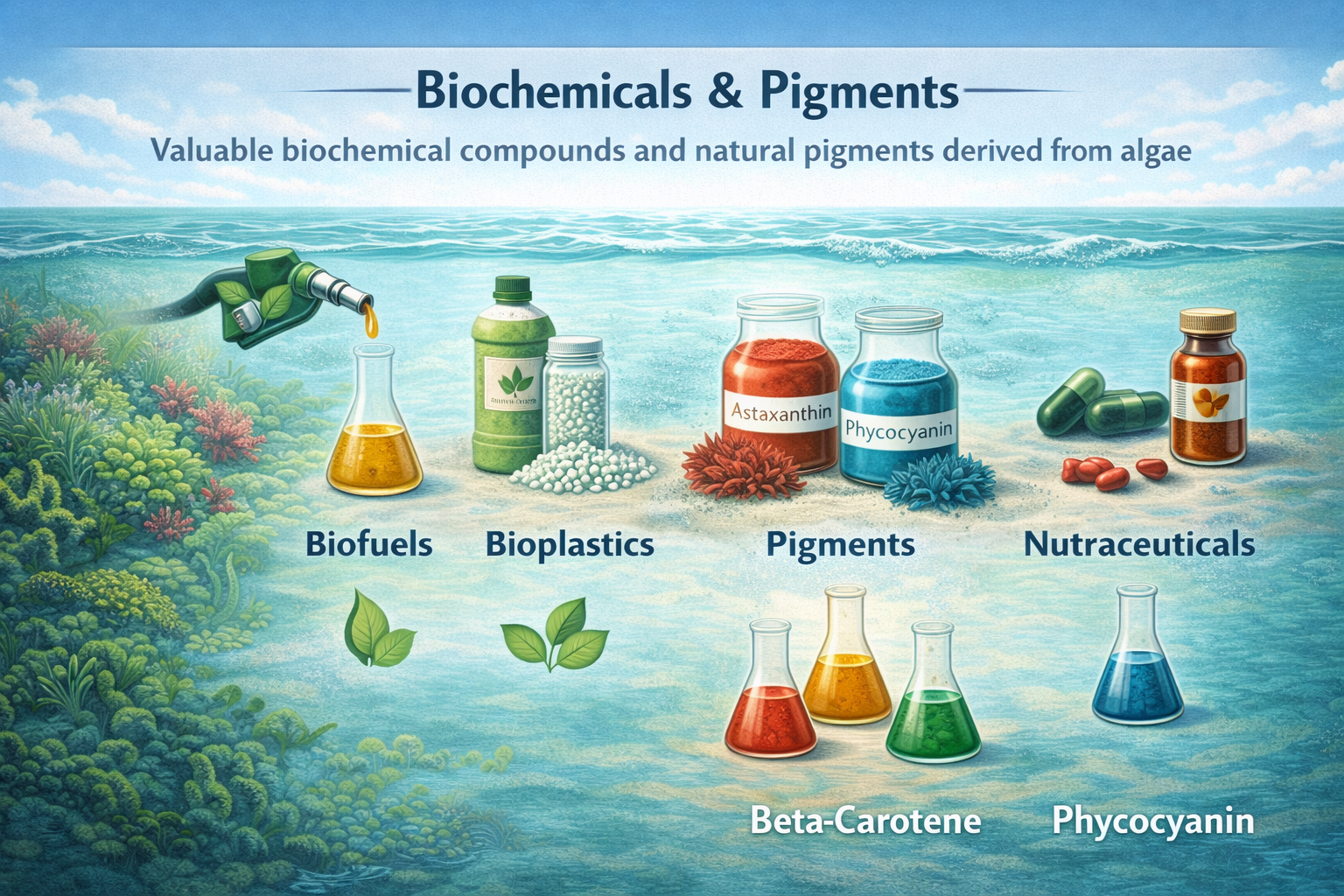
Functional beverages are another major growth category for algae integration. Food companies are increasingly adding Spirulina, Chlorella, and algae-based omega-3 oils into smoothies, protein shakes, wellness drinks, sports beverages, and energy products. Spirulina is especially popular because of its intense natural blue-green pigment and high protein concentration. In recent years, algae-based natural colorants such as phycocyanin have become highly attractive replacements for synthetic dyes in beverages and confectionery. The global shift toward immunity-supporting and performance-oriented drinks is creating strong long-term opportunities for algae ingredients in this segment.
Snacks and bakery products are also highly suitable for algae incorporation, particularly in health-oriented and premium food markets. Studies show that microalgae can improve the protein, antioxidant, mineral, and fiber content of products such as biscuits, bread, crackers, pasta, noodles, cereal bars, and chips. Spirulina and Chlorella are among the most tested species in bakery applications because they can significantly enhance nutritional value even at relatively low inclusion levels. However, food manufacturers must carefully manage flavor, aroma, and color intensity because excessive algae concentration can affect consumer acceptance. As formulation technologies improve, algae-fortified bakery and snack products are expected to expand further.
Another important future category is plant-based meat, dairy alternatives, and fortified foods. Algae proteins and oils are increasingly attractive for vegan burgers, dairy-free beverages, yogurts, spreads, and meat alternatives because they provide both nutrition and sustainability benefits. Algae can also help improve amino acid balance and omega-3 content in plant-based products that traditionally lack certain nutrients. As global consumers increasingly demand sustainable and climate-friendly foods, algae ingredients are expected to move from niche wellness products into mainstream packaged food categories. The strongest commercial opportunities will likely come from products where algae deliver both functional nutrition and environmental value simultaneously.