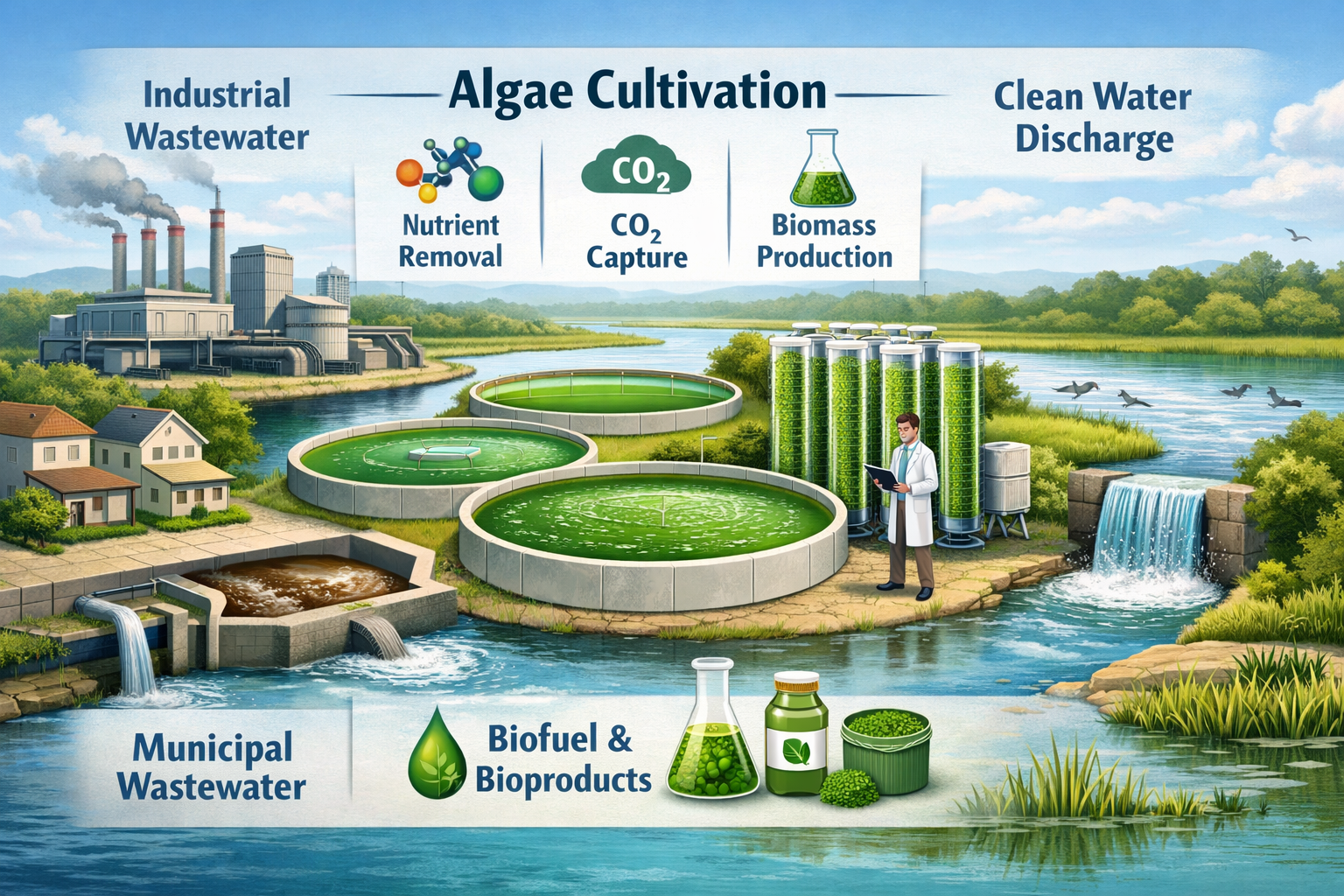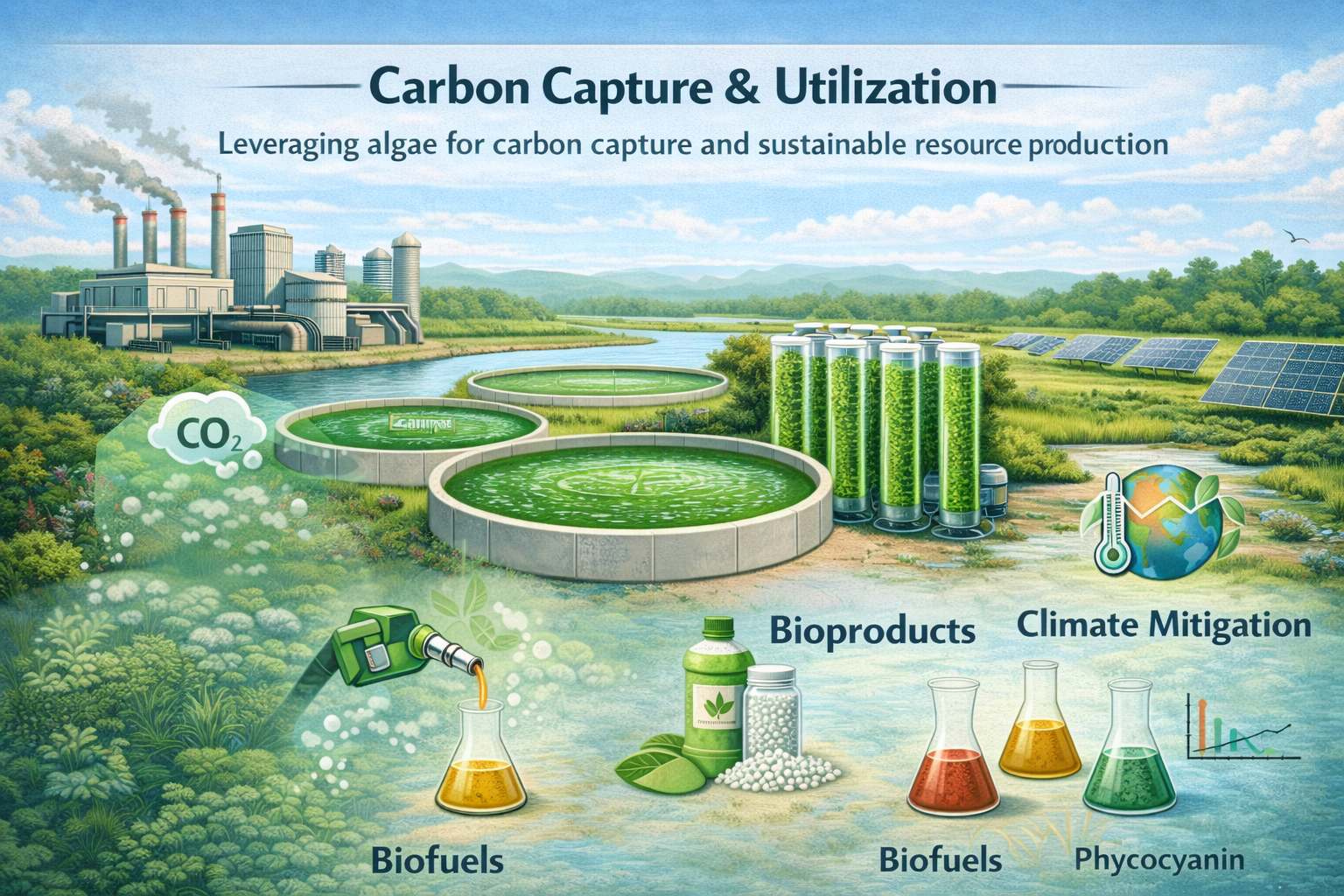
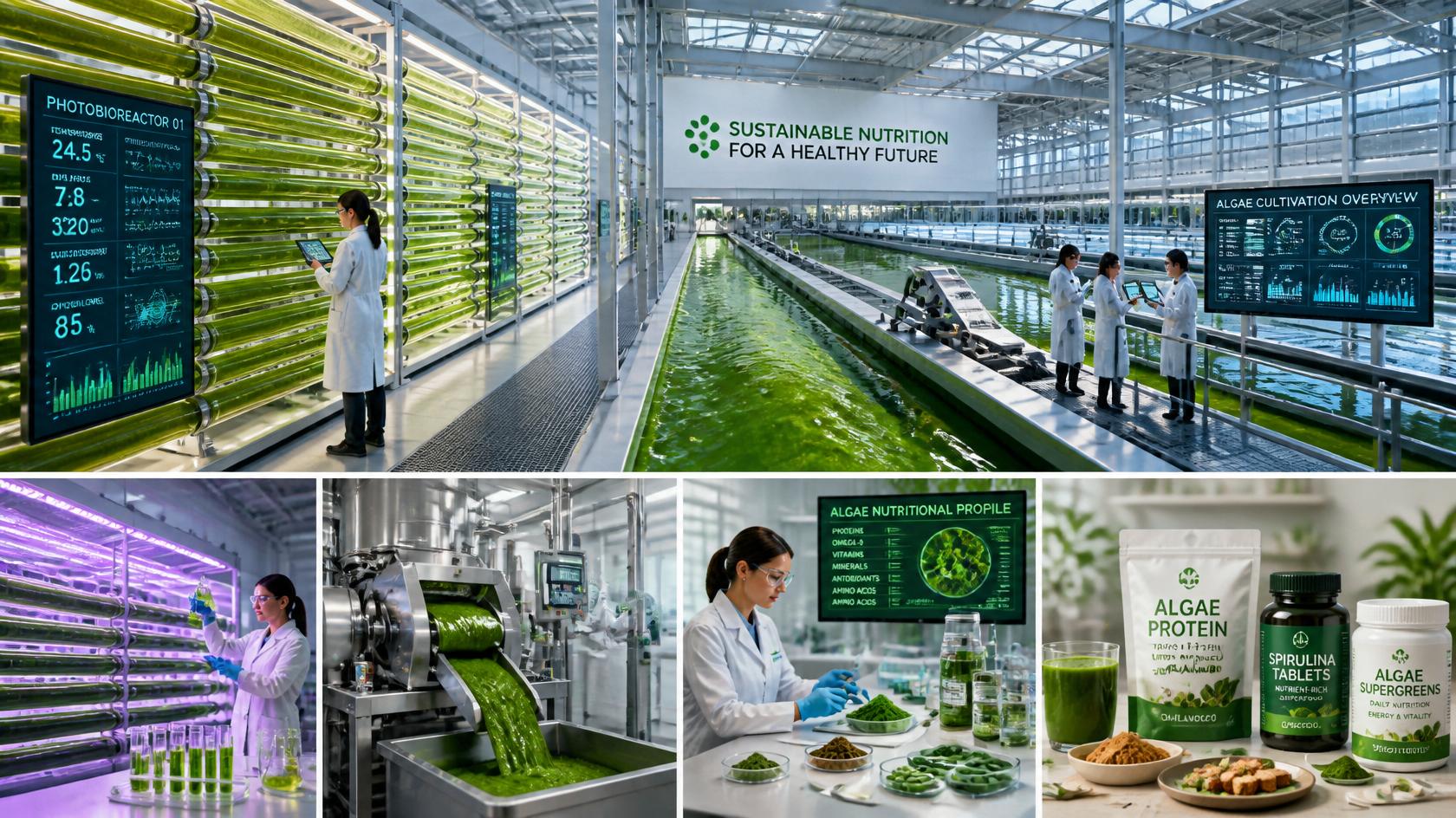
The biggest challenge in algae-based food production is reducing cultivation and processing costs while achieving industrial-scale output. One of the most important technologies addressing this problem is the use of open raceway pond systems instead of fully enclosed photobioreactors. Raceway ponds are significantly cheaper to construct and operate because they use natural sunlight and simpler infrastructure. Although productivity is lower than advanced photobioreactors, open ponds remain the dominant commercial approach for large-scale species such as Spirulina and Chlorella. Studies show that cultivation infrastructure and harvesting can account for a major share of algae production expenses, so low-cost pond engineering is critical for scalability.
Another major cost-reduction strategy is integrating algae cultivation with wastewater treatment and industrial CO₂ utilization. Wastewater provides low-cost nutrients such as nitrogen and phosphorus, while industrial emissions supply carbon dioxide needed for photosynthesis. This reduces spending on fertilizers and carbon inputs, which are among the largest operational costs in algae farming. Research increasingly shows that coupling algae systems with municipal wastewater plants, food-processing industries, breweries, and power plants can improve overall economic feasibility while simultaneously supporting environmental sustainability and carbon reduction goals.
Technologies that improve harvesting and dewatering efficiency are also essential because algae cultures are extremely dilute, often containing less than 1% solid biomass. Traditional centrifugation and drying methods consume large amounts of energy. To lower costs, companies are increasingly adopting membrane filtration, dissolved air flotation, bio-flocculation, gravity settling, and low-energy drying systems. Advanced membrane systems and electro-flocculation technologies can significantly reduce electricity consumption during biomass recovery, which is one of the most energy-intensive stages of algae production.
Automation, artificial intelligence, and precision monitoring are becoming increasingly important for industrial scalability. Modern algae farms now use AI-driven sensors, automated nutrient dosing, machine-learning growth prediction, and real-time environmental monitoring to optimize productivity. These technologies help maintain ideal light exposure, pH, temperature, and nutrient balance while reducing labor requirements and minimizing culture crashes caused by contamination or environmental fluctuations. Automated systems are especially valuable in large commercial farms where even small efficiency improvements can produce major financial savings at scale.
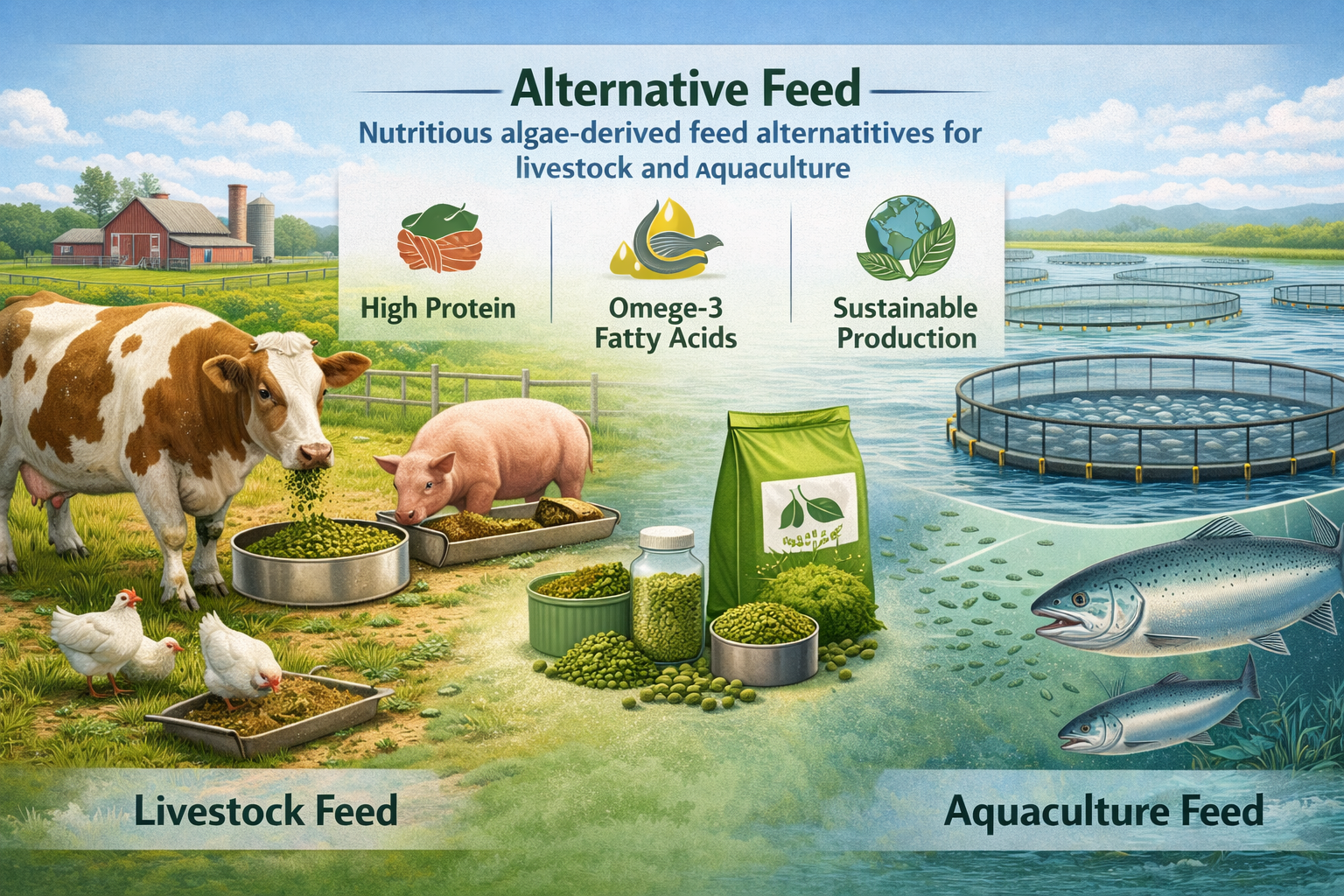
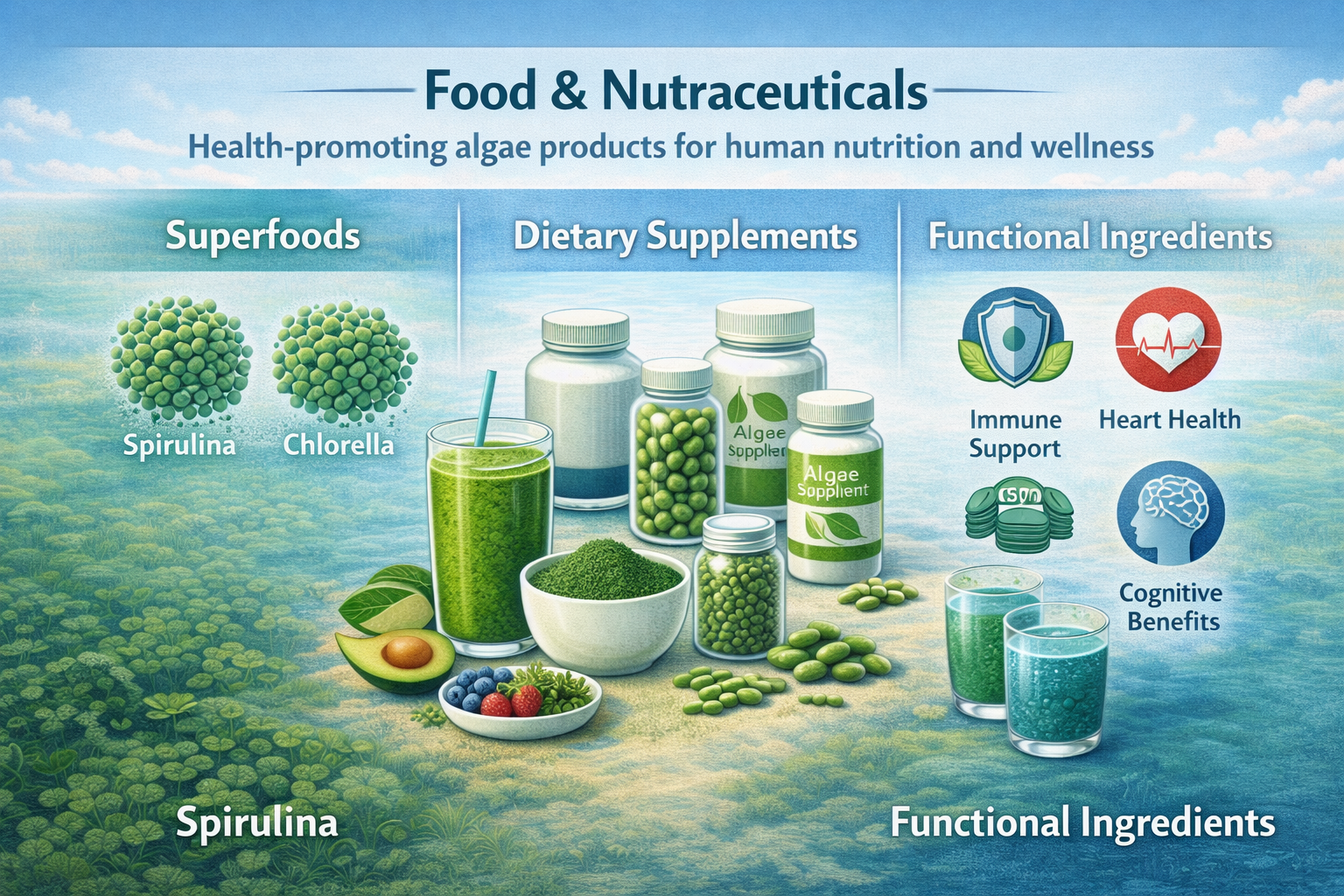
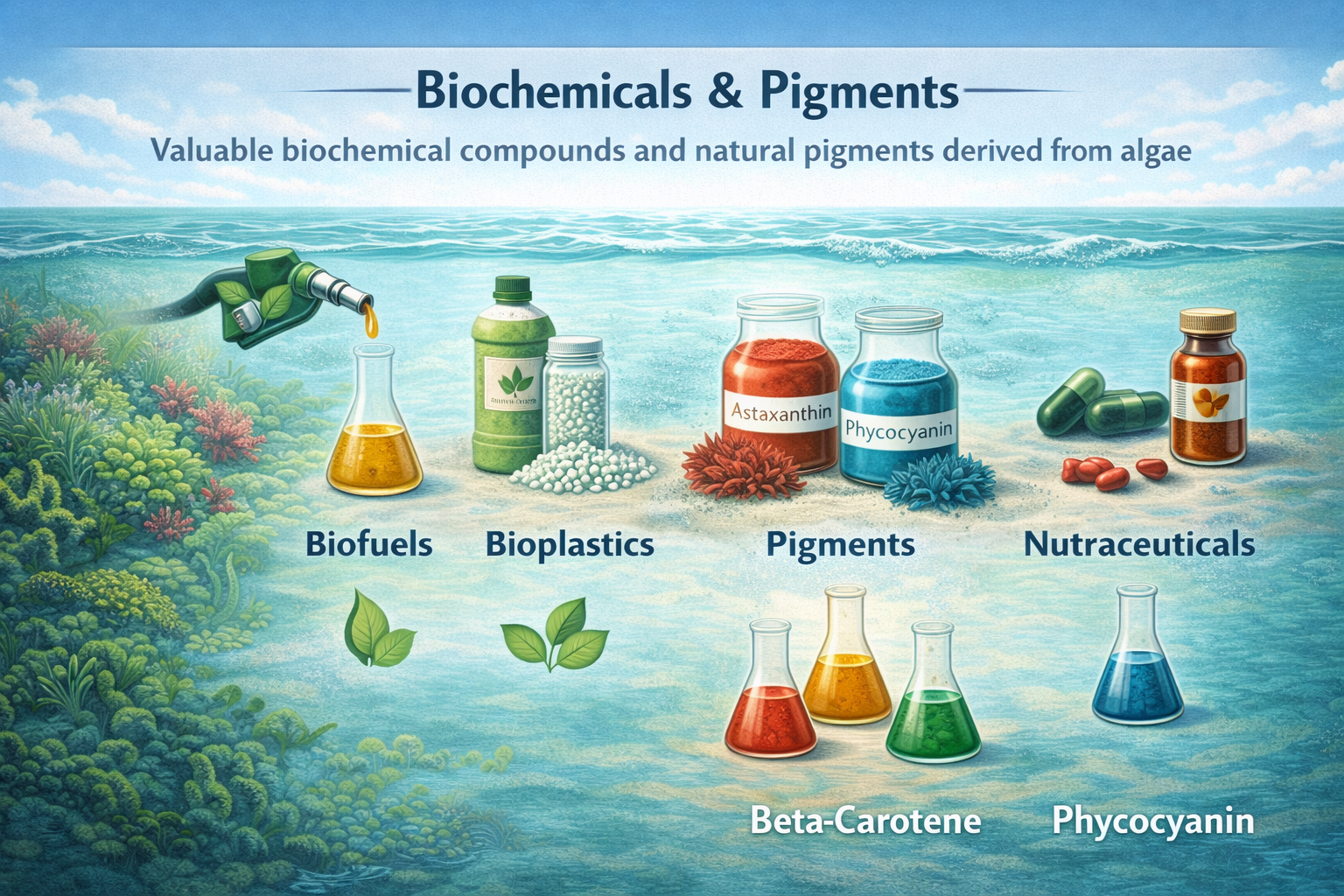
Finally, the future of scalable algae foods depends heavily on integrated biorefinery technology. Instead of producing only a single product, modern algae biorefineries aim to extract multiple high-value outputs from the same biomass, including proteins, omega-3 oils, pigments, antioxidants, carbohydrates, and biofertilizers. This improves profitability because every component of the biomass is monetized. Experts increasingly believe that multi-product algae biorefineries, combined with low-cost cultivation systems and automated processing, represent the most realistic pathway toward making algae-based foods commercially competitive in global mainstream food markets over the next decade.