Commercializing algae-based human food products requires companies to comply with food safety, novel food, labeling, ingredient approval, and manufacturing regulations that vary across major global markets. The regulatory process is critical because algae products are consumed directly by humans and may contain bioactive compounds, pigments, heavy metals, or allergens that require safety assessment. The most commercially important markets for algae foods are currently the United States, European Union, China, Japan, India, and Australia, and each region has its own approval framework for edible algae ingredients and algae-derived compounds.
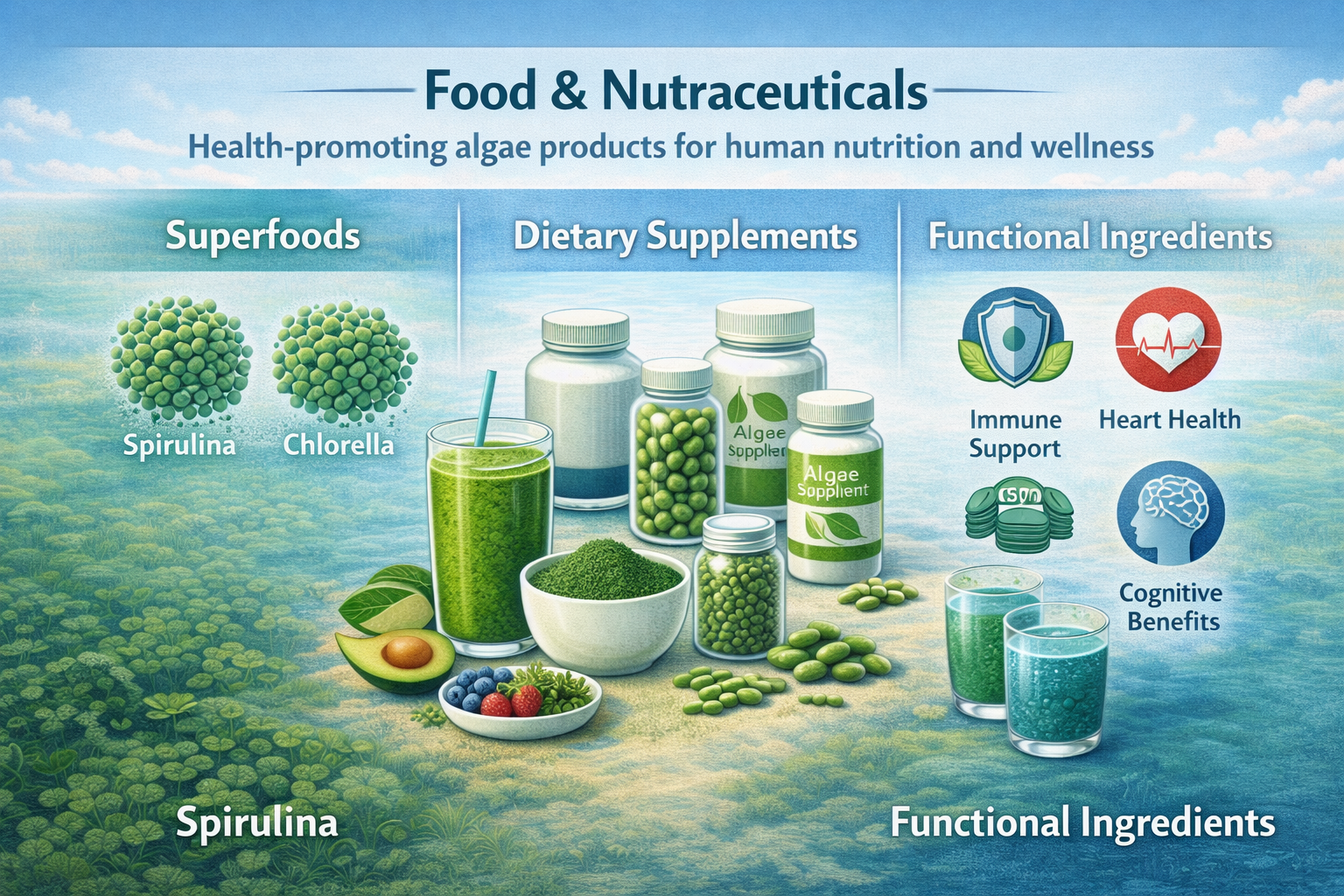
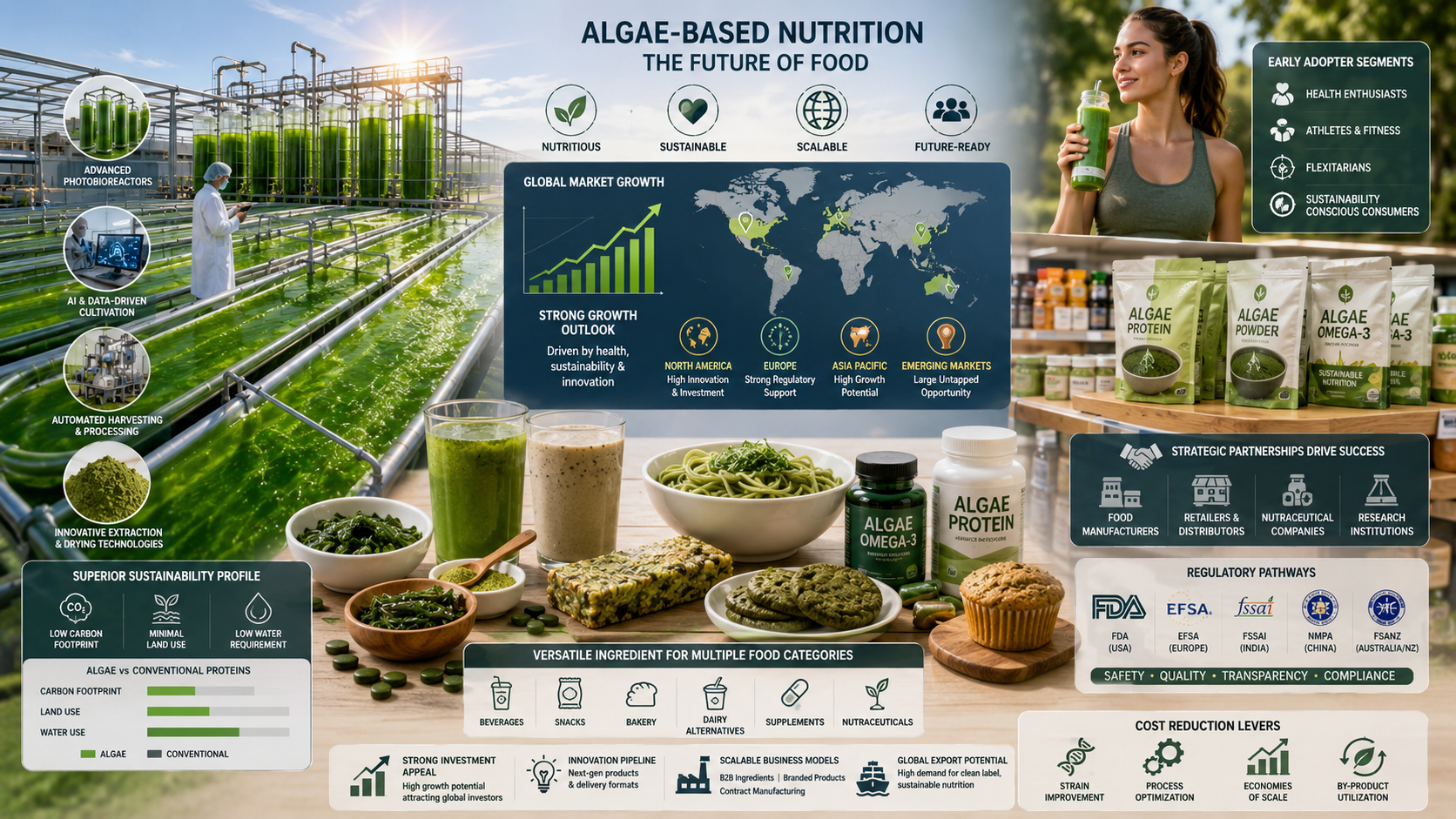
In the United States, algae food products are regulated primarily by the U.S. Food and Drug Administration (FDA). Many algae ingredients enter the market through the GRAS (Generally Recognized As Safe) pathway, which allows commercialization if scientific evidence demonstrates safety under intended usage conditions. Several algae species and ingredients, including Spirulina, Chlorella, DHA-rich algal oils, beta-carotene, and astaxanthin, already have GRAS status for specific food applications. Companies must also comply with regulations covering food labeling, nutritional claims, contaminant limits, and Good Manufacturing Practices (GMPs). For dietary supplements, additional compliance under the Dietary Supplement Health and Education Act may apply.
In the European Union, algae products face stricter approval requirements under the Novel Food Regulation. Any algae ingredient that was not widely consumed within the EU before 1997 may require authorization as a novel food before commercialization. The approval process includes extensive scientific evaluation by the European Food Safety Authority (EFSA) covering toxicology, nutritional composition, allergenicity, stability, and proposed usage levels. This process can take several years and often requires substantial investment in safety studies and documentation. However, once approved, companies gain access to one of the world’s largest premium health-food markets.
Asian markets are also becoming increasingly important for algae commercialization. China and Japan already have long histories of algae consumption, especially seaweed and Spirulina products, which simplifies market acceptance for certain categories. However, companies still need approvals related to food safety standards, import regulations, contaminant testing, and ingredient registration. In India, algae foods are regulated under the Food Safety and Standards Authority of India (FSSAI), which governs product approval, labeling, health claims, and nutraceutical regulations. Australia and New Zealand similarly regulate algae foods through Food Standards Australia New Zealand (FSANZ), particularly for novel ingredients and functional foods.
Beyond basic approval processes, one of the biggest global regulatory challenges is demonstrating consistent safety and quality. Algae cultivation systems can accumulate heavy metals, toxins, pathogens, or environmental contaminants if poorly controlled. As a result, regulators increasingly require testing for purity, microbial contamination, traceability, and production consistency. Companies seeking global commercialization must therefore invest heavily in quality assurance systems, standardized cultivation methods, laboratory testing, and regulatory documentation. Despite these regulatory barriers, approval pathways are gradually becoming clearer as algae-based nutrition gains mainstream acceptance, making regulatory compliance a major competitive advantage for companies entering the global algae food industry.