The global market for algae-based human food and nutrition is expanding rapidly as consumers shift toward plant-based proteins, functional foods, omega-3 supplements, and sustainable nutrition products. Current estimates vary depending on which segments are included, but recent industry reports place the broader global algae products market at around USD 5.5–6.0 billion in 2025, with forecasts projecting growth toward USD 8–11 billion by the early 2030s. Much of this growth is being driven by food, dietary supplements, nutraceuticals, and health-focused consumer products based on microalgae such as spirulina and chlorella.
Within the human nutrition segment, microalgae-based food products are becoming one of the fastest-growing categories. A recent market analysis estimated the global microalgae-based food market at approximately USD 744 million in 2025, with projections reaching nearly USD 1.74 billion by 2034, reflecting strong annual growth close to 10%. The market is being supported by rising demand for clean-label ingredients, vegan protein, natural colorants, and nutrient-dense functional foods. North America currently leads the sector, while Asia-Pacific remains the fastest-growing production region because of its large algae cultivation capacity.
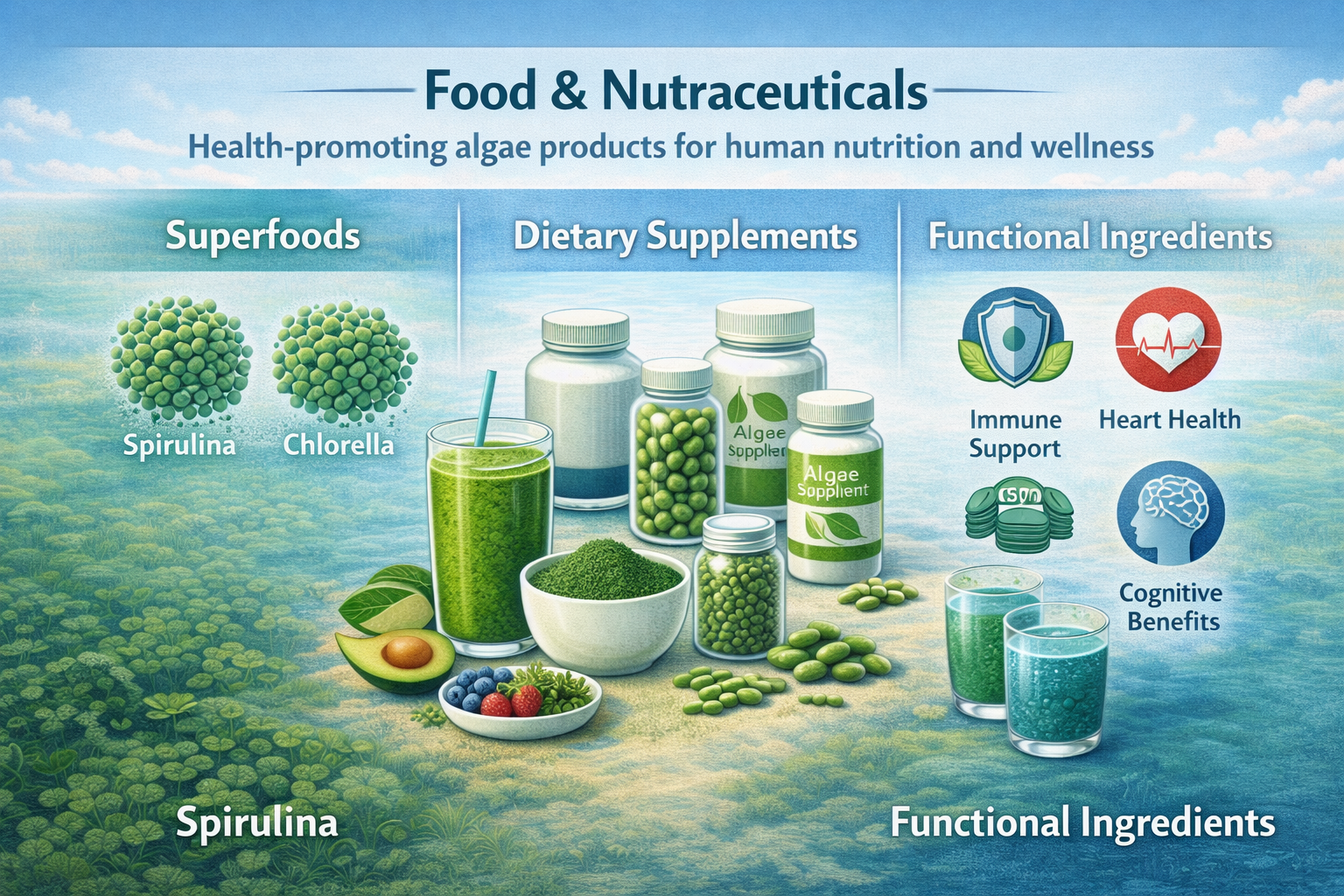
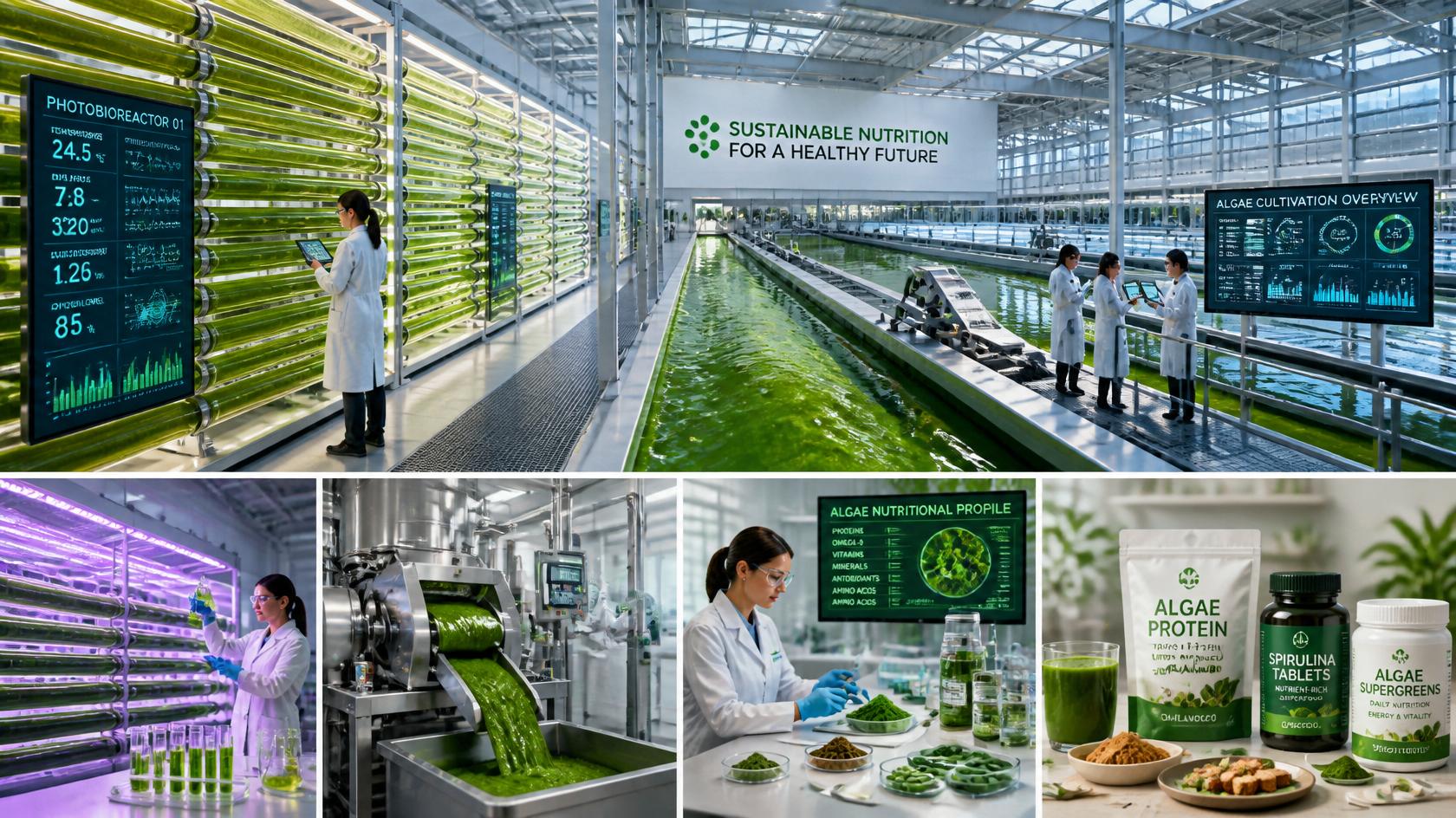
The largest commercial products in algae-based nutrition are currently spirulina, chlorella, omega-3 algae oils, astaxanthin, and algae proteins. Spirulina remains the dominant commercial species because of its high protein content and established production scale. Chlorella is increasingly popular due to its omega-3, chlorophyll, vitamin, and antioxidant profile, while algae-derived DHA and EPA oils are gaining market share as sustainable alternatives to fish oil. Reports also show strong growth in algae protein ingredients for sports nutrition, vegan foods, meal replacements, and functional beverages.
Geographically, Asia-Pacific dominates production, especially China, India, Japan, and Southeast Asia, while North America and Europe lead premium nutraceutical and functional-food consumption. India is emerging as an important future growth market because of rising demand for wellness supplements, vegetarian nutrition, and sustainable proteins. At the same time, Europe and the United States are seeing increasing regulatory support and investment in alternative proteins and sustainable food systems, which is accelerating commercialization of algae-based ingredients across mainstream food industries.
The long-term outlook for algae-based human nutrition remains strong because algae offer several advantages over conventional agriculture: high protein productivity, lower land requirements, rapid growth rates, and the ability to produce valuable nutrients such as omega-3 fatty acids, antioxidants, vitamins, and pigments. Industry forecasts consistently show annual growth rates between 6% and 10% across different algae nutrition categories. As food companies increasingly prioritize sustainability, plant-based diets, and functional health ingredients, algae-based human food and nutrition is expected to become one of the most commercially important segments of the global bioeconomy over the next decade.
Checkout the questions from Human food & nutrition
- What is the long-term export potential for algae-based food products from emerging markets?
- Which algae-based food innovations are most likely to attract venture capital and strategic investors?
- What level of consumer awareness and willingness to pay exists for algae-based nutrition products?
- How important are partnerships with food manufacturers, retailers, and nutraceutical companies for market entry?
- What are the main supply chain challenges in sourcing, processing, and distributing algae-based ingredients?
- Which food categories are most suitable for algae ingredient integration, such as snacks, beverages, supplements, or bakery products?
- How do algae-based foods compare with conventional foods in carbon footprint, land use, and water use?
- What role can algae play in replacing fish-derived ingredients in food and nutrition products?
- How can algae-based foods be positioned as premium, functional, or mass-market products?
- What regulatory approvals are needed to commercialize algae-based human food products in major markets?
- How attractive is algae as a source of protein, omega-3s, and micronutrients for food companies?
- Which regions offer the best investment opportunities for algae-based food businesses?
- What technologies can reduce production costs and improve scalability of algae-based foods?
- Which business models are most viable for algae-based food startups: B2B ingredients, branded products, or contract manufacturing?
- What are the biggest cost barriers to scaling algae-based food production?
- How can algae-based ingredients compete with plant protein and alternative protein products?
- What consumer segments are most likely to adopt algae-based foods first?
- Which algae species have the strongest commercial potential for human food applications?
- What technologies can improve large-scale algae cultivation for human nutrition?
- Algae-Based Human Food & Nutrition: The Future of Sustainable Eating