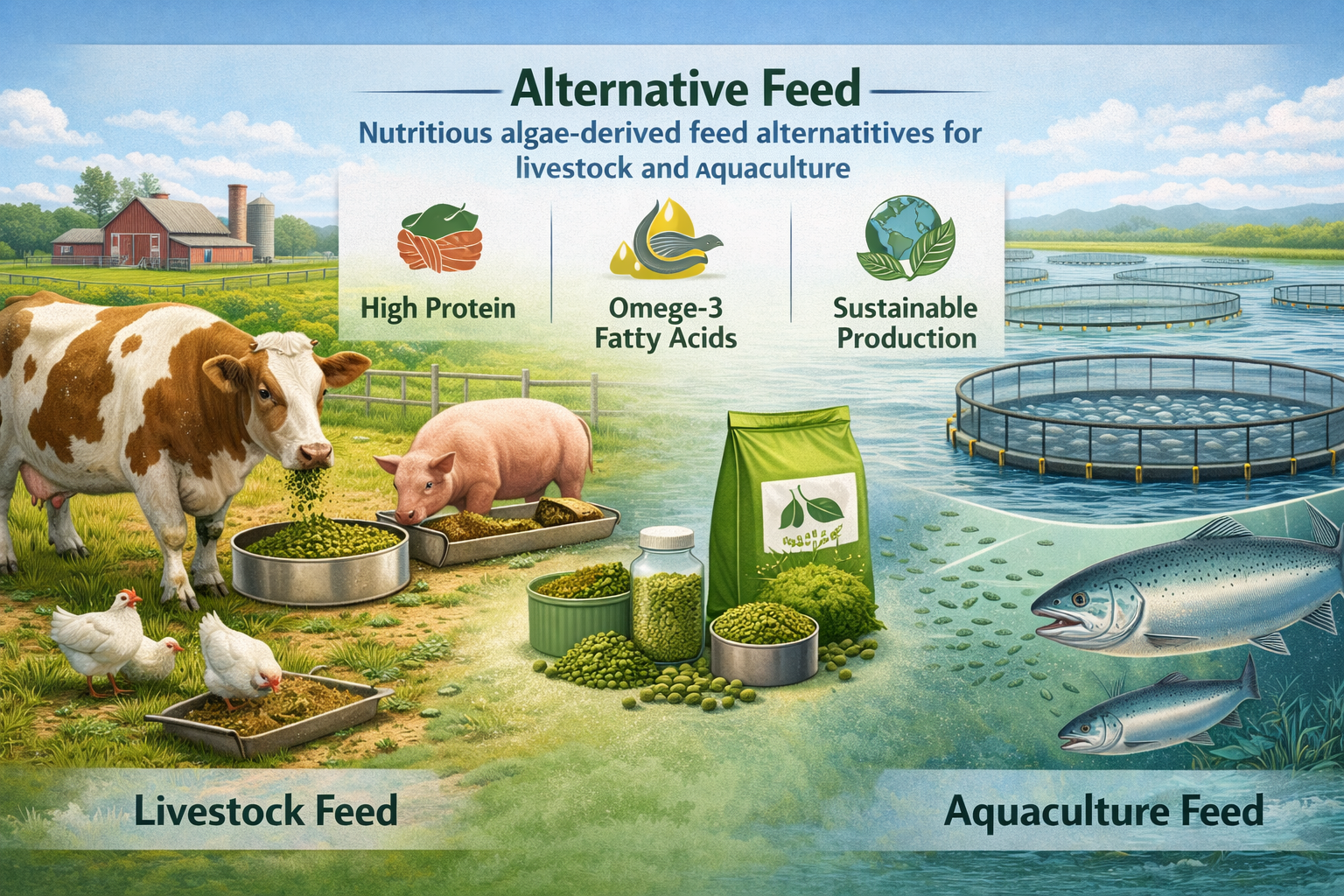
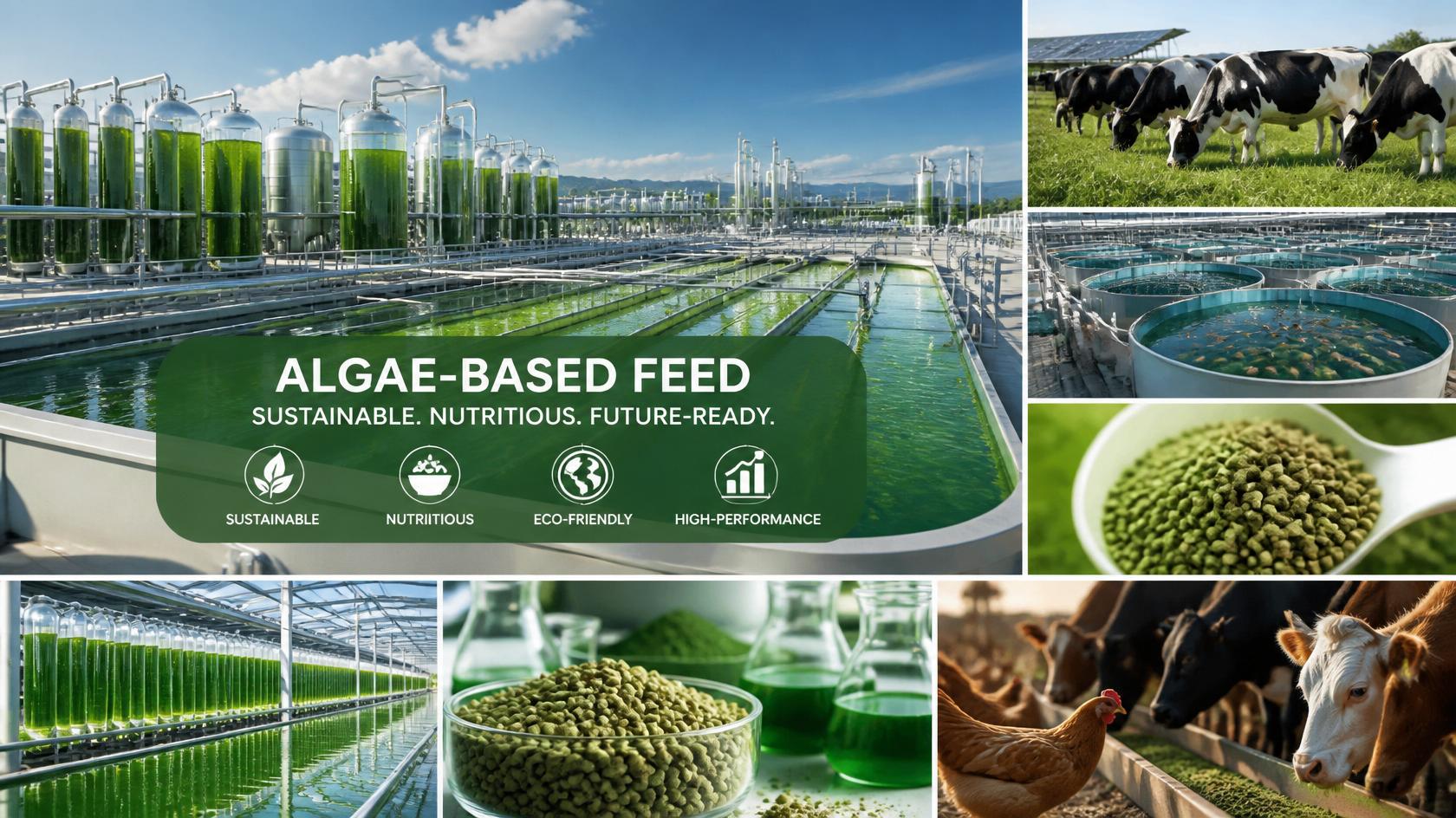
The strongest growth driver for algae-based cattle feed and aquaculture feed is the global rise in demand for sustainable protein. FAO reported that world fisheries and aquaculture production reached 223.2 million tonnes in 2022, with aquaculture accounting for 51% of aquatic animal production, and global demand for aquatic products is projected to rise 11% over the coming decade. As seafood consumption keeps expanding, feed producers will need ingredients that can scale without adding pressure on land, water, or wild fisheries, which puts algae in a strong position.
A second major trend is the push to cut methane emissions from livestock. Recent studies show that algae- and seaweed-based additives can reduce enteric methane in cattle by up to 65% in vivo in one 2024 trial, while broader reviews report very large reductions under some conditions, although results depend on species, dose, and diet. That climate benefit matters because regulators, food companies, and dairy brands are all under pressure to lower farm emissions, creating a clear market pull for algae-based cattle feed.
In aquaculture, the biggest market trend is the need to replace fishmeal and fish oil with more resilient ingredients. FAO noted that in 2022, by-products already made up 34% of fishmeal and 53% of fish oil production, showing that the sector is increasingly constrained by limited marine inputs. Algae offer a scalable alternative because they can supply protein, EPA, DHA, pigments, and functional compounds needed in fish and shrimp diets, which makes them attractive as aquaculture expands globally.
Another important trend is the move toward premium, traceable, climate-friendly feed labels. Retailers and processors are beginning to reward lower-emission dairy and seafood products, and this can justify a price premium for animals raised on algae-enhanced feed. Reuters reported in 2024 that climate-friendly milk made with seaweed feed additives was already being sold in supermarkets, showing that downstream branding and consumer willingness to pay are becoming real commercial forces.
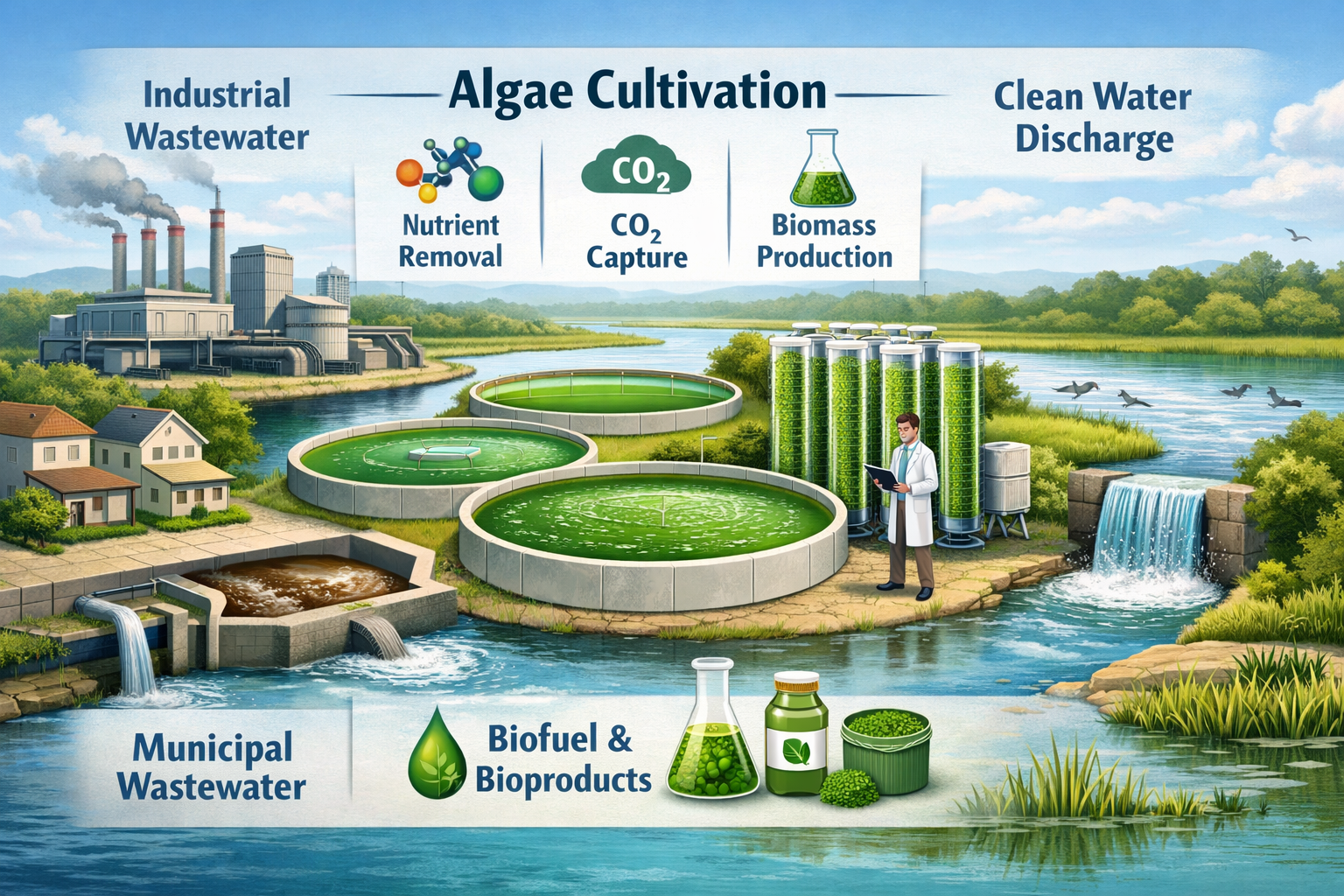
Finally, growth will be driven by cost reduction and industrial scale-up. Market forecasts already point to steady expansion, with one 2025 estimate placing the global algae-based animal feed market at US$4.83 billion in 2025 and US$6.53 billion by 2032, while another projects US$4.5 billion in 2024 rising to US$6.6 billion by 2034. The winners will be companies that can lower production costs through photobioreactors, offshore or land-based cultivation, wastewater nutrient recycling, and standardized extraction, because scale and price parity will decide how fast algae moves from niche to mainstream.
Checkout the questions from Cattlefeed and fishfeed
- What are the most effective distribution channels for algae-based cattle feed and aquaculture feed products?
- Which countries are investing heavily in algae-based animal nutrition and aquaculture feed technologies?
- Which feed formulations create the highest demand for algae-derived ingredients?
- Which livestock and aquaculture sectors are the strongest target markets for algae-based feed products?
- What are the major business opportunities in the algae-based cattle feed and aquaculture feed industry?
- What are the biggest challenges in commercializing algae-based feed products?
- Can a small-scale algae feed production unit scale into a large commercial livestock and aquaculture supply business?
- How scalable is algae cultivation for supporting the global feed industry?
- What are the operational and maintenance costs of running an algae feed production unit?
- How much land, water, machinery, and infrastructure are required to build a profitable algae feed production facility?
- What technologies can improve the efficiency of algae cultivation, harvesting, and feed processing?
- Can algae biomass from wastewater treatment be safely reused for feed production?
- Which raw materials, nutrients, or waste streams can support low-cost algae feed production?
- What role can algae play in sustainable and climate-friendly animal nutrition?
- Can algae-based feed improve fish growth, immunity, and feed conversion ratio (FCR)?
- Can algae-based feed reduce methane emissions in cattle farming?
- Can algae-based feed products commercially compete with conventional feed ingredients in terms of cost, scalability, and performance?
- How does algae-based feed compare with conventional feed ingredients in terms of nutrition and sustainability?
- Which algae species are most suitable for commercial cattle feed and aquaculture feed production?
- Algae-Based Cattle Feed & Fish Feed: Transforming Livestock and Aquaculture Nutrition