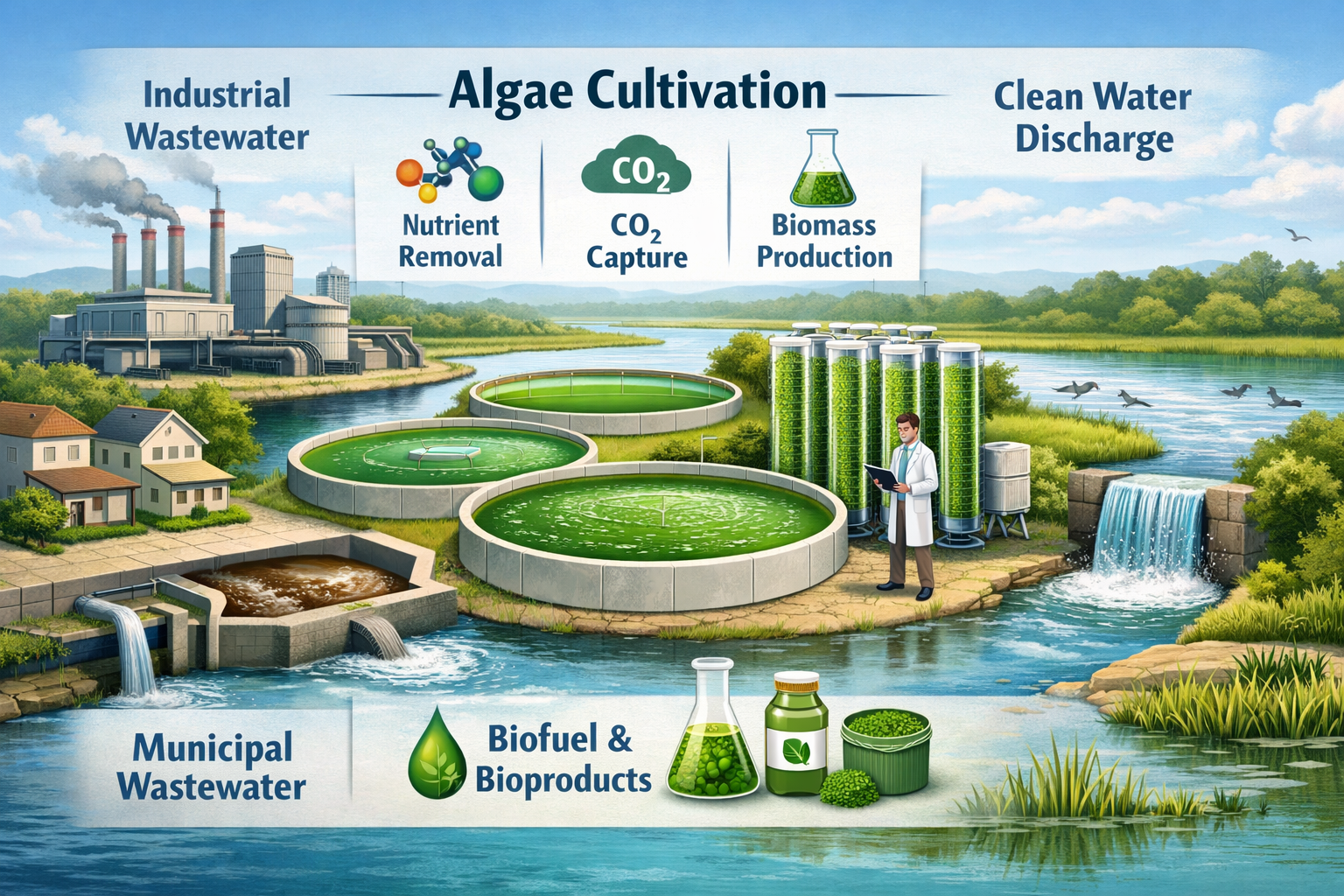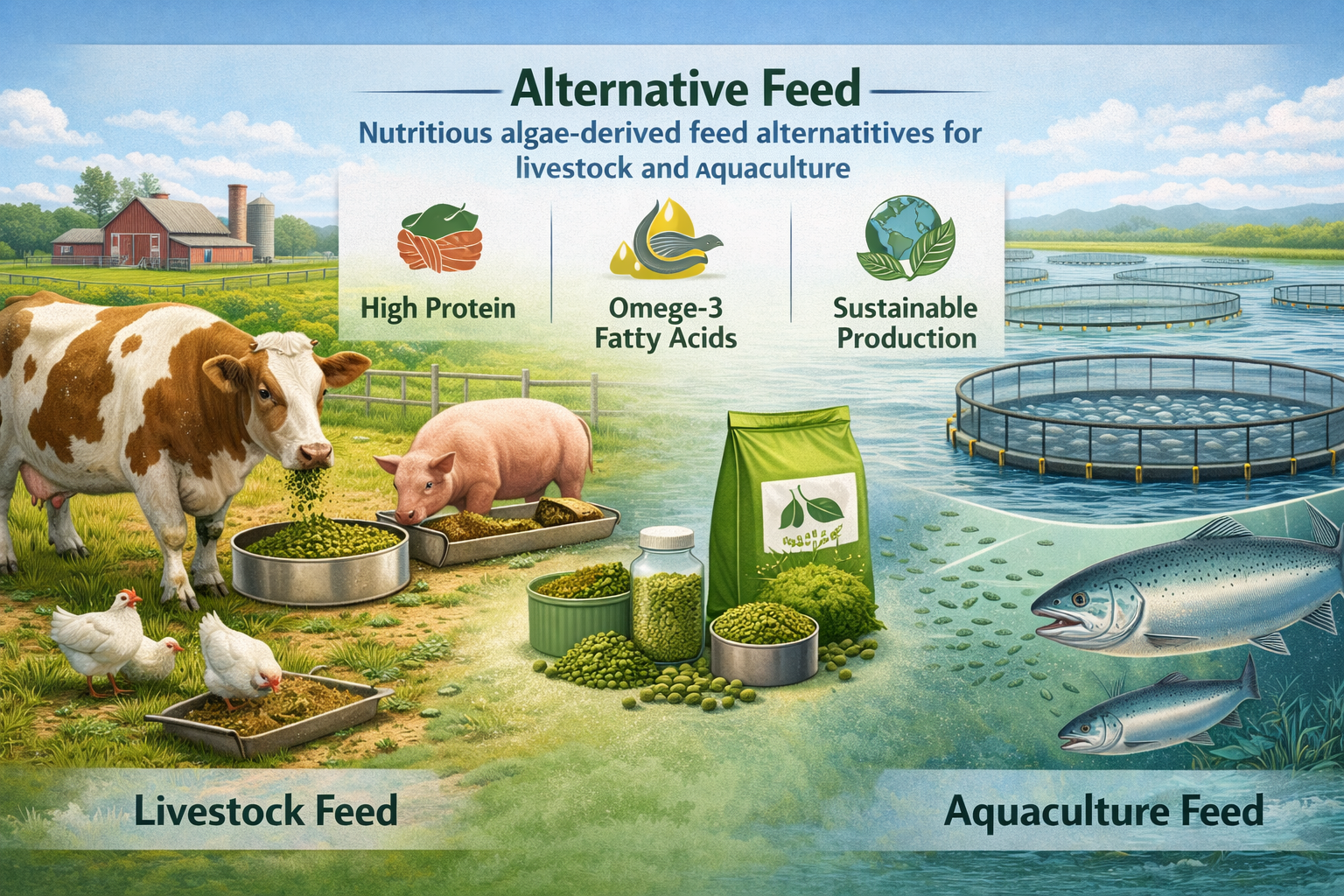
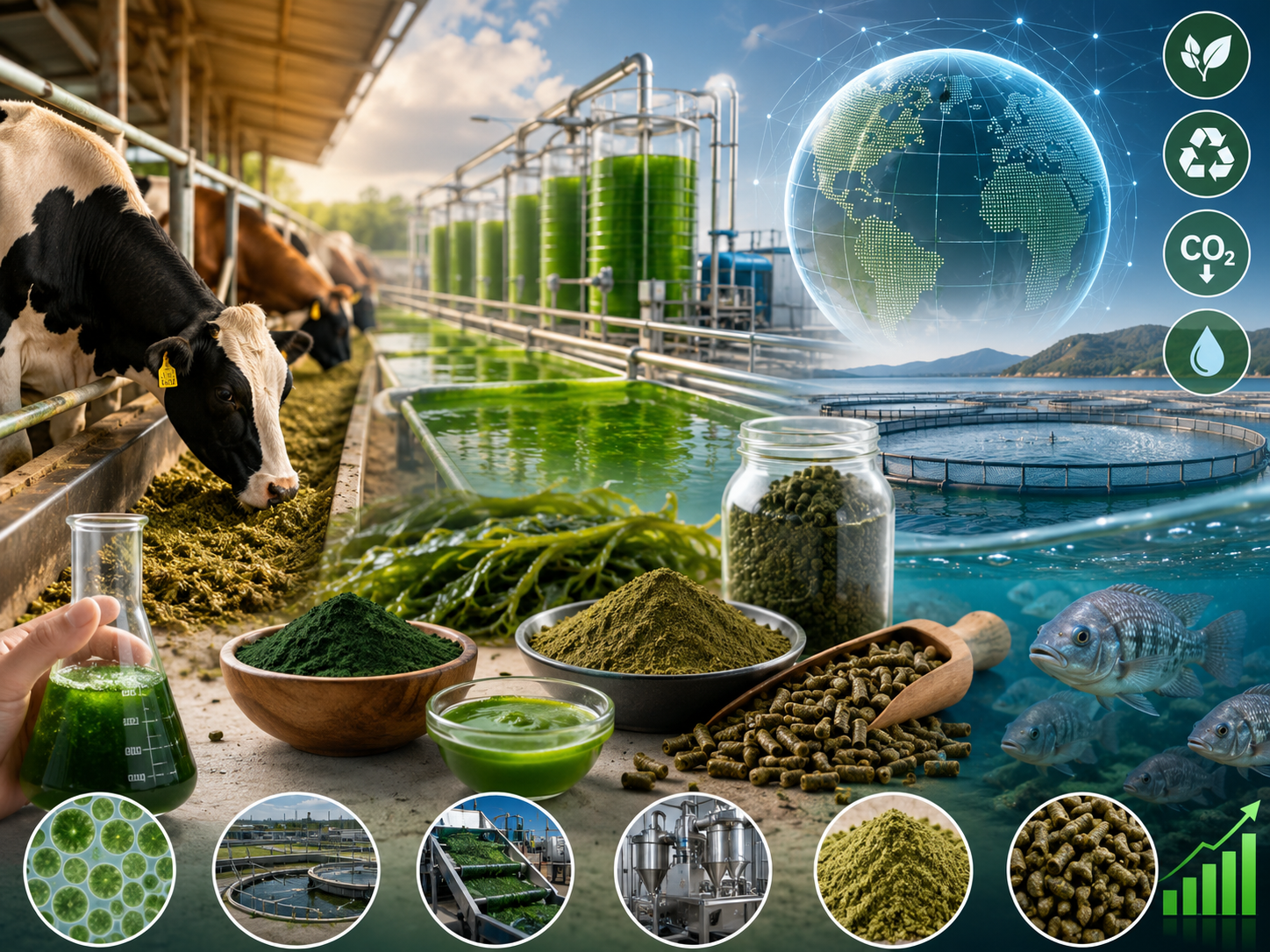
Algal biomass produced during wastewater treatment has strong potential for reuse in animal and aquaculture feed, but its safety depends heavily on the wastewater source, treatment controls, and regulatory compliance. Microalgae grown in nutrient-rich wastewater can contain high levels of protein, lipids, vitamins, and pigments, making them attractive as alternative feed ingredients. However, researchers consistently emphasize that wastewater-derived algae may also accumulate contaminants such as heavy metals, pathogens, pharmaceuticals, pesticides, and industrial chemicals, which creates safety concerns if not properly managed.
The safest and most commercially realistic approach is to use algae cultivated from carefully selected wastewater streams, especially agricultural, food-processing, dairy, and aquaculture wastewater. These streams generally contain high nitrogen and phosphorus levels but lower concentrations of toxic contaminants compared with mining, textile, or chemical-industry effluents. Studies on food-industry wastewater repeatedly show that it is relatively suitable for algal cultivation because it has high organic nutrients with comparatively lower toxic loads. This significantly improves the feasibility of producing biomass that may qualify for feed applications after appropriate testing and processing.
One of the main risks is the accumulation of heavy metals and emerging contaminants inside algal cells. Microalgae are highly efficient biosorbents, meaning they can absorb cadmium, lead, mercury, arsenic, antibiotics, and other pollutants from wastewater. While this property is beneficial for wastewater purification, it creates challenges for feed reuse because contaminants can enter the food chain. Reviews on wastewater-grown microalgae therefore stress that biomass intended for feed must undergo strict monitoring for toxic residues and microbial contamination before commercialization. In many cases, wastewater-grown algae may be more suitable first for bioenergy or fertilizer applications rather than direct feed use unless contamination levels are proven safe.
Several technologies can improve safety and commercial viability. Pretreatment, controlled cultivation systems, strain selection, harvesting purification, drying, and post-processing can reduce contamination risks significantly. Researchers are also exploring integrated systems where wastewater-grown algae are first refined to extract valuable compounds while removing unwanted substances. In aquaculture, some studies have already demonstrated safe use of treated algal biomass under controlled conditions, particularly when cultivated in secondary-treated municipal wastewater or nutrient-polished aquaculture effluent rather than raw industrial wastewater. These approaches are helping build confidence in circular nutrient-recovery systems.
Globally, the future of wastewater-derived algae feed will depend on regulation, certification, and traceability. The European Union, United States, and several Asian markets are strengthening standards around feed safety, contaminant monitoring, and circular bioeconomy practices. As technology improves, algae biomass from low-risk wastewater streams could become an important sustainable protein source for aquaculture and livestock, especially in regions facing feed shortages and nutrient pollution. However, large-scale commercial adoption will require consistent evidence that contaminant levels remain below regulatory limits and that the biomass is nutritionally reliable and biologically safe for long-term feed use.