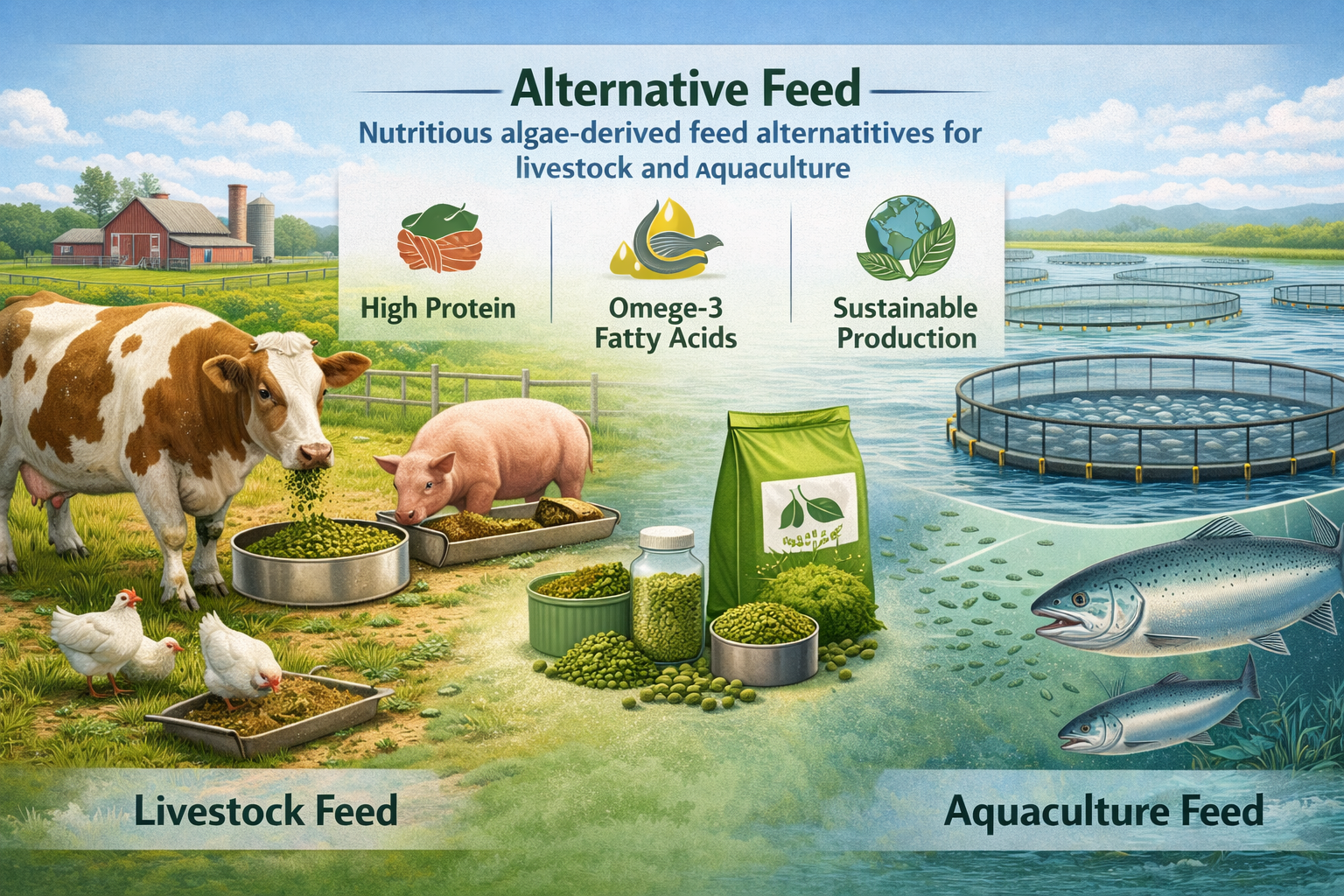
The strongest investors in algae-based animal nutrition and aquaculture feed technologies are the United States, India, the United Kingdom (especially Scotland), Norway, and the Netherlands. These countries are attracting capital because algae can replace part of fishmeal, fish oil, and other high-impact feed inputs while also supporting climate goals and supply-chain security. The market is expanding globally, but the most active funding is concentrated where governments already back aquaculture innovation and low-carbon feed systems.
In the United States, investment is being driven by federal aquaculture and algae R&D support. NOAA maintains dedicated aquaculture funding opportunities, the USDA/NIFA is backing a project on marine algae to enhance milk production, mitigate greenhouse gases, and recover nutrients, and the U.S. Department of Energy selected algae conversion projects in 7 states to develop low-carbon fuels, chemicals, and agricultural products. That mix of public funding and applied research makes the U.S. one of the biggest innovation hubs for algae-based feed technologies.
India is investing heavily through seaweed-focused fisheries policy. Under PMMSY, the government launched a fisheries package worth ₹20,050 crore, with ₹640 crore specifically allocated for seaweed cultivation from 2020 to 2025. Official updates also show funding for a multipurpose seaweed park in Tamil Nadu and seaweed seedbanks, which matters because feed-grade seaweed supply is a prerequisite for animal nutrition and aquaculture applications at scale.
In the United Kingdom and Norway, the investment signal is strongest in Scotland/Norway’s salmon economy. Scotland’s government has committed £1.5 million to MiAlgae, which is developing fish-free omega-3 from algae and says it can save 30 tonnes of fish for every tonne of algae produced. Scotland also distributed £14 million through Marine Fund Scotland in 2024/25, while Norway’s Foods of Norway center—funded by the Research Council of Norway—is developing novel feed ingredients from blue and green biomass and improving feed efficiency for fish and farm animals.
The Netherlands is another major player because it combines algae-scale-up capital with strong aquaculture know-how. Dutch producer Phycom secured €9 million to scale microalgae production, and EU aquaculture guidance for the Netherlands explicitly notes that investigating seaweed for animal feed can expand the market for Dutch algae and seaweed products. That makes the Netherlands especially relevant for industrialized microalgae and aquafeed ingredient development.
Overall, the clearest heavy investors are the countries with public funding, salmon or dairy pressure points, and strong feed-tech ecosystems: the U.S., India, Scotland/UK, Norway, and the Netherlands. These countries are moving fastest because algae-based feed can deliver both climate benefits and commercial feed security.