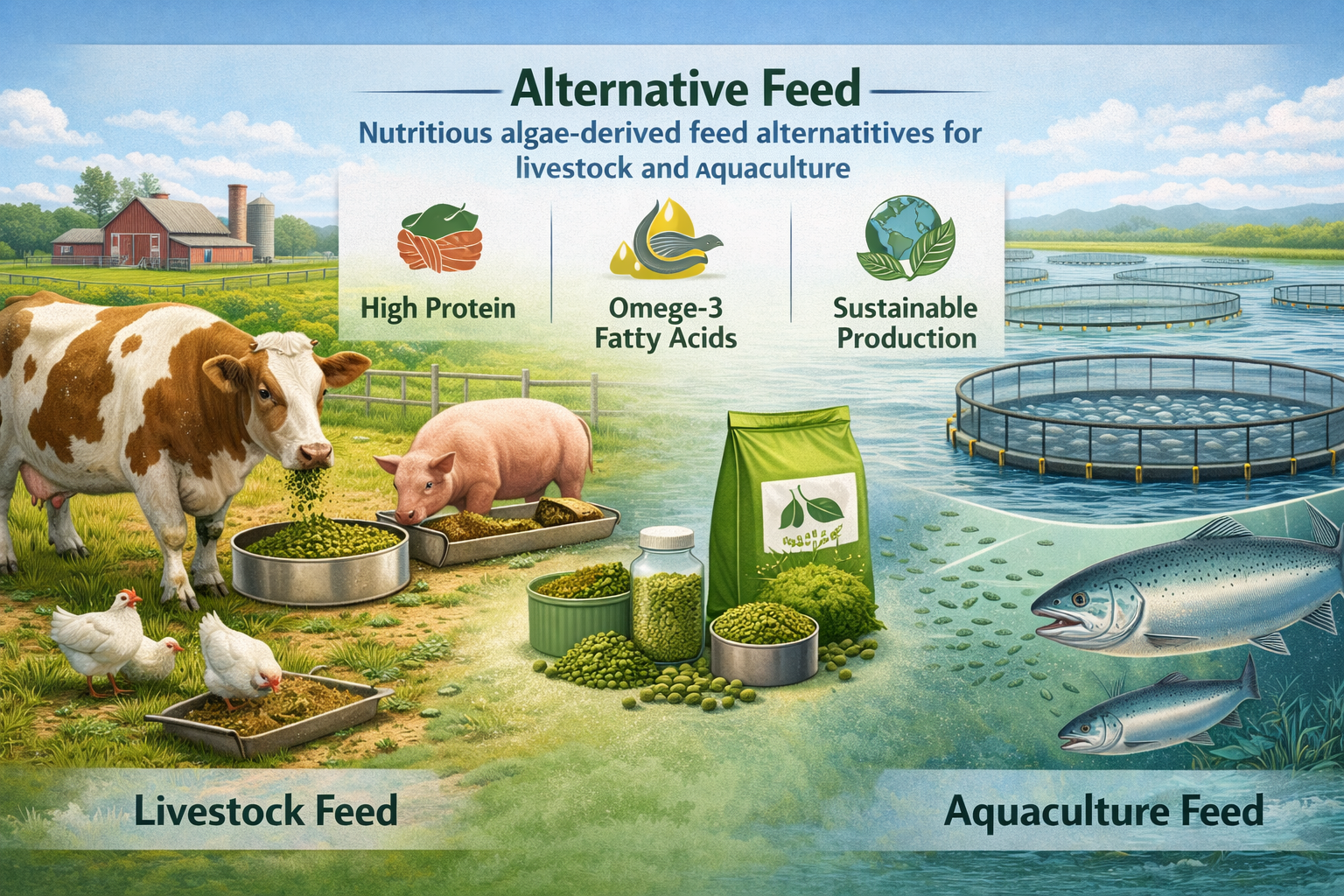
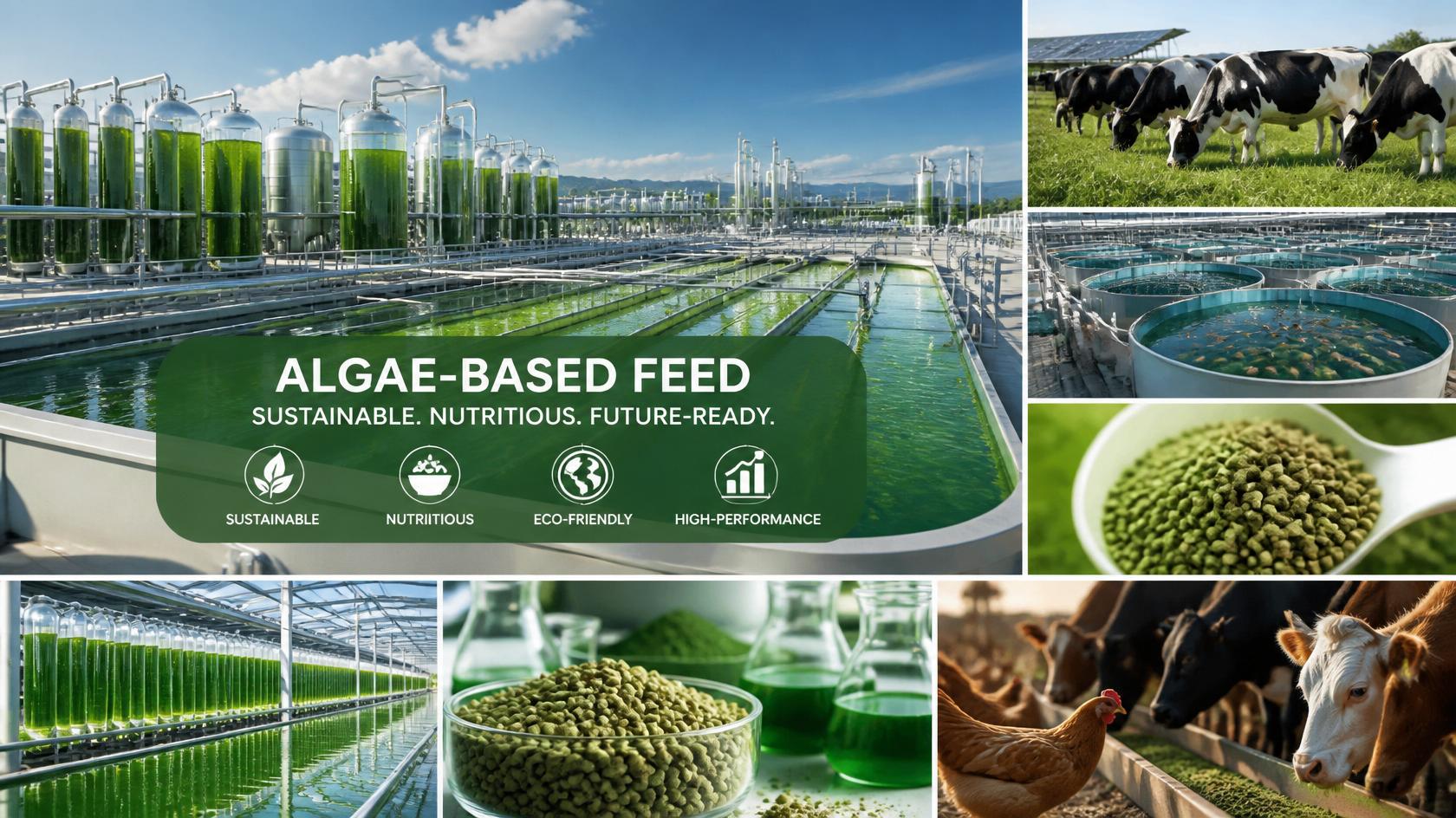
The strongest target market for algae-based feed products is aquaculture, especially for salmon, shrimp, tilapia, trout, and seabass systems that depend on fishmeal and fish oil. FAO says global aquaculture reached 130.9 million tonnes in 2022, surpassing capture fisheries for aquatic animal production for the first time, and aquaculture is expected to keep expanding toward 205 million tonnes by 2032. Because the sector already consumes most global fishmeal and fish oil, algae is a natural fit as a protein, omega-3, and functional-ingredient replacement.
Within aquaculture, carnivorous and high-value species are the best entry points because they have the highest dependence on marine ingredients and the strongest need for performance and health benefits. Reviews show microalgae and seaweeds can improve growth, feed utilization, disease resistance, stress tolerance, and fillet quality, and species such as Nannochloropsis, Chlorella, Schizochytrium, Tetraselmis, and Isochrysis are repeatedly highlighted as promising aquafeed ingredients. A tilapia study also showed a cost-competitive microalgae-based feed that can reduce reliance on fishmeal and fish oil.
The next strongest market is poultry, especially broilers and layers. FAO says poultry meat and eggs are among the most widely eaten animal-source foods globally, and demand continues to rise because chicken is affordable, widely accepted, and suitable for intensive production systems. Recent research shows microalgae such as Arthrospira (Spirulina) can boost meat and egg production, strengthen stress resilience, and improve product quality, which makes poultry a practical market for both nutrition and functional-feed claims.
Swine is another strong target, especially for piglets, grower-finisher pigs, and sows, where algae can act as a protein, mineral, and health-support ingredient. Reviews report that microalgae in swine diets can improve meat quality, strengthen the immune system, and enhance lipid composition, while recent work frames microalgae as a sustainable mineral source for pig nutrition. This matters because pig and poultry feed demand is closely linked to global livestock expansion and soy-replacement pressure.
The more specialized but commercially important market is ruminants, especially dairy cattle and high-value beef systems. Microalgae are attractive here less as a bulk feed replacement and more as a methane-mitigation and milk-quality tool; reviews show algae-based additives can reduce enteric methane, and marine microalgae are being studied specifically to lower ruminal emissions. So, the global ranking is clear: aquaculture first, poultry second, swine third, and dairy/beef ruminants as a targeted climate-smart niche.