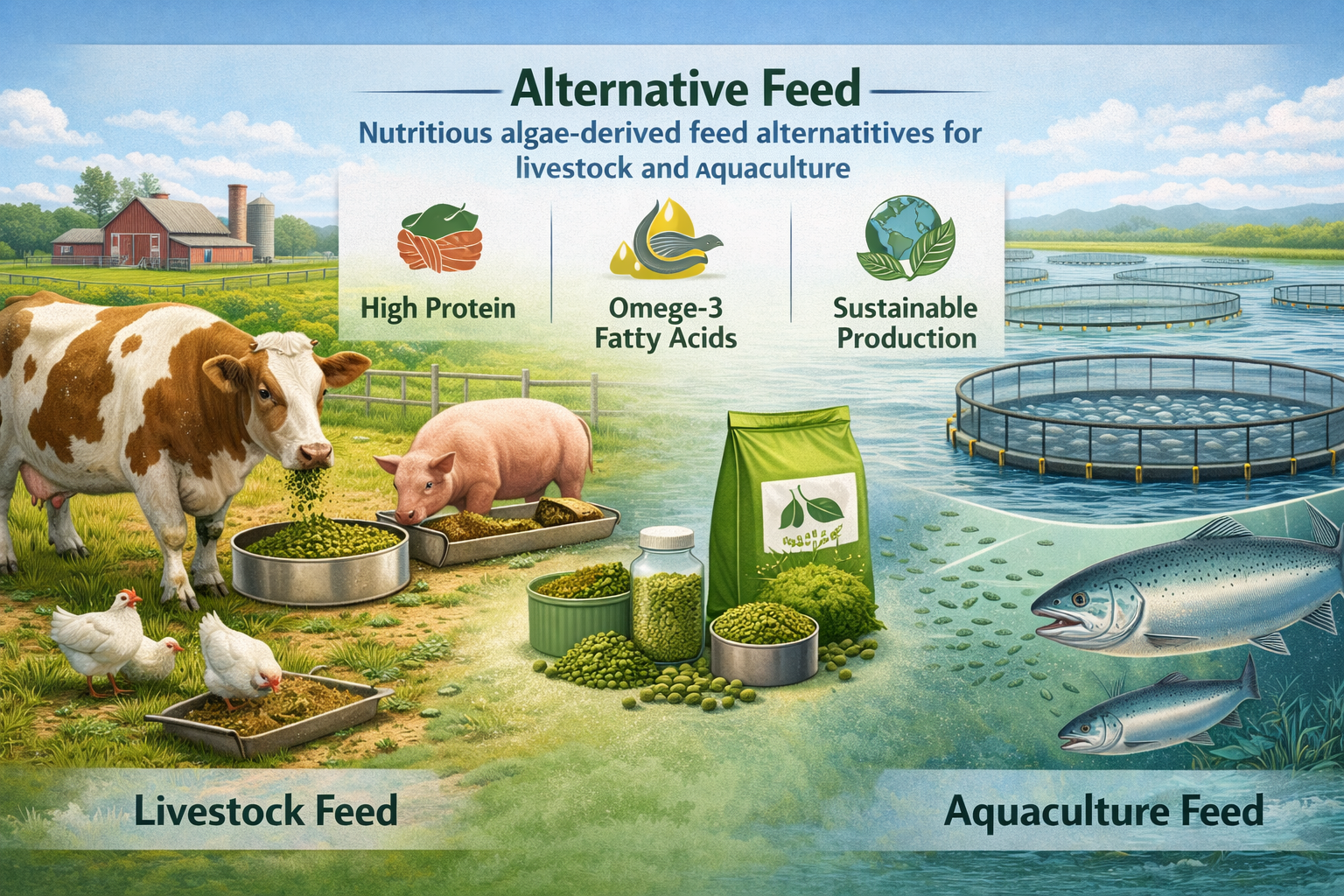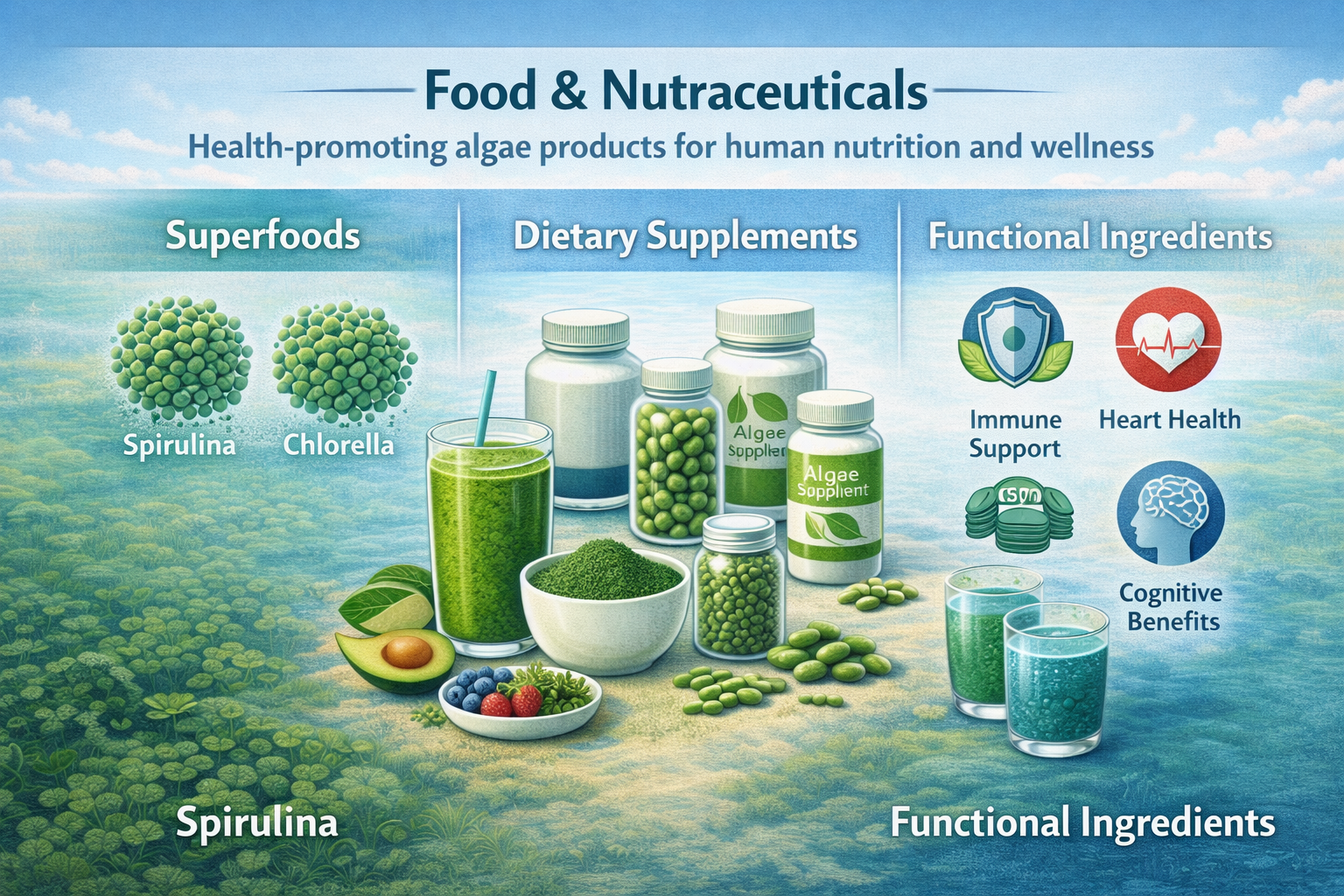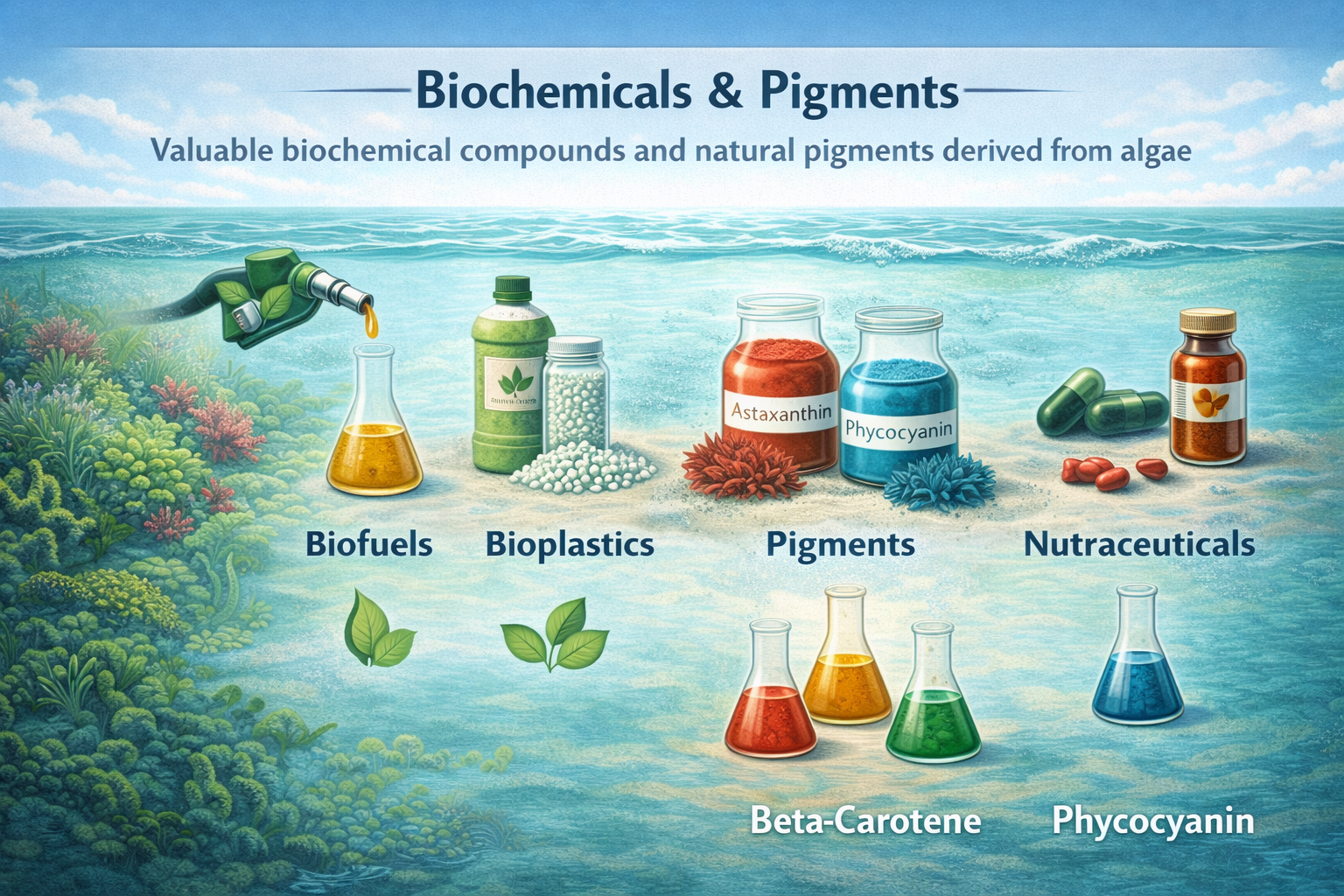
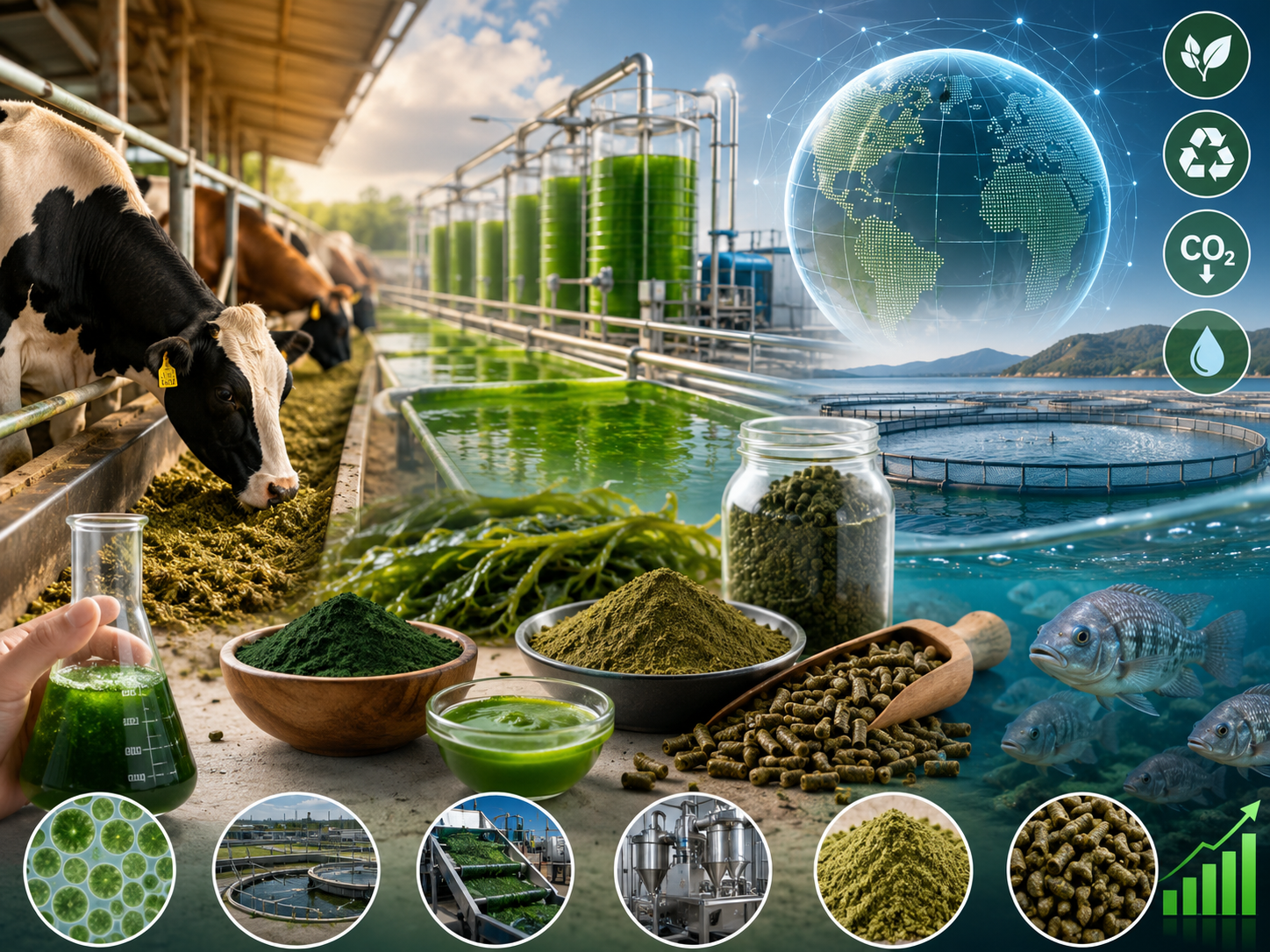
Algae can play a transformative role in sustainable and climate-friendly animal nutrition because they provide a highly nutritious feed source while reducing the environmental impact of livestock production. Microalgae such as Spirulina, Chlorella, and marine seaweeds contain high levels of protein, omega-3 fatty acids, vitamins, minerals, and antioxidants, making them valuable alternatives to conventional feed ingredients like soybean meal and fishmeal. The FAO and several global studies recognize algae as a promising feed resource because algae cultivation requires less land and freshwater compared to traditional crops, while also absorbing carbon dioxide during growth. This makes algae-based feed an important solution for building low-carbon food systems globally.
One of the most significant climate benefits of algae in animal nutrition is its ability to reduce methane emissions from livestock, especially cattle. Research on red seaweed species such as Asparagopsis taxiformis has shown remarkable methane reduction potential when added in small quantities to cattle feed. Scientific studies report methane emission reductions ranging from 50% to over 80% in some feeding trials. Since methane is a greenhouse gas that is far more potent than carbon dioxide over the short term, reducing livestock methane emissions is critical for achieving global climate goals. Algae-based feed additives are therefore being explored worldwide as practical methane mitigation tools for the livestock sector.
Algae can also improve the sustainability of aquaculture, one of the world’s fastest-growing food sectors. Fish farming traditionally depends heavily on fishmeal and fish oil sourced from wild fisheries, creating pressure on marine ecosystems. Microalgae provide a sustainable alternative because they naturally contain EPA and DHA omega-3 fatty acids, which are essential for fish growth and human nutrition. Studies show that algae-based aquafeeds can partially replace conventional marine feed ingredients without compromising fish health or growth performance. This reduces dependence on overexploited fisheries while supporting more sustainable seafood production worldwide.
Another important role of algae is improving animal health and feed efficiency. Algae contain bioactive compounds such as polysaccharides, pigments, and antioxidants that can enhance immune response, gut health, and stress resistance in poultry, cattle, and aquaculture species. Several studies indicate that algae supplementation can improve feed conversion ratios and animal productivity while lowering the need for antibiotics in some systems. Better feed efficiency means fewer resources are required to produce meat, milk, eggs, or fish, which directly lowers the environmental footprint of animal agriculture. This aligns with global efforts to promote sustainable livestock systems and reduce agricultural emissions.
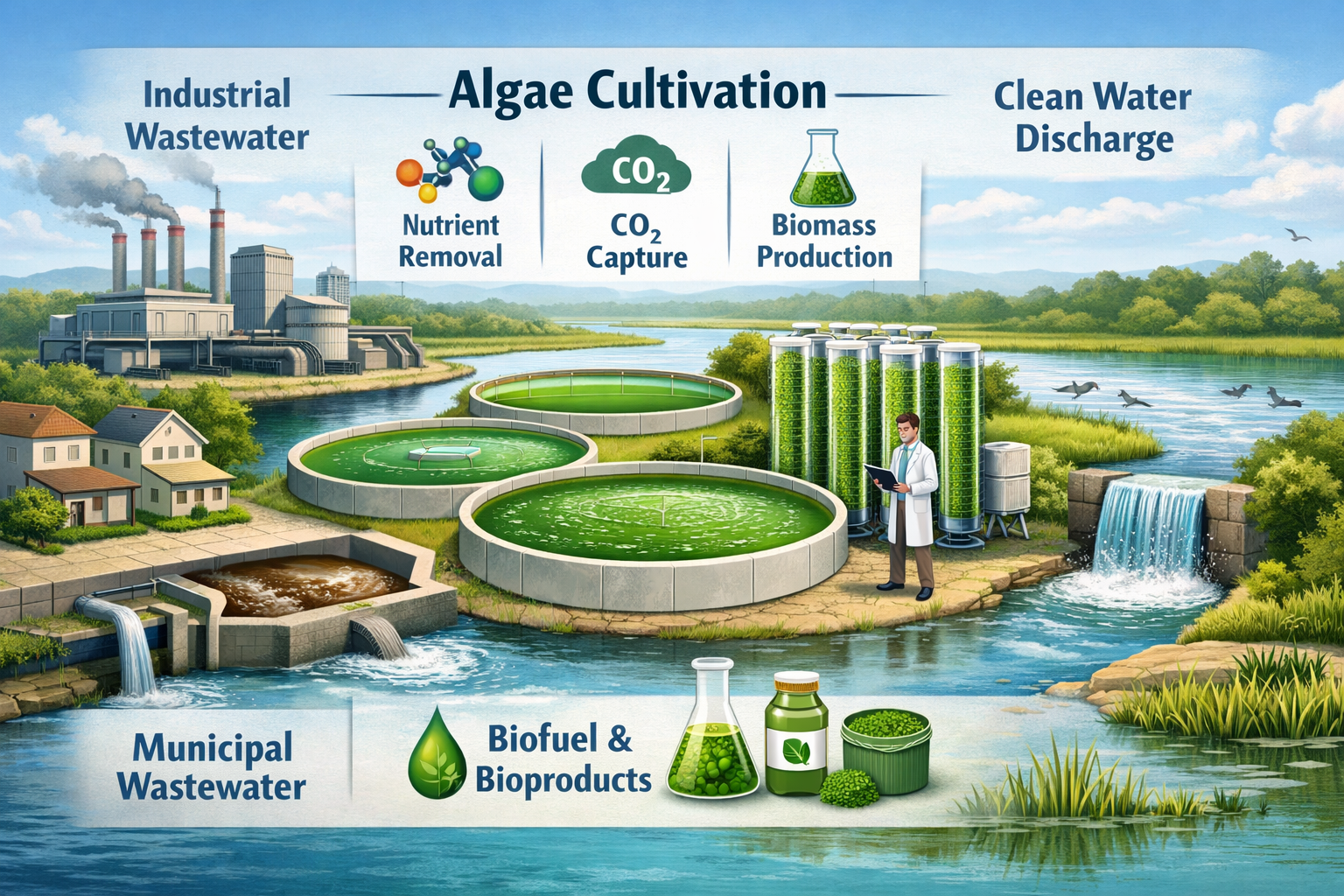
Despite its strong potential, large-scale adoption of algae in animal nutrition still depends on overcoming challenges related to production cost, large-scale cultivation, and supply chain development. Technologies such as photobioreactors, wastewater-based algae cultivation, AI-driven farming systems, and biorefinery models are helping reduce costs and improve scalability. Global demand for sustainable feed ingredients is rising rapidly as governments and food companies adopt net-zero commitments. As climate regulations become stricter and sustainable protein demand increases, algae are expected to become a major component of future animal nutrition systems across agriculture and aquaculture industries worldwide.