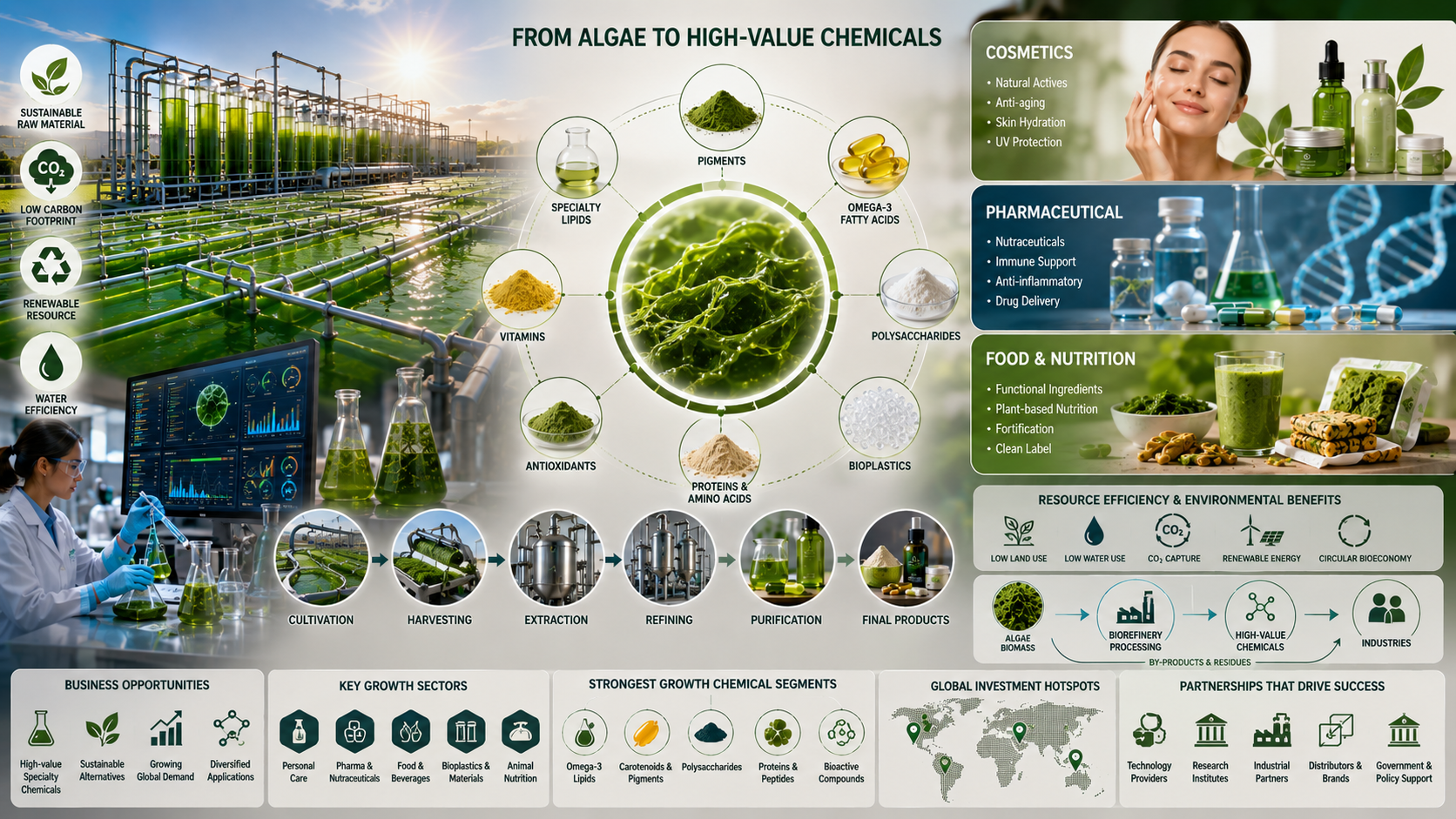
The algae-derived chemical segments with the strongest future growth potential are omega-3 oils, astaxanthin and other carotenoids, phycocyanin, and algae proteins. The overall algae products market is forecast to rise from USD 5.87 billion in 2025 to USD 8.07 billion by 2030 at 6.6% CAGR, driven by demand for sustainable protein, omega-3, and cosmetics ingredients. That growth profile shows that the fastest expansion will come from high-value, health-linked, and clean-label chemical segments rather than bulk commodities.
The strongest near-term opportunity is omega-3 oils, especially algae-derived DHA and EPA. The broader omega-3 market is projected to grow from USD 4.36 billion in 2025 to USD 7.76 billion by 2030, a 12.2% CAGR. Algae-based omega-3s are particularly attractive because they provide a vegan, sustainable, and contaminant-controlled alternative to fish oil, which is increasingly important for infant formula, supplements, and functional foods in North America, Europe, and Asia.
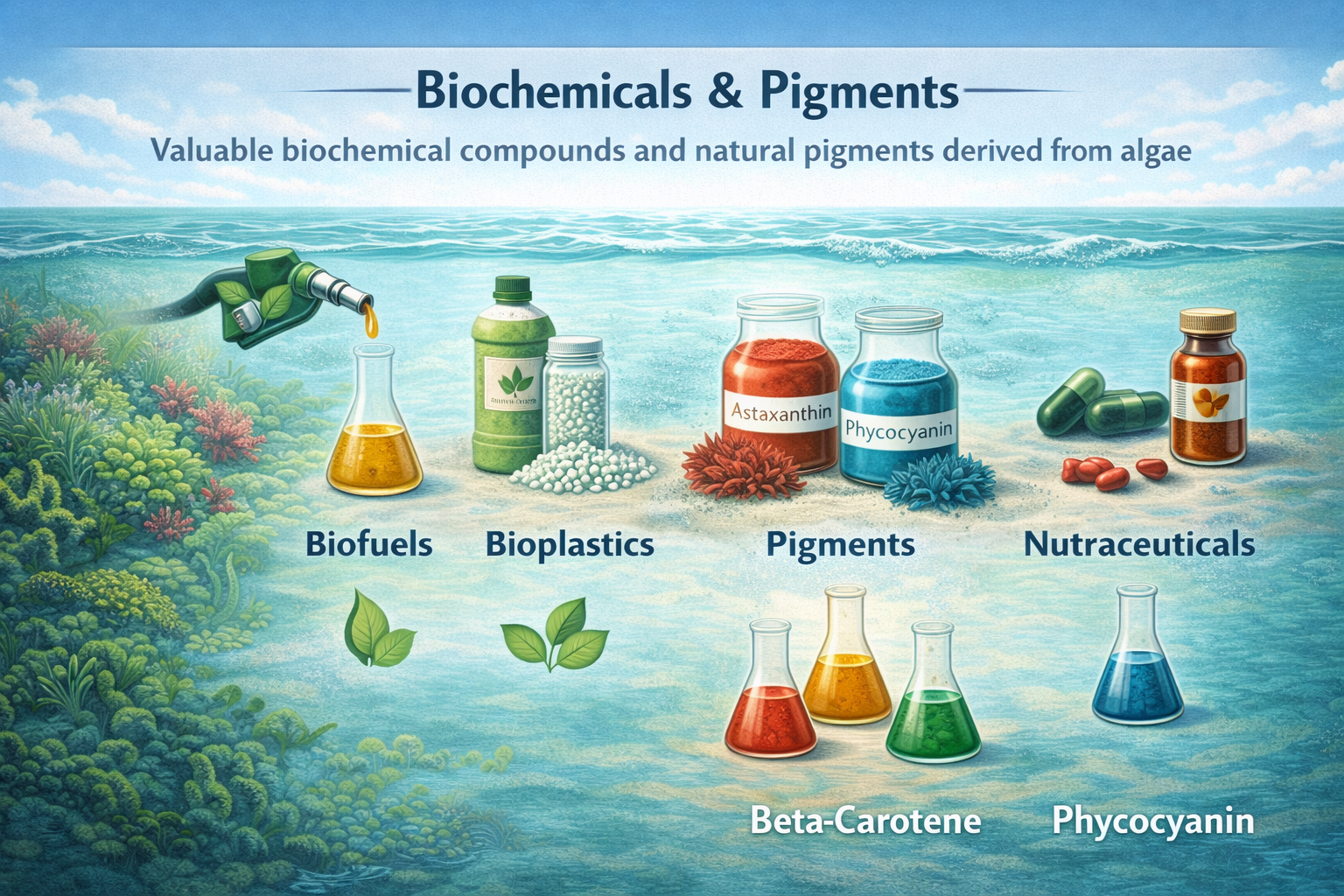
A second major growth area is astaxanthin, one of the highest-value algae-derived chemicals. One recent forecast places the global astaxanthin market at USD 6.92 billion by 2034, expanding at 14.95% CAGR. That strength comes from use in nutraceuticals, aquaculture feed, cosmetics, and food applications, where demand for natural antioxidants is rising fast. Closely related carotenoids such as beta-carotene also have solid upside, with one forecast showing growth from USD 0.5 billion in 2026 to USD 1.1 billion by 2036 at 7.1% CAGR.
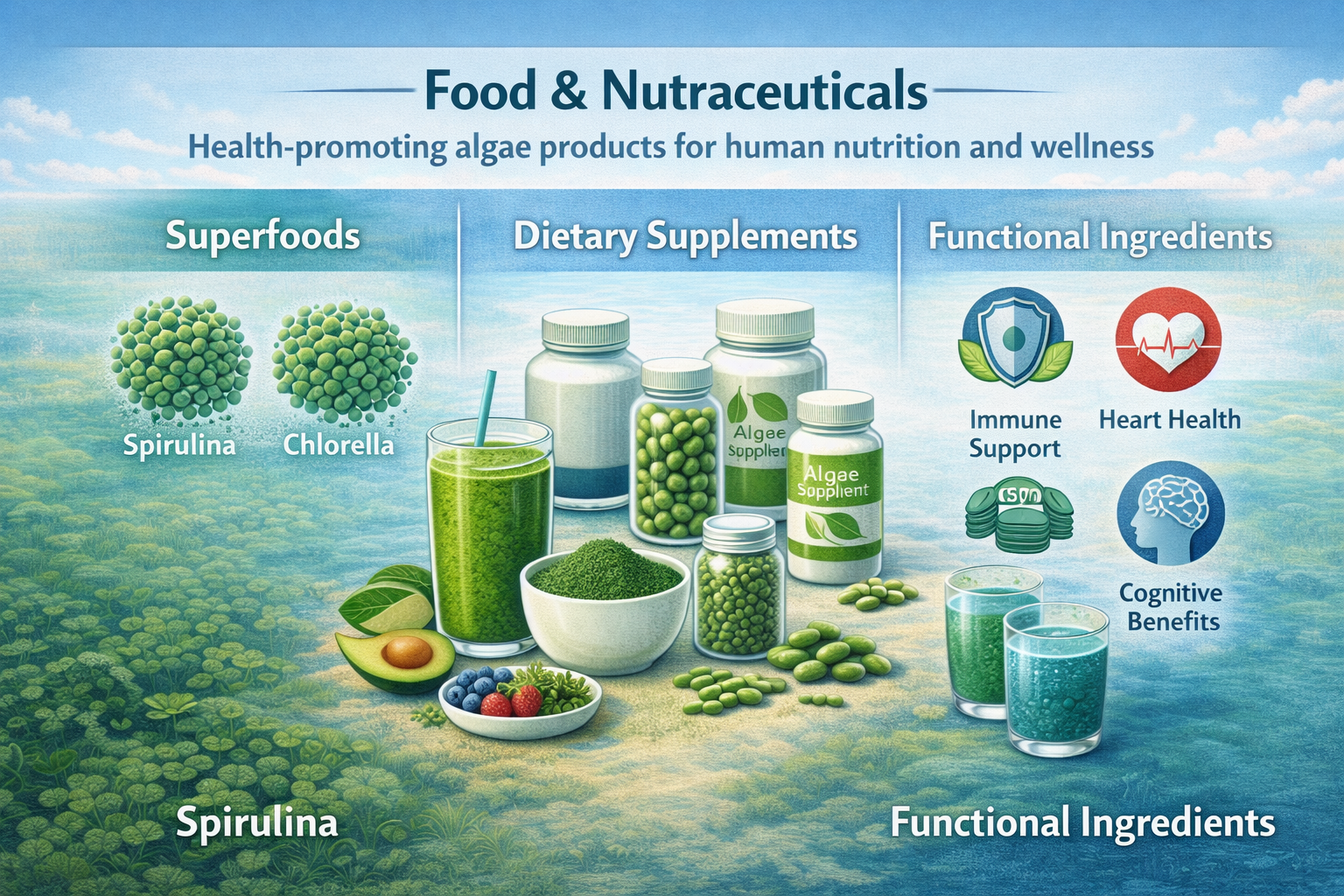
Phycocyanin is another standout segment because it is tied to the rapid shift toward natural blue colorants in food and beverage products. Market estimates show phycocyanin growing from USD 175.4 million in 2023 to USD 276.4 million by 2030 at 6.9% CAGR, with newer forecasts pointing to even faster upside in the longer term. Its appeal is especially strong in clean-label beverages, confectionery, supplements, and cosmetics, where synthetic colors are being phased down.
Algae protein has a slightly slower growth rate, but it remains strategically important because of its larger addressable market in food reformulation. The global algae protein market is estimated at USD 1.05 billion in 2025 and projected to reach USD 1.62 billion by 2034 at 4.87% CAGR. In practice, the best future portfolio is likely to be omega-3 oils first, astaxanthin and pigments second, phycocyanin third, and algae protein as the broad-volume base. That mix reflects where global food, nutraceutical, and personal-care demand is heading.