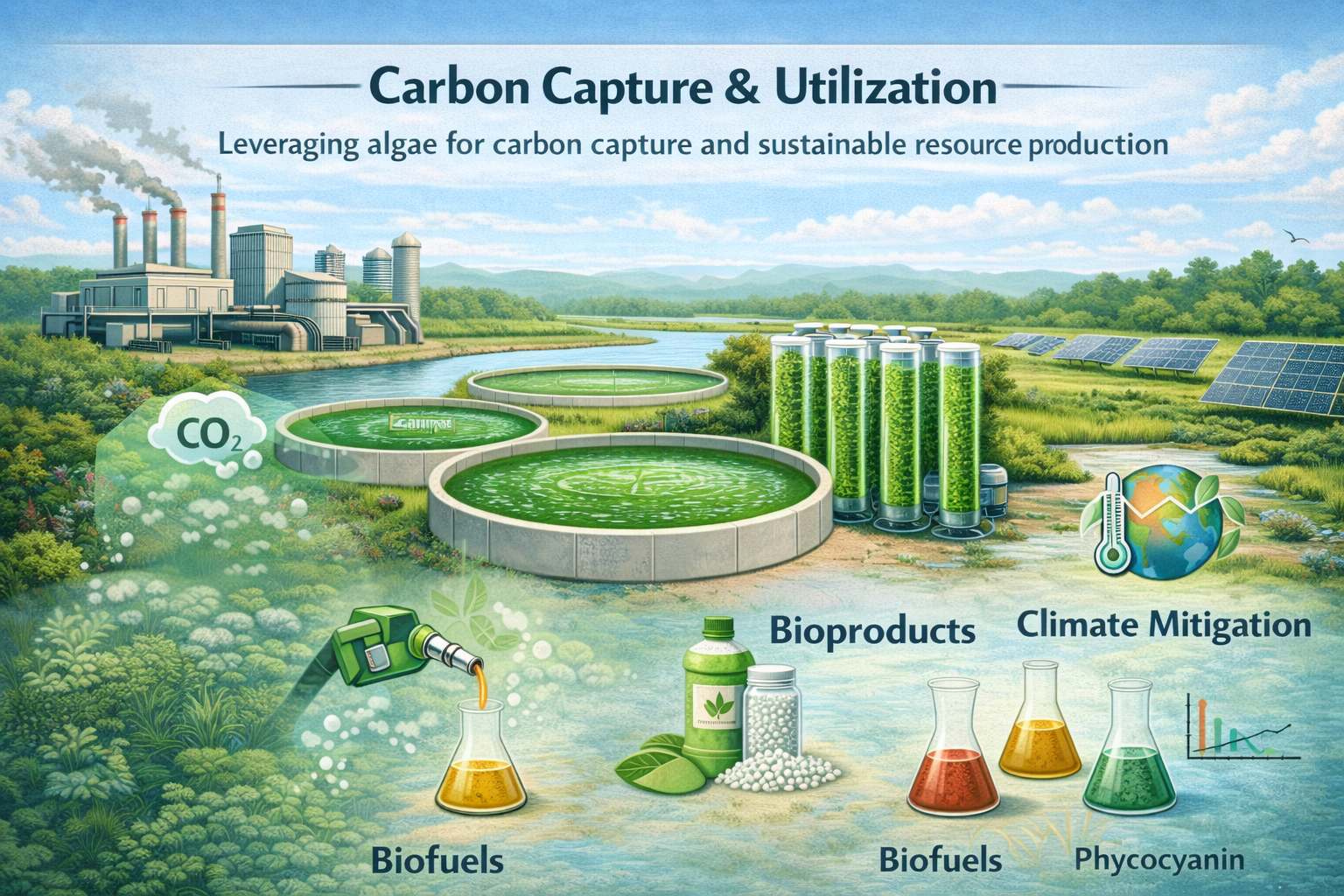

Big Impact: The Global Case for Algae-Based Chemicals
🌍 Overview
Algae-based chemicals represent a rapidly emerging segment within green chemistry, where microalgae are used as feedstock to produce a wide range of bio-based chemicals, materials, and industrial compounds.
Unlike fossil-based chemical production, algae cultivation relies on CO₂, sunlight, and non-arable land, making it a low-carbon and resource-efficient alternative. From bioplastics to pigments and specialty chemicals, algae is becoming a key pillar in the transition toward a circular bioeconomy.
🚀 Current High-Impact Solutions
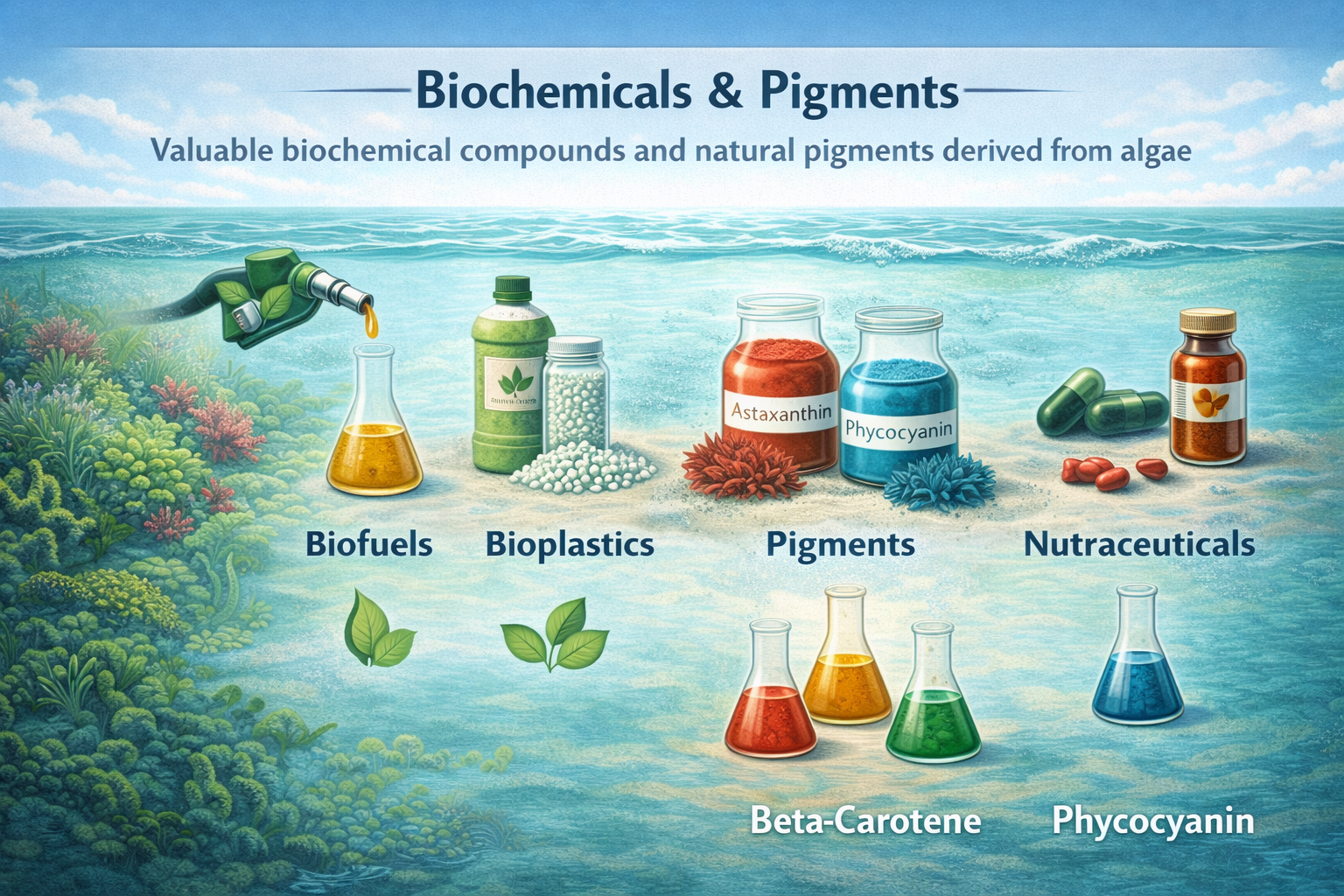
- Natural pigments & colorants: Astaxanthin, beta-carotene for food, cosmetics, nutraceuticals
- Bio-based polymers: Algae-derived bioplastics replacing petroleum-based plastics
- Specialty chemicals: Surfactants, antioxidants, and bioactive compounds
- Cosmetic ingredients: Anti-aging compounds, UV-protectants, and skin-care actives
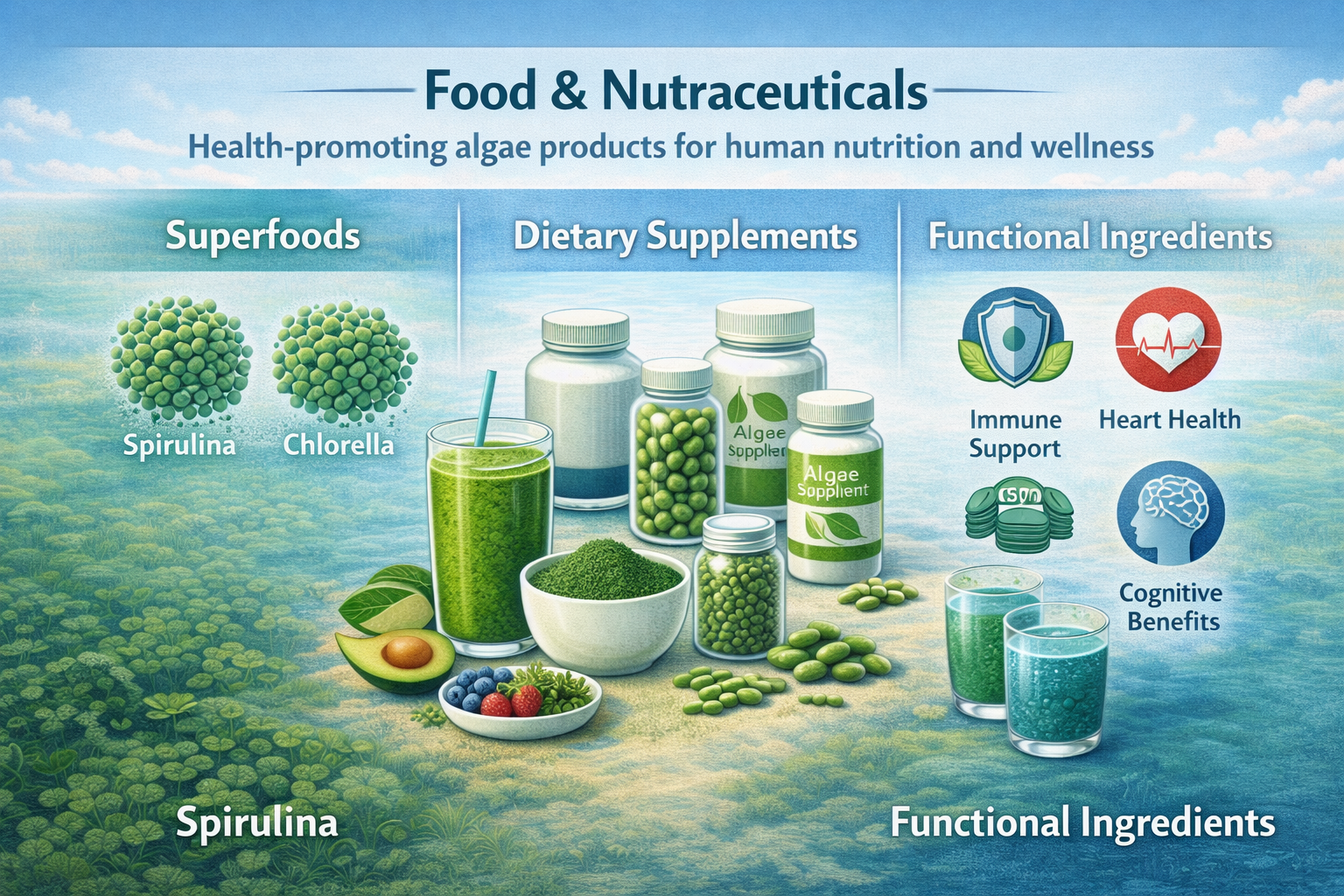
- Nutraceutical extracts: Omega-3 oils (DHA/EPA) used in supplements and fortified products
🔮 Future Potential
- Large-scale production of commodity chemicals (e.g., ethanol, organic acids)
- Algae-based drop-in replacements for petrochemicals
- Integration into biorefineries producing multiple chemical streams from a single biomass
- CO₂-to-chemical platforms using industrial emissions as feedstock
Process Overview

⚙️ Technical Pathways
Step-by-step production flow:
- Strain Selection:
- Specific algae strains selected for target compounds (lipids, pigments, proteins)
- Cultivation:
- Open ponds or closed photobioreactors
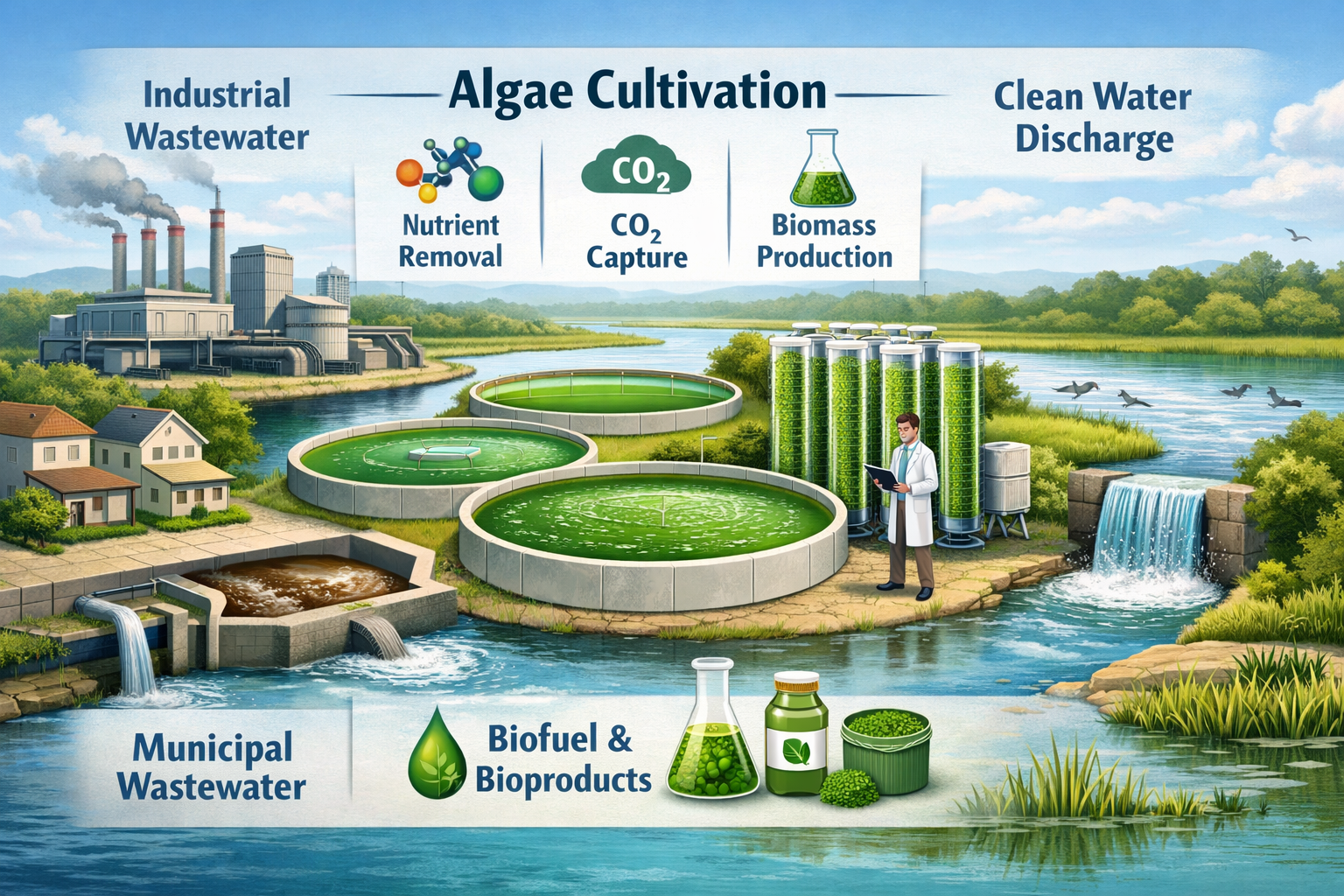
- Inputs: sunlight, CO₂, nutrients
- Biomass Accumulation:
- Rapid growth with high productivity per unit area
- Harvesting:
- Techniques: flocculation, centrifugation, filtration
- Extraction & Fractionation:
- Lipid extraction (for oils and chemicals)
- Pigment extraction (astaxanthin, chlorophyll)
- Protein and carbohydrate separation
- Refining & Conversion:
- Chemical or enzymatic processing into final products
- Polymerization for bioplastics
- Formulation for end-use industries
🔄 Input–Output Logic
Inputs:
- CO₂ (industrial flue gases or atmosphere)
- Water (including saline or wastewater streams)
- Nutrients (nitrogen, phosphorus)
- Sunlight or artificial light
Outputs:
- Bio-based chemicals (lipids, pigments, polymers)
- High-value specialty ingredients
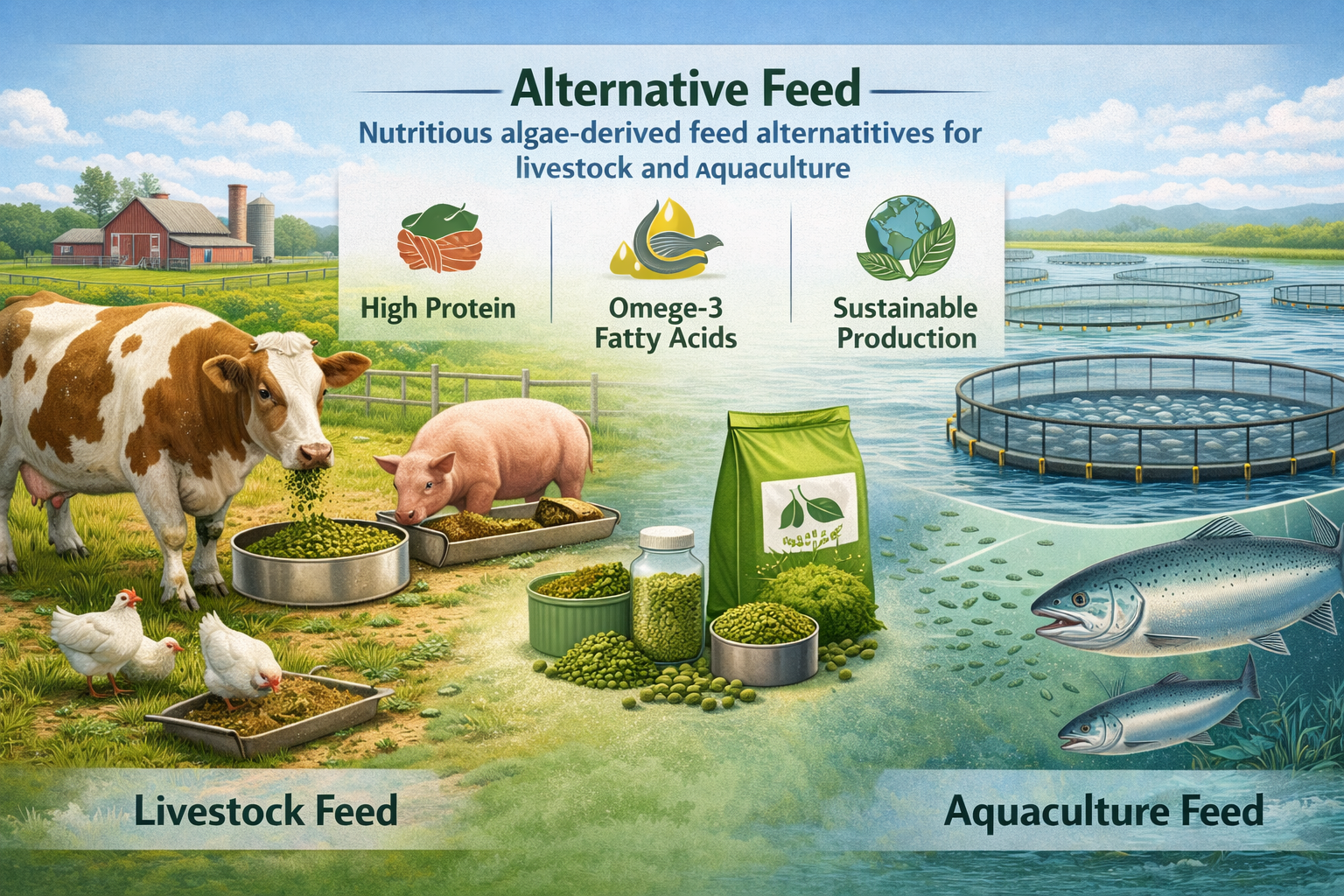
- Residual biomass (usable for feed, fertilizers, or energy)
Key Gaps and Challenges
⚙️ Technical Bottlenecks
- Low efficiency in extraction and downstream processing
- Strain optimization challenges for consistent yields
- Scaling photobioreactors economically
💰 Economic Barriers
- Difficulty competing with low-cost petrochemical production
- High capital and operational costs
- Limited commercialization of bulk chemical production
🚚 Supply Chain Gaps
- Lack of large-scale biorefinery infrastructure
- Fragmented value chains between producers and end-users
- Limited logistics for algae biomass processing
⚠️ Additional Challenges
- Regulatory complexity for new bio-based chemicals
- Market acceptance and certification requirements
- Need for standardized quality metrics
Stakeholder & Community Action
Key Stakeholders & Strategic Actions
🏛️ Governments & Policymakers
- Introduce incentives for bio-based chemical production
- Implement carbon pricing to favor low-emission alternatives
- Support pilot-scale algae biorefineries
🧪 Research Institutions
- Improve strain engineering and metabolic pathways
- Develop cost-effective extraction technologies
- Advance integrated biorefinery concepts
🏭 Chemical Industry & Corporates
- Invest in algae as an alternative feedstock platform
- Partner with startups for innovation pipelines
- Integrate algae-derived chemicals into product portfolios
🚀 Startups & Innovators
- Focus on high-value niche chemicals first for profitability
- Build modular and scalable production systems
- Leverage synthetic biology and AI-driven optimization
🤝 Partnerships & Collaboration
- Collaborations between oil & gas, chemical, and biotech sectors
- Integration with carbon capture projects
- Public-private partnerships for commercialization
Conclusion
Algae-based chemicals represent a critical frontier in sustainable industrial transformation. By converting CO₂ into valuable chemical products, algae offers a pathway to decarbonize one of the world’s most resource-intensive industries.
While current applications are concentrated in high-value niches, continued innovation and scale-up can unlock mainstream chemical production from algae, reducing reliance on fossil resources and enabling a circular, low-carbon economy.