
Big Impact: The Global Case for Algae-Based Nutrition
🌍 Overview
Algae—ranging from microalgae like spirulina and chlorella to macroalgae (seaweed)—is emerging as a next-generation superfood. With high protein content, essential amino acids, omega-3 fatty acids, vitamins, and antioxidants, algae offers a nutrient-dense, low-impact alternative to traditional food sources.
As global demand for protein rises and land/water resources become constrained, algae presents a high-yield, climate-resilient food solution that requires minimal land, freshwater, and fertilizers.
🚀 Current High-Impact Solutions
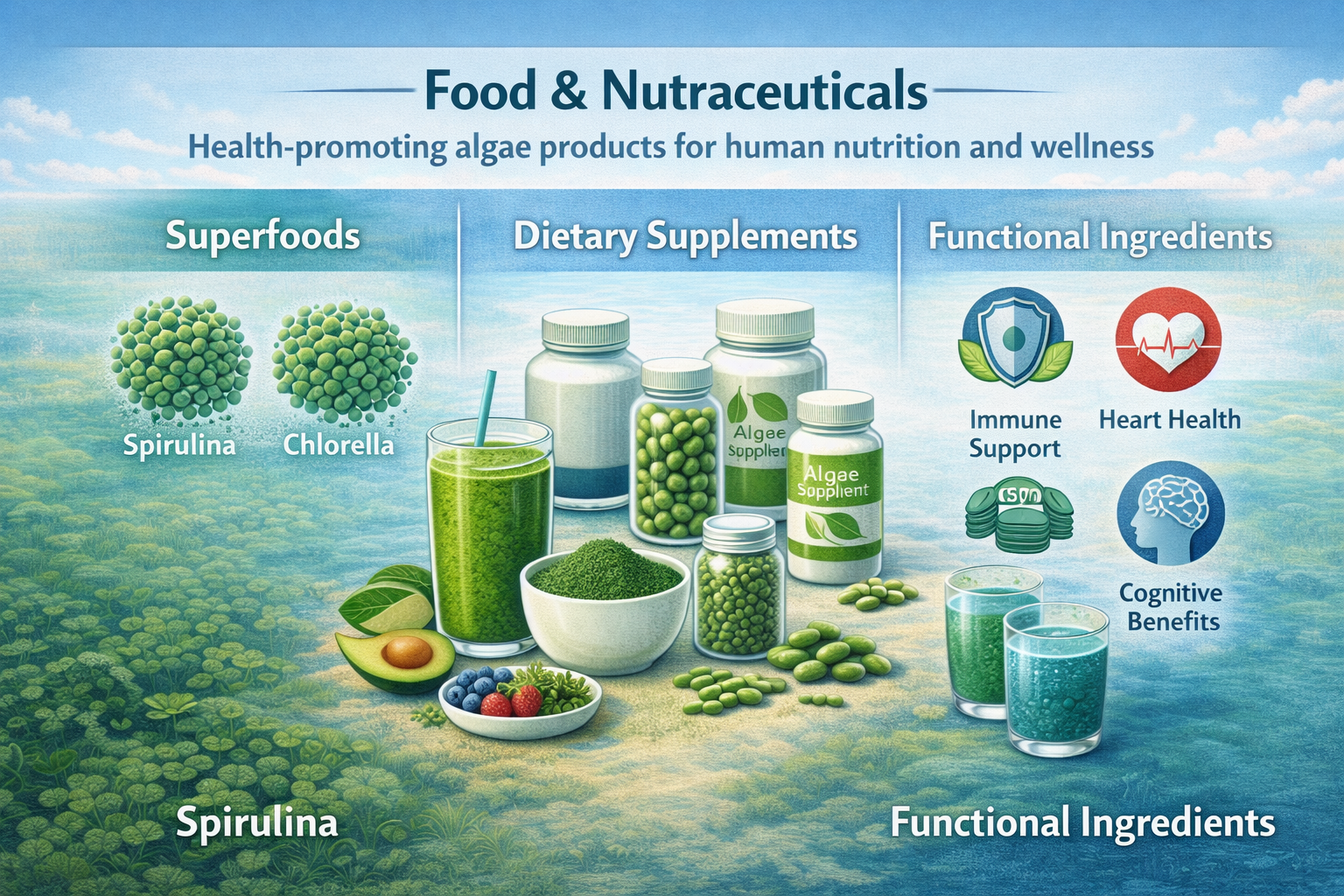
- Dietary supplements: Spirulina and chlorella tablets/powders dominate the health market
- Plant-based protein alternatives: Algae protein used in vegan foods and meat substitutes
- Functional foods: Algae added to smoothies, snacks, pasta, and nutrition bars
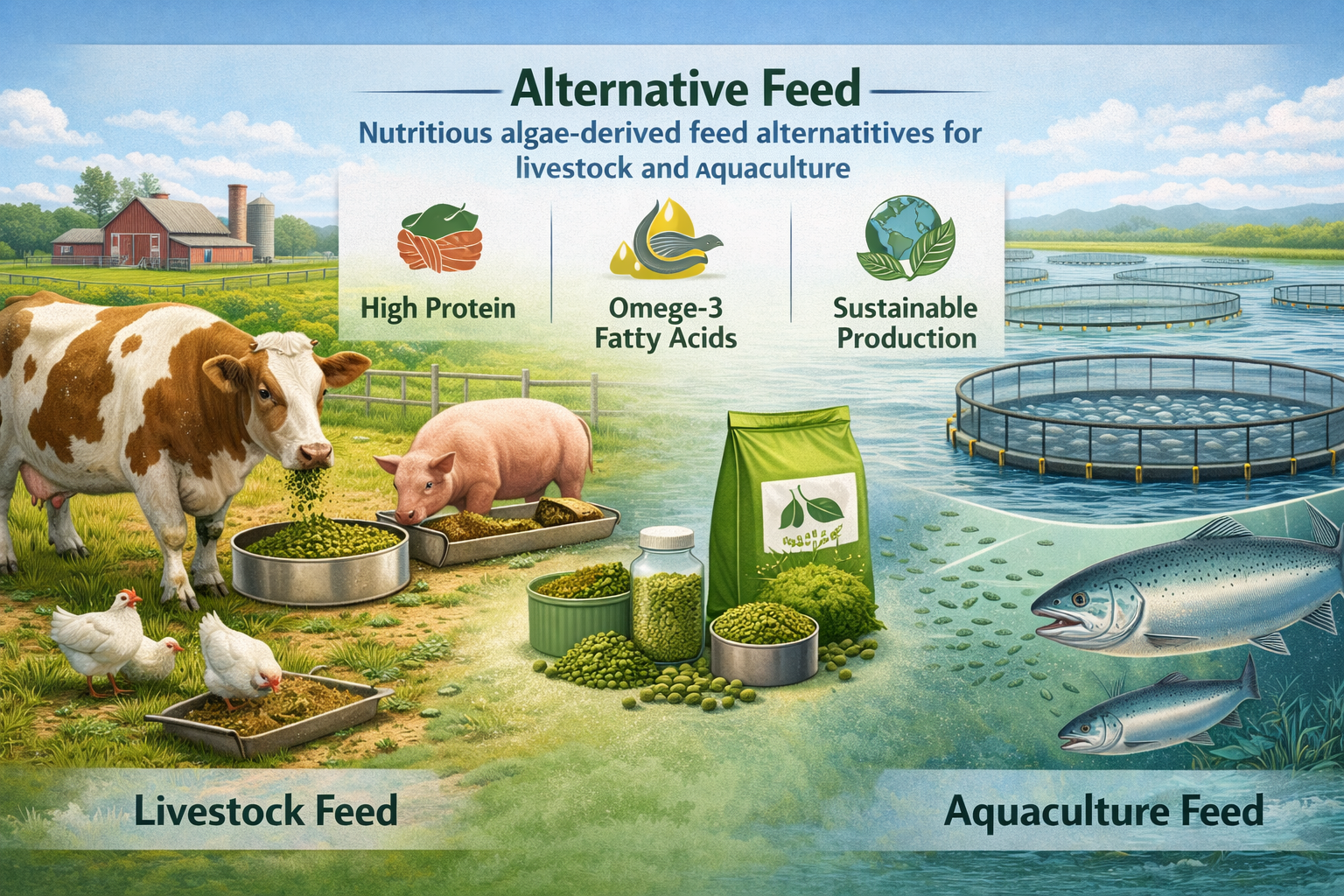
- Omega-3 production: Algae-derived DHA/EPA replacing fish oil
🔮 Future Potential
- Algae-based complete protein foods competing with soy and whey
- Integration into mainstream packaged foods (bread, dairy alternatives, snacks)
- Personalized nutrition using algae bioactive compounds
- Space and extreme-environment food systems (NASA-level applications 🌌)
Process Overview

Step-by-step production process:
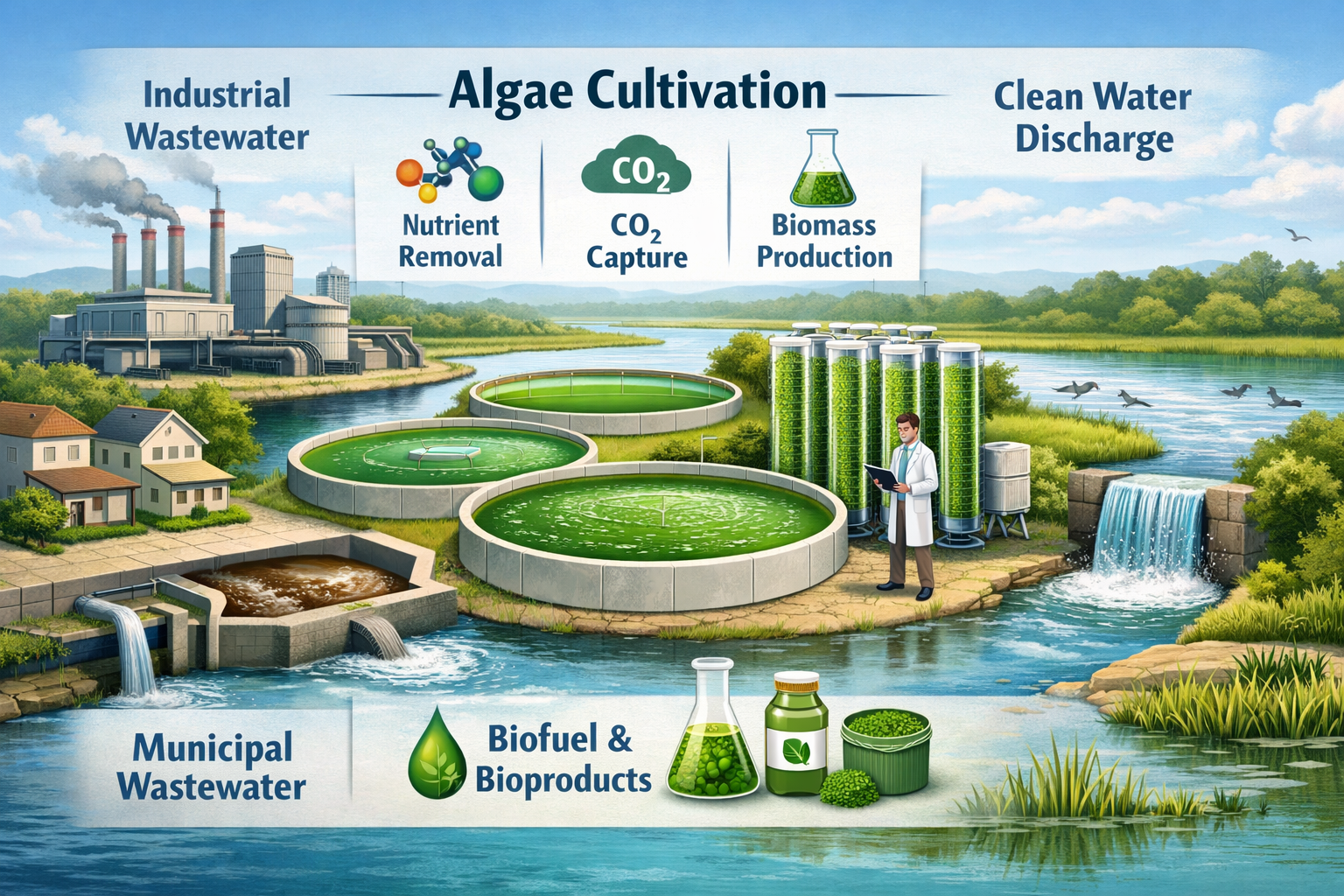
- Cultivation:
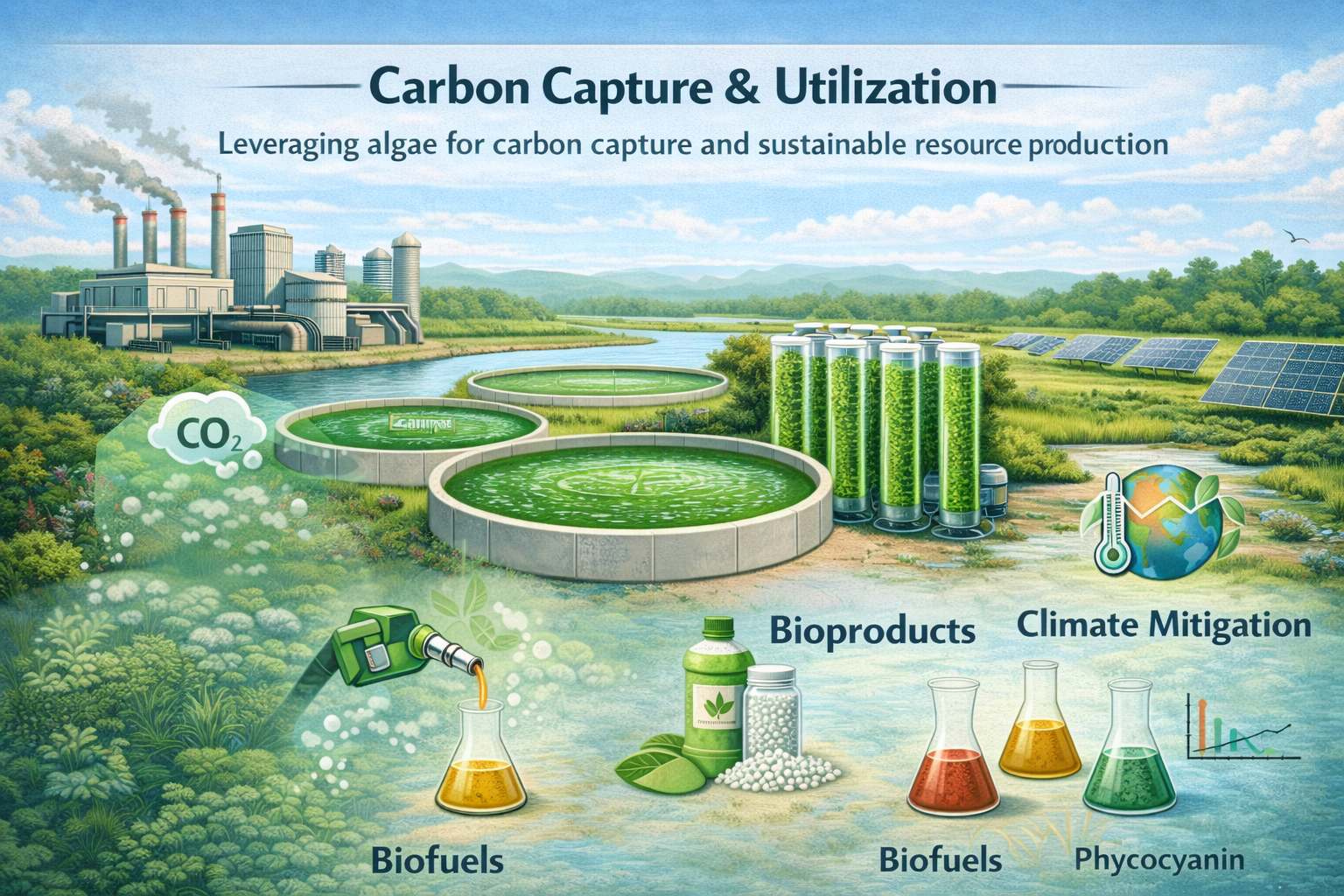
- Microalgae grown in open ponds or photobioreactors
- Macroalgae (seaweed) cultivated in ocean farms
- Growth Optimization:
- Controlled light, nutrients, and CO₂ supply
- Rapid biomass doubling (can double in 24–48 hours)
- Harvesting:
- Filtration, centrifugation, or flocculation to collect biomass
- Processing:
- Drying into powder, tablets, or flakes
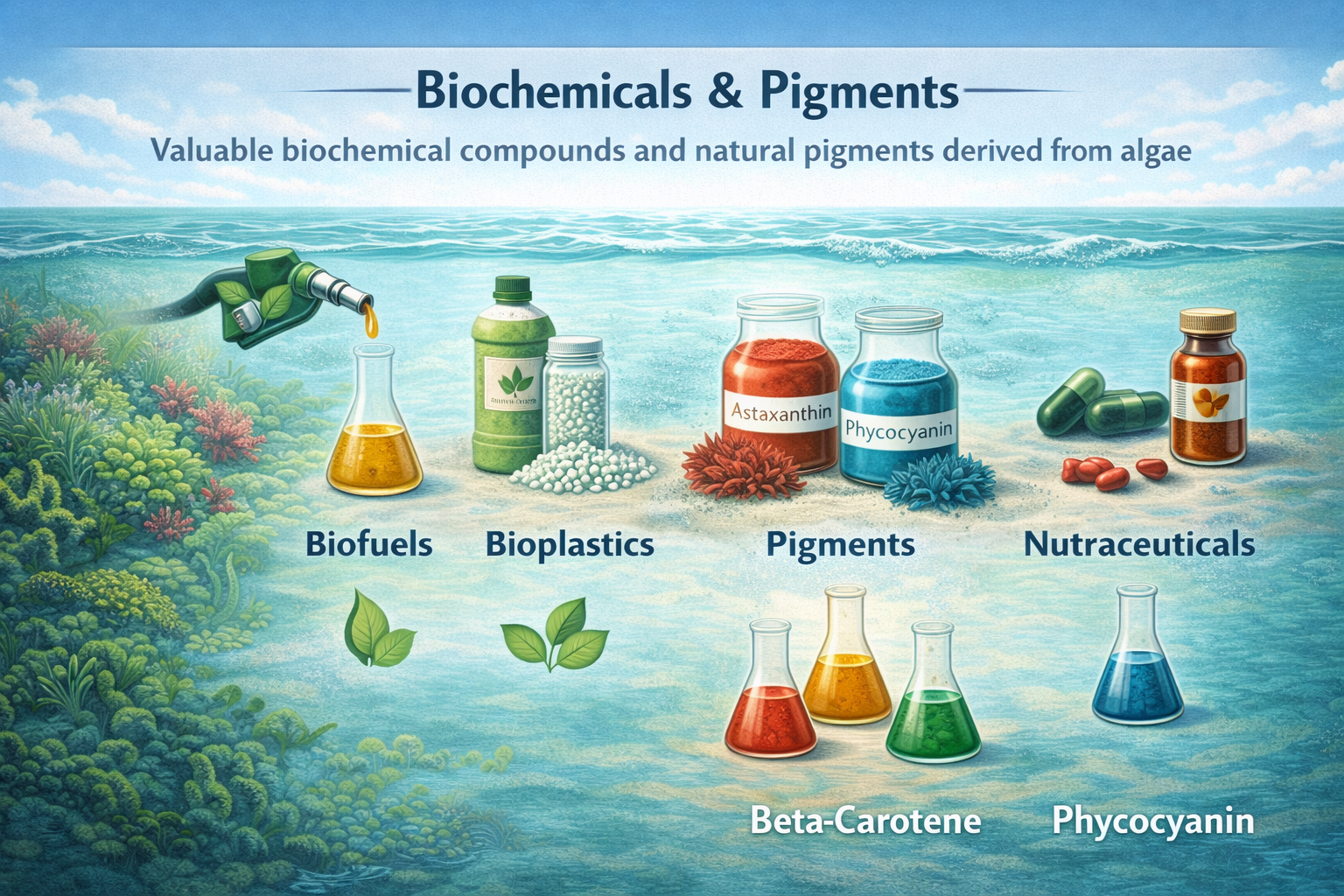
- Extraction of proteins, oils (omega-3), pigments
- Product Integration:
- Used in supplements, packaged foods, or direct consumption
🔄 Input–Output Logic
Inputs:
- Sunlight or artificial light
- CO₂
- Water (freshwater or seawater depending on species)
- Nutrients (nitrogen, phosphorus)
Outputs:
- High-protein biomass (up to 60–70% protein in spirulina)
- Omega-3 fatty acids (DHA/EPA)
- Vitamins (B12, A, K) and antioxidants
- Minimal waste and low environmental footprint
Key Gaps and Challenges
⚙️ Technical Bottlenecks
- Scaling photobioreactors efficiently
- Maintaining consistent taste, texture, and color in food products
- Limited strain optimization for large-scale food production
💰 Economic Barriers
- Higher production cost compared to conventional protein (soy, whey)
- Expensive downstream processing (drying, extraction)
- Premium positioning limits mass adoption
🚚 Supply Chain Gaps
- Limited large-scale food-grade algae processing facilities
- Weak integration with mainstream food manufacturing
- Distribution challenges in emerging markets
⚠️ Additional Challenges
- Consumer acceptance (taste, “green” perception)
- Regulatory approvals in different countries
- Lack of awareness about nutritional benefits
Stakeholder & Community Action
Key Stakeholders & What They Can Do
🏛️ Governments & Policymakers
- Provide subsidies and incentives for sustainable protein production
- Simplify regulations for algae-based food approvals
- Promote algae in national nutrition programs
🧪 Research Institutions
- Develop better strains with improved taste and yield
- Innovate low-cost cultivation and harvesting methods
- Conduct clinical studies on health benefits
🏭 Food Industry & Corporates
- Integrate algae into mainstream food products
- Invest in large-scale production infrastructure
- Build strong branding around algae as a premium superfood
🚀 Startups & Innovators
- Create appealing algae-based consumer products (snacks, drinks, protein powders)
- Use food-tech to improve flavor and texture
- Develop direct-to-consumer (D2C) algae brands
🌍 Communities & Consumers
- Adopt algae-based foods in daily diets
- Support sustainable food choices
- Increase awareness through social and digital platforms
Conclusion
Algae-based nutrition represents a powerful shift toward sustainable, high-efficiency food systems. With its unmatched nutrient density and minimal environmental footprint, algae has the potential to transform global diets.
However, scaling this solution requires overcoming cost, perception, and infrastructure challenges. With coordinated efforts across policy, industry, and innovation, algae can move from a niche superfood to a mainstream dietary staple of the future.