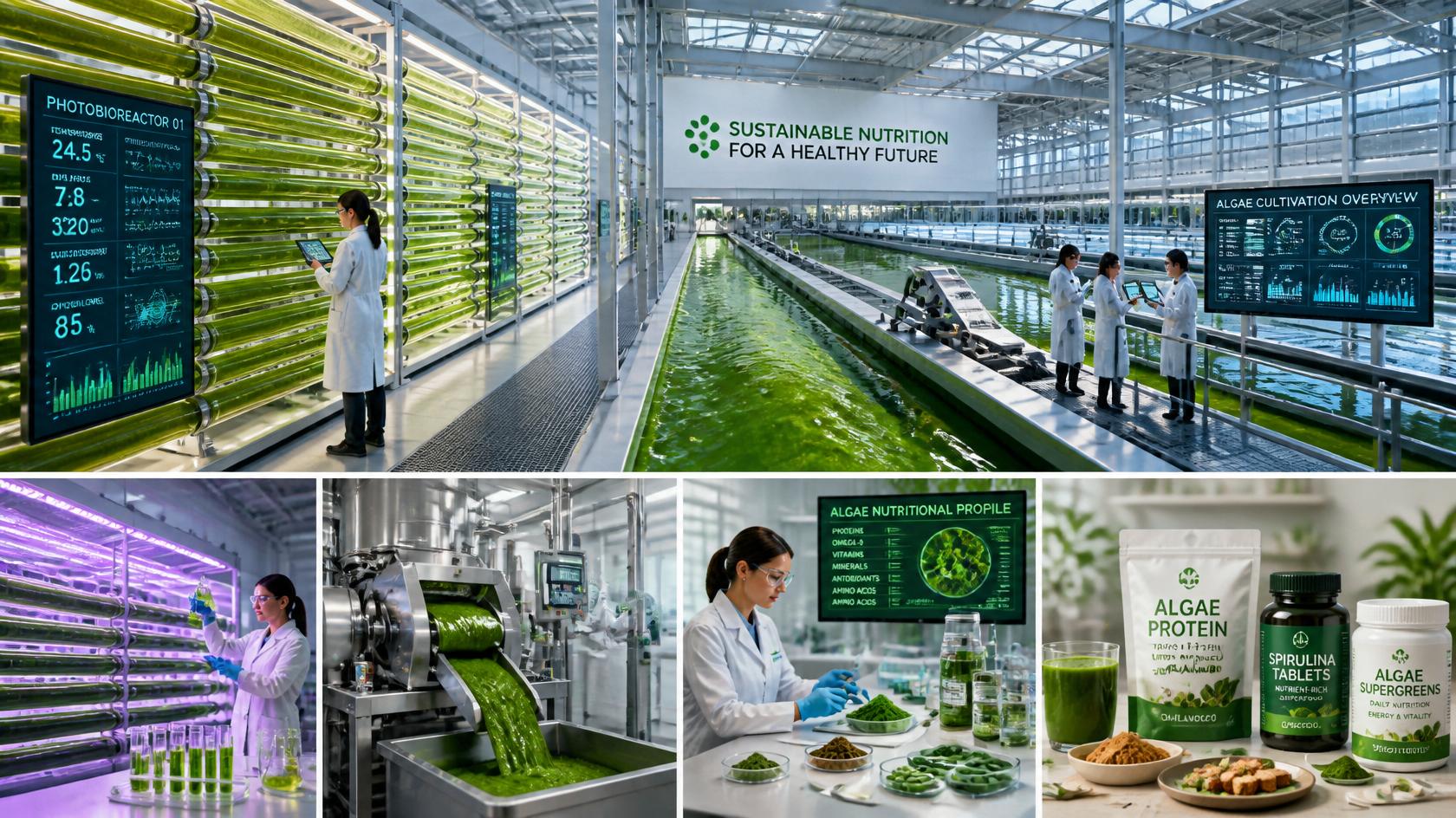
Algae cultivation for human nutrition can be significantly improved through advanced cultivation technologies that increase productivity, nutrient quality, and cost efficiency. One of the most important technologies is the use of closed photobioreactors (PBRs) instead of traditional open ponds. PBRs provide controlled conditions for light, temperature, pH, and carbon dioxide, which improves biomass productivity and reduces contamination risks. Recent global studies highlight that modern tubular, flat-panel, and airlift PBR systems can dramatically improve microalgae growth efficiency while supporting industrial-scale production. Photobioreactors are now considered one of the most promising technologies for large-scale algae farming worldwide.
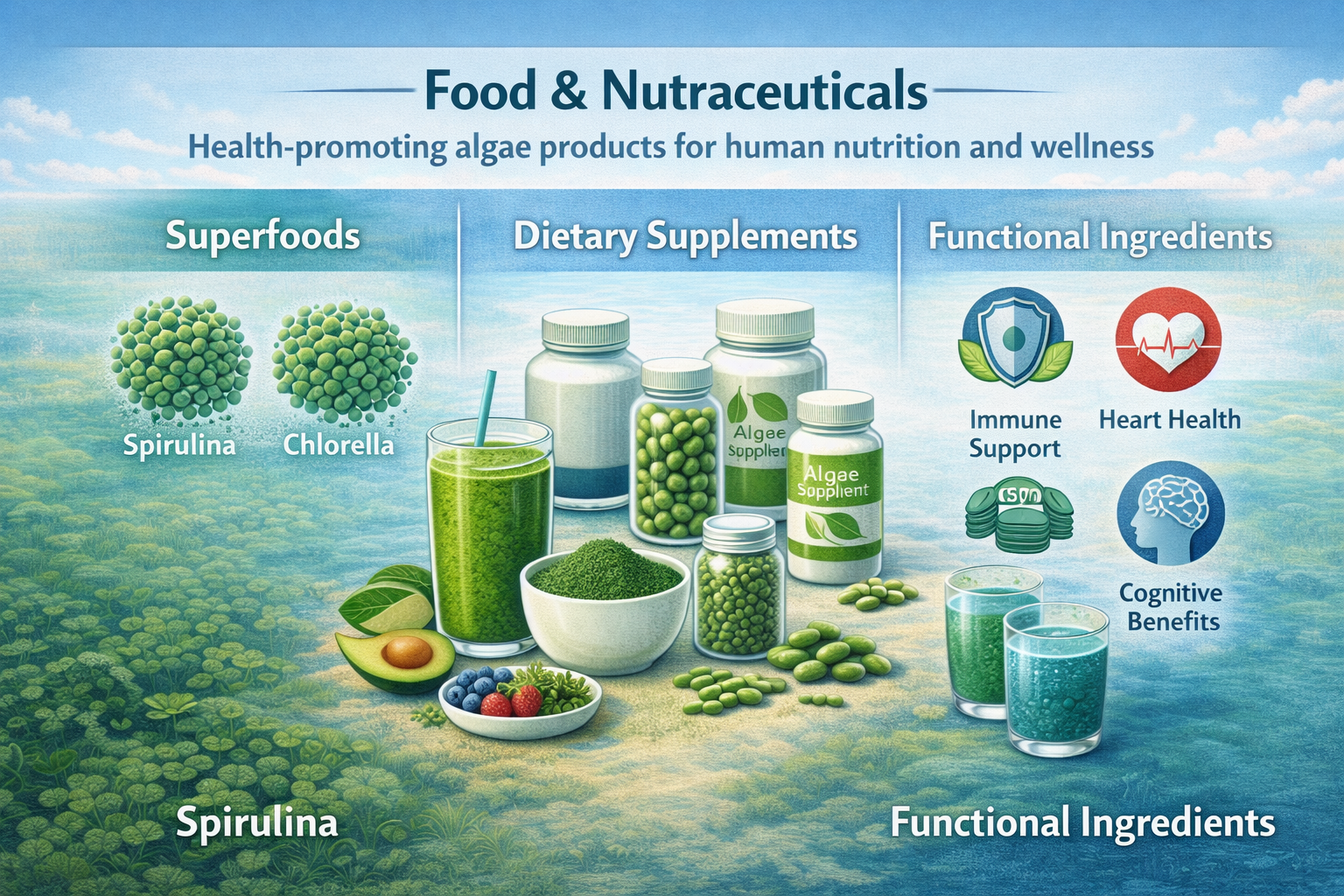
Another major innovation is the integration of Artificial Intelligence (AI) and Machine Learning (ML) into algae cultivation systems. AI-driven monitoring systems can optimize nutrient supply, light exposure, temperature, and harvesting schedules in real time. Researchers report that machine learning models improve biomass prediction, nutrient recovery, and operational efficiency while lowering energy and water consumption. AI-based cultivation systems can continuously analyze algal growth conditions and automatically adjust operations to maximize productivity and nutritional quality. This is especially important for producing protein-rich algae such as Spirulina and Chlorella for global food markets.
Technologies related to genetic engineering and strain optimization are also transforming algae cultivation for nutrition. Scientists are developing algae strains with higher protein content, faster growth rates, improved omega-3 fatty acid production, and better resistance to environmental stress. Advanced biotechnology tools such as CRISPR and metabolic engineering allow researchers to enhance nutrient density and improve cultivation stability at industrial scale. Optimized algae strains can produce higher levels of proteins, vitamins, antioxidants, and essential fatty acids, making algae more competitive as a sustainable human food source.
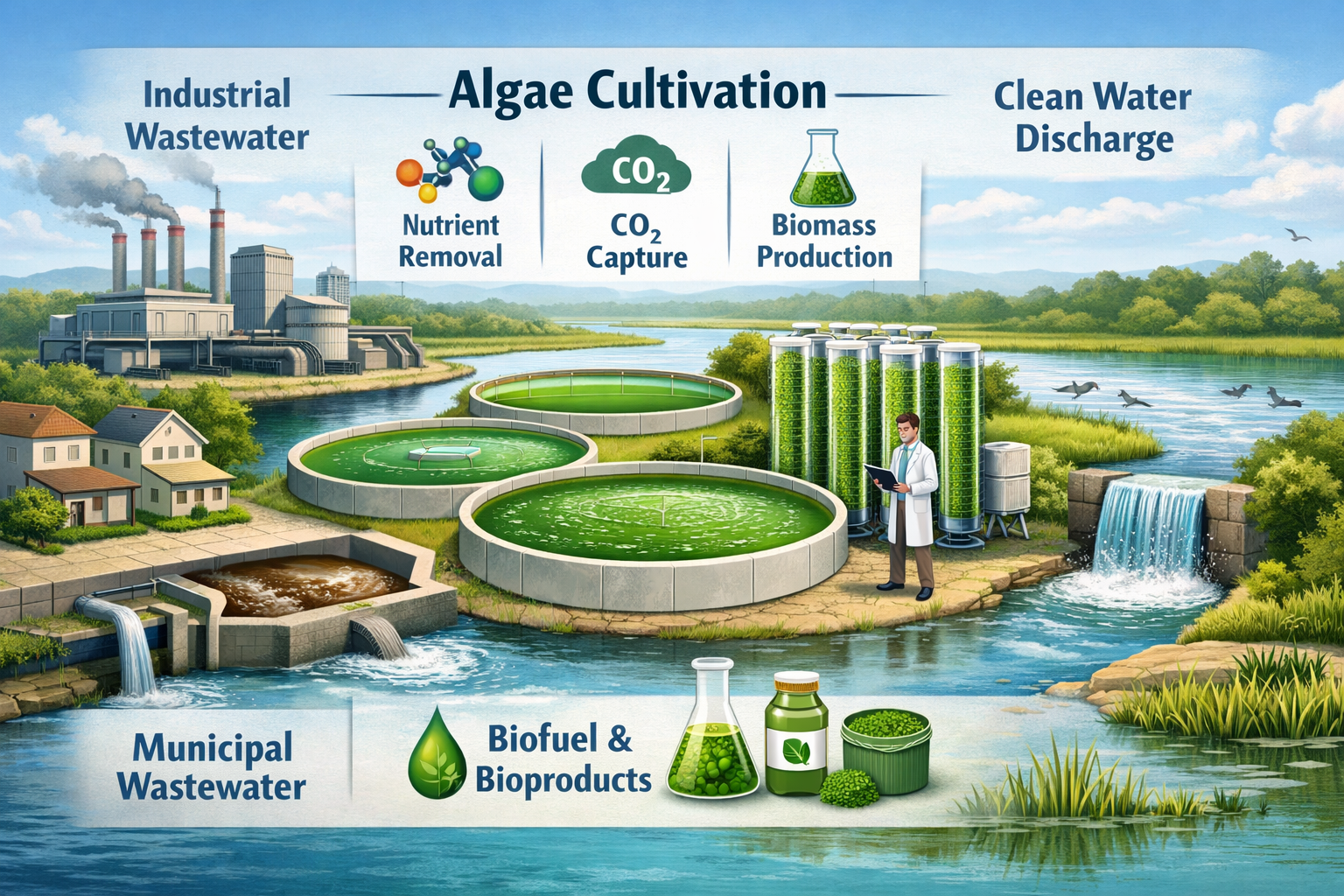
Another critical technology is the use of wastewater recycling and nutrient recovery systems. Algae require nitrogen, phosphorus, and carbon dioxide for growth, and wastewater streams can supply these nutrients at lower cost. Studies show that algae-bacteria symbiotic systems and algae-membrane bioreactors can achieve nutrient removal efficiencies of more than 80% while simultaneously producing valuable algal biomass. This technology reduces freshwater demand, lowers fertilizer costs, and supports circular bioeconomy models. Integrating wastewater treatment with algae cultivation can significantly improve the economic viability of large-scale nutritional algae production.
Finally, improvements in LED lighting systems, automated harvesting, and dewatering technologies are essential for commercial expansion. LED-based lighting allows algae cultivation even during low sunlight periods while improving photosynthetic efficiency. At the same time, advanced harvesting methods such as centrifugation, membrane filtration, flocculation, and automated drying systems help reduce operational costs, which remain one of the biggest barriers in algae production. Researchers estimate that harvesting and dewatering can account for around 30% of total algae production costs, making technological innovation in these stages highly important. Together, these technologies are helping algae become a scalable global solution for sustainable human nutrition, food security, and alternative protein production.